Steel can make sparks. I'm not sure it can be done on concrete, but the spike may have had some rebar in the middle that would be hard enough to chip off fragments of steel. A hot spark could then smoulder in the grass for some time (like if the guy then decided to go for a smoke break to let the Yellowjackets calm down) and be out of hand by the time he got back.
The story does kind of seem a bit farfetched as it goes on with the lengthy string of failures on his part. There is a nonzero chance the guy didn't want to cop to burning trash in his overgrown and tinder dry back yard and made up the crazy story. There's probably no way to prove it either way.
Sparks are a major hazard in a lot of industries, to the extent that there is a full range of non-sparking tools made from high-strength copper alloys. They're most often used in the oil, gas and petrochemicals industries, but they're also used in dry and dusty environments like grain elevators and flour mills.
I have no idea whether this story is the whole truth, but it's perfectly plausible - in extremely dry conditions, a tiny ember can become an uncontrollable fire in a matter of seconds. The speed of a grass fire can be truly frightening. Take a look at this video:
The fire in that video was started by the heat of an exhaust pipe, but it could have just as easily been caused by a spark or a cigarette butt. If a fire like this started in front of you, how sure are you that you'd be able to extinguish it single-handedly? What if it started behind you and it got a head start of a few seconds before you noticed it? If you were dressed in shorts and sandals rather than fire-resistant boots and overalls, would you even stand a chance?
A moment of hesitation or distraction is all it takes to lose control of a grass fire. Based on the account given, I can fully imagine the desperate and ultimately futile effort made to extinguish a fire that rapidly spread out of control.
That video is incredible. It's hard to estimate size from the shaky footage late in the video, but I would say the fire grows to be almost 50 meters wide in the course of... three minutes? And that's with a dozen men trying to fight it. I was looking at some other grass fire videos and found a great demonstration by a fire department [1]. It's pretty clear that even on a calm day in short grass your window to stamp out an accidental fire is perhaps 10 seconds.
The video in your second link shows just how hard those grass fires can be to contain. There's what, a half-dozen to dozen riders present? And despite their effort, it continues to spread throughout the video.
Most people severely underestimate the speed of fire and overestimate the speed at which they can respond. Even if a fire looks tiny, you have a very narrow window of opportunity to react before the fire spreads beyond your ability to control.
The same applies to fire in the home - if you can't put it out right now with whatever comes to hand, you've probably lost your window of opportunity to fight the fire. If your sofa or curtains catch fire, there simply isn't time to fill a bucket or fetch a hose. If you don't have an extinguisher to hand and can't snuff out the flames with a blanket, you need to run.
I was amazed how quickly all the riders reacted and also recognized it wasn’t going to be easy to get out - “we’re not going to stop that with camelbacks”!
I once broke into a restaurant and put out a fire which would have gone critical before the firefighters arrived. Towels and dishrags. By the time they did, it was out. Likewise once when my car caught fire in the engine room. Buckets of water from the cleaner in the adjacent supermarket.
You often do stand a chance if you keep your wits, assess the situation, and act sensibly without any delay. I know everything is easy from my armchair, but can't help noticing how in the grassfire video nobody seems to be doing anything worthwhile while the thing is still manageable. In that kind of dry grass, jackets should have come off and smothered the fire within the first seconds, no panic and no danger.
Fire can get outa hand say farmers that burn ditches and wheat fields after harvest. Add a little bit of wind and you cannot even approach the fire, might need to stay 5-10 yards away. Go ahead and stop that one then :).
Best bet, if possible, would be to improvise a barrier xx meters away so when the fire reaches there it stops by itself. Easier said than done.
Those tools suck. Nobody who's not working in an environment saturated with volatile hydrocarbons should be using them. Seriously, they might as well be made of butter compared to normal steel tools. Seriously. 0/10. Do not recommend. I guess the hammers are ok though since they're basically just a metal lump.
I find both your comment and jandrese's comment perfectly convincing. So now I'm horribly confused and I have no idea who is right. I guess there just isn't enough information to rely on to figure out what exactly happened?
No need of silencer, you can put your leg on the side stand to touch the asphalt road slightly and it will create tons of spark. Same is true for concrete with less intense sparks depending on the composition
Fire investigators can trace back the origin of fires. I know in some cases they can trace it back to a specific outlet in a home.
Would the investigators not be able to see the point of origin has a 24 inch concrete stake driven in to the ground? Would they not be able to see there was an overturned 4-wheeler? This story sounds so unbelievable that I’d expect trained investigators to be able to find the obvious holes (I swear, no pun was intended).
> I know in some cases they can trace it back to a specific outlet in a home.
It's not even hard. When I had a fire in my apartment while I was away, the inspector simply was actually really nice when we went through an explained everything in the aftermath:
"See that "V" on the wall, that tells me the fire started here at this outlet. Note that the books you had on this shelf are charred, but not fully burned. Books are pretty lousy in terms of going up in flames. Note the books on this side, they're totally burned. Accelerant--you probably kept oil in the cupboard above them. You clearly had something heavy in this cabinet, cast iron? ..."
And he just went on and on as he walked through. If you ever want to try to commit insurance fraud by setting a fire .. don't. The inspector will know--he may not be able to prove it, but he will know.
>>If you ever want to try to commit insurance fraud by setting a fire .. don't. The inspector will know--he may not be able to prove it, but he will know.
Morals aside, people will do and quite a few will get away with it. Average Joe should not, but for every fire inspector there's a smart crook.
For sure. I see it when I work in my yard late into the summer. As it gets dark I've made sparks with shovels, picks and quite often the teeth on the excavator bucket will scrape a rock and make some pretty good sparks.
It can be done on concrete. I've split logs for firewood on concrete before. Sometimes the wood is more cooperative than anticipated, and so the the axe goes right on through the log like it's not there, and kisses the concrete. There's sometimes a spark or two when it happens.
Steel tools on concrete can definitely make sparks. I assume it requires the aggregate in the concrete to be hard or the concrete to be very old and therefore hard. I’ve noticed this when breaking up concrete at night, a horrible chore.
I'm not a fire expert, but I do think it's short-sighted to put so much attention on how fires start, when the ultimate size and impact of a wildfire depends so much on the environment in which the fire grows and sustains.
To me it's a lot like blaming a web service outage on a mistake by a single developer, when there are other questions like- how might our system have allowed for the introduction of a bug? What measures could have been taken to contain bugs? I feel like the software industry understands this, I wonder if this lesson could be translated to how we talk about wildfires.
The start of a fire is a criminal investigation, not a root cause analysis. Billions of dollars are on the line, because different groups have to pay out depending on how/who started the fire.
In this case there was no criminal liability. That means all the fire insurance companies will have to pay out of their own pocket.
For other fires, PG&E was found liable for not maintaining their power lines. They will probably have to declare bankruptcy, because the fire insurance companies will all sue them to cover their payouts.
There is a different team that does RCA and puts in place new policies or proposes new regulations to prevent whatever caused the fire, but what you're seeing is the result of a criminal investigation (although they do work together in collecting evidence).
I was reading the book "What Do You Care What Other People Think?" by Richard Feynman, where he describes being on the committee investigating the loss of the Challenger Space Shuttle.[1]
What I found interesting was his take on the software system:
"To summarize then, the computer software checking system and
attitude is of the highest quality."
At first I thought, "wow, software is getting a pass."
But then mulling it over, I realized that software is almost easy compared to the unpredictability, unreliability and untameable stubbornness of the physical world.
The rub here is that you can't just make nature and urban-forest interfaces 'wildfire-safe' because that means cutting down all the vegetation, replacing it with non-native species, or simply removing all access to the vegetated areas.
There's really nothing to do besides clear low brush every so often... which fire is better at than humans anyway.
There's a lot of debate about the electrical utility's (PG&E) responsibility for other fires. But I think this shows that it's really a matter of when, not if, fires will break out. If it's not an electrical wire sparking in the wind it will be a hammer or a tail pipe.
But you’re forgetting that something like 80%+ of the big wildfires were started by PG&E equipment. It’s also willful negligence in the lack of maintenance [1]. It’s not 100%, but we can do far better.
What if you reform PG&E and those 80% go away. Will the next wildfire that breaks out be 5x bigger now that dry material had more time to accumulate? Should controlled burns be done more often to reduce the impact of inevitable wildfires when they do happen?
> Should controlled burns be done more often to reduce the impact of inevitable wildfires when they do happen?
The forest management servicepeople are starting to wake up to this, although there is a lot of inertia in bureaucracy so reform is slow. But controlled underbrush burns are becoming more common.
Source: father owns a house in Yosemite National Park. We have to take care of our property by mowing/removing virtually all vegetation within 50ft of the house, but there are also controlled burns semi-regularly in our community performed by USFS.
Most of the land that burned in the Camp Fire last year (the infamous one that burned through a town and killed 80 people had burned just a few years before; much of the rest was manicured grasslands and woodlands within the town. Newly burned/cleared land grows back quickly with grass and brush that actually poses more of a fire hazard than a dense forest.
I'm guessing that there are probably better ways to manage fire risk than to wait for some random power lines to overheat.
For example, if you do a controlled burn you can pick the day with the best weather conditions and have trained responders ready to deal with any problems. If a random power line overheats, you only know about it when half the state is on fire.
I found it interesting is that PG&E was recently given the go-ahead to TURN OFF POWER during high wind situations.
Not that there aren't maintenance and management problems, but allowing power to be turned off seems like a no-brainer but maybe management didn't have that option before.
Um, when they turn off the power, it’s not to a single neighborhood. It’s going to be to wide swaths of the power grid. They were talking on KQED the other day that this might even at times include San Francisco and San Jose, depending on where the risk is. Whenever that happens, intersections are going to be left without stoplights, people on life support will lose their power, hospitals will go onto backup generators, etc. Its possible that people will die as a result of power outages, especially if they happen in the heat of summer.
“People talking on KQED” is not anything you should trust if it’s one of the many programs where people call in and concern troll or where the host pontificates on “what-ifs”.
Unless it has actually been identified as a risk, I’d say it’s safe to assume PG&E wouldn’t just shut off the power in the bay for any extended period of time. There isn’t really anywhere in the US with that level of instability.
By people, I meant reporters. Here’s a link to a story on CBS. The issue is that the Camp Fire was caused by major transmission lines - turn off some of those, and SF/SJ will lose power coming from major hydro sources in the Sierras.
This guy must feel horrible. "What if I had just left the wasp nest and went to lunch instead?" "What if I had called 911 earlier?" "What if I had used bug spray instead?"
Note that "An hour later, the River fire started nearby and the two eventually merged." Which seems to indicate that if one or the other ignition events didn't happen, we'd still have had mostly the same fire.
There’s an interesting podcast (in German) with the head of the global fire monitoring center that talks a lot about how fires like that spread and cannot always be contained. Some parts are specific to germany, but most are applicable all over the world
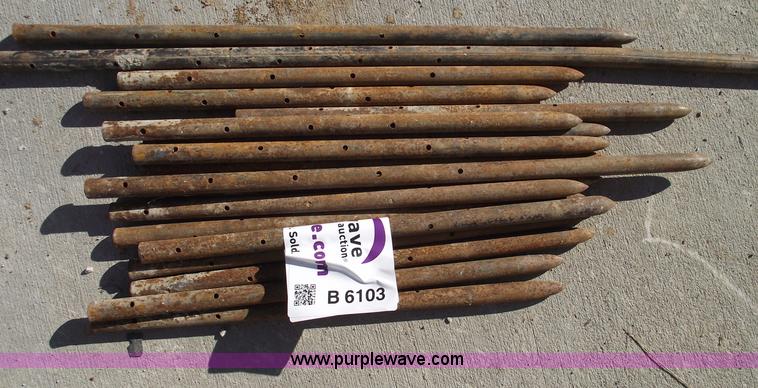
> On July 27 of last year, while firefighters were spread across the state battling fires in the north and south, a Potter Valley rancher working on a hot day in a bed of waist-high cured grassland drove a stake into the ground and created a spark that grew into the 410,000-acre Ranch fire.
Thanks to climate change you can expect more of this...
We need to start holding corporations lobbying against climate change resolution accountable for their actions.
> We need to start holding corporations lobbying against climate change resolution accountable for their actions.
Or vote for politicians that don't give in to that kind of lobbying. Corporations can lobby all they want, it's the politicians that decide on policy and law.
Lobbying is great, you, yourself can talk to your local representative. If lobbying is removed, then you can't legally talk to your local representative. Which means those with a lot of money can afford to illegally 'lobby'.
The problem is why are USA politicians so easy to sway with lobbying? Is it voters? Is it the two-party system? Is it that easy to get re-elected?
The ease of sway with lobbying is a symptom of something deeper and systemic. IMO, I think it's the two party system (One party away from China!). If you disagree, who's the third most popular party in USA? Europe and many other countries have a sizable third most popular party(!).
I think of lobbying as just a particular type of speech, and have an extremely high hurdle for curtailing speech, especially speech whereby the people make requests of government.
Have we reached the point where literally any malady can be blamed on climate change? Because if so, we have also reached the point where very real effects of climate change can be written off as "the boy who cried wolf".
Probably hammering metal on metal (hammer and stake) created small and hot metal splinters – like sparks, but not glowing red – and this was enough to start the fire.
You often see road signs in dry states advising motorists pulling trailers to double check their chains to make sure they don't cause sparks that start roadside wildfires.
It's more about the chains dragging and getting super hot. You won't be creating sparks on a non-paved surface. Vegetation won't be growing on a paved surface.
that's not the 'fishy af' part. what's a bit fishy is the comedy of errors afterwards. only slightly though. it's entirely plausible. had he also tried unsuccessfully to urinate on the fire, then maybe i'd be doubtful.
In all of the zillion times that the same stuff happened without the accompanying errors you never heard about it.
If you look at major aviation or industrial disasters a great many of of them involve two or more unlikely to fail components failing at once. It's not reasonable to look at it after the fact and say "look, a coverup! those two systems wouldn't likely have failed at once!"


The story does kind of seem a bit farfetched as it goes on with the lengthy string of failures on his part. There is a nonzero chance the guy didn't want to cop to burning trash in his overgrown and tinder dry back yard and made up the crazy story. There's probably no way to prove it either way.