My undergrad is in Physics and I took engineering classes in Rickover Hall. I was stationed on a nuclear ship. Even after deploying for the Fukushima disaster, I am a fan of nuclear power. But I have a hard time justifying new investment in an era where solar is competitively priced. The downside of solar is approximately 0 compared to the downside of a reactor accident.
I'll even allow for the high, high likelihood that more people will die installing roof-top solar than will ever die in the lifetime of all nuclear reactors combined. The political capital lost in a reactor accident isn't worth it. The lost of faith in technology, the loss of trust in science. The mass hysteria just isn't worth it.
Don't even bother talking about political capital. Nuclear is a worse option because it is overpriced, period. It's not just the downsides that are subsidized by the government, the actual running cost is hidden behind reams of bureaucracy, hidden program budgets, optimistic amortizations, and underestimated decommissioning costs. And even then the reactors still manage to go massively over budget with the initial construction.
People like to feel superior to others by citing fear as the reason nuclear is being avoided, but the real reason anyone should oppose it is straight up costs, without even any disasters factored in. Any other choice with the current and next-3-decades technology is just pissing money away, when it could be spent continuing renewables' rapid decline in cost.
First, there can be little doubt that a substantial fraction of the high cost of nuclear is down to almost the entire west being scared stiff of the stuff for thirty years. If we gave actual scientists and engineers a real mandate to come up with a pragmatic, realistic (ie accepting a small amount of risk as acceptable, perhaps something on the scale of a single Fukushima every 30 years, just like we accept a small amount of risk everywhere else - driving, living in hurricane country, even flying isn't perfectly safe) regulatory regime, costs would surely come back down.
Second, funny how costs suddenly matter when it's about nuclear. Barely a month goes by without some new unimaginable mind numbing (wholly impractical) 'solution' to climate change that we're being implored to consider, because it's about saving the planet for our children. Nuclear is a perfectly practical, much cheaper (if still very expensive), 80% solution to climate change that we can actually start implementing today, but somehow it's not on the table. Somehow it doesn't seem all that plausible that cost is really the issue.
In short, climate change is the biggest issue facing the world (except nuclear and fracking). I'm very excited that the NYT is being practical here.
It is interesting how you say that nuclear might be cheaper and at the same time accept an incident like fukushima every 30 years like you pay 1000 peanuts and that it alright again. Maybe you will allow a nuclear plant in your backyard but most people already have a problem with wind power. This has nothing to do with fear about the technology itself but about the decrease in property value in vicinity of the plant. So, may be your intention is good but not realistic as the Hinkley Point C plant for 30+ billion pound in england shows.
So if I have two solutions that are equally expensive but one leaves me with radioactive waste, why would you chose that one? And while I agree that we need some back up plan to stabilize the net load, that also wont be nuclear power as those plants are not fast in start up managment either.
Cheaper compared to every other suggested solution to climate change. If climate change wasn't a thing, sure, I'd probably be on board with writing off nuclear and waiting for some combination of solar and wind and storage to take over.
Also, regardless of who pays, a Fukushima-event every few decades is several orders of magnitude cheaper than flood-securing New York City alone (and there are a lot more places in the world that will need flood securing).
I doubt the flood-securing work is avoidable. But maybe it could be less bad.
Rather than nuclear, which lends itself to big government, corruption, corporate projects, bond issues, and taxes, I'd prefer to see money instead poured into acceleration of the spread of solar, which is less centralized and easier to spread to all kinds of places. Sure, not everywhere, but the potential is pretty untapped.
Any such decrease in property value is precisely because of the irrational fear of nuclear power.
> So, may be your intention is good but not realistic as the Hinkley Point C plant for 30+ billion pound in england shows.
Government should not fund or provide any guarantees to such projects; we should tax carbon and let people decide what to do (in which case, we wouldn't even need to argue which is cheaper and we can just let power companies figure it out).
> So if I have two solutions that are equally expensive but one leaves me with radioactive waste, why would you chose that one?
Isn't solar more expensive when you factor in the cost of batteries (which would be required if solar scales up; i.e. a diseconomy of scale)? Please correct me if I'm wrong.
It's completely rational to reduce property values when there is a risk you will be forced to move and lose all your possessions. If the risk is say 0.3% over the next hundred years paying every homeowner ~20,000$ within 40 miles when the plant is built to offset that risk is completely rational, but would make nuclear Even less viable.
If your house explodes due to natural gas, your property and that of all your neighbors and their neighbors and the surrounding community isn't contaminated for a period of time exceeding your natural lifespan. If you have a radiation accident instead, it very well may be. The two scenarios are quite different.
They are identical scenarios. The only difference is the scale.
In both scenarios I am "rolling the dice" on a catastrophic failure in exchange for energy - and if I am home when it happens it will shorten my lifespan significantly.
Saying the scenarios are identical doesn't make them so. And scale matters.
But... I'd say with truly modern nuclear power, safety is less of an issue. Perception of safety is still an issue. So your home value will go down. No biggie; you may be ok with that.
The issue that really bugs me though is that with nuclear, a large government or corporate entity has decided to roll the dice for you on your behalf. With something like solar, there is more possibility for local and individual control. So instead of bond issues, taxes, state-mandated insurance fees, contracts, and control by faceless entities with names like TEPCO who make decisions like "no let's not do the safety retrofit" you get to decide for yourself.
And, no gas explosions either! So, the best of both worlds.
I prefer local control. Nuclear is too centralized.
Gas explosion: House destroyed, you still own the land, you can rebuild on the land. Even if you move to a new home, you can sell the land for the going rate in the are (which will likely drop because more land is coming on the market, but perhaps not too much).
Nuclear incident: You own irradiated land. Good luck, maybe the government will buy it off you, or the power company if stipulated as some penalty.
One destroys some of your local property, the other destroys the value of all your local property.
TEPCO had a modern plan to fix the issue before it happened. They decided not to act. Nuclear power takes the decision out of your hands, and puts it in the hands of organizations like that. I prefer something like solar which keeps power in my own control, local, decentralized, not decided by some huge behemoth that is driven by money and actuarial charts.
Yet the topic is, will future nuclear plants be needed to slow global warming? Future plants (indeed all current plants) will include safety plans and devices. Such plants have not had catastrophic events.
Fukushima exclusion zone disagrees with you. Sure, if we limited reactors to 'safe' locations that reduces risks, but we still put them in stupid areas such as near fault lines.
The two direct deaths where from an insufficient sea wall not the reactor design. Saying future reactor designs fix the problem is a mistake. Because again it was not the reactor design that caused their deaths.
So again, saying some hypothetical perfect design exists and it would obviously have a large enough see wall, and that is what your defending is a true Scotsman argument.
PS: Remember, future designs also have future defects.
When people think of the Fukushima disaster the two direct and unfortunate deaths caused by the insufficient sea wall are not what come to mind. The meltdown of the reactor is the primary concern. If a meltdown had never occurred the Fukushima incident would have never been mentioned on this thread or in any other conversation about the safety issues with nuclear power. So I'm sorry but bringing up the inadequate sea wall is a complete straw man argument when talking about safety issues from nuclear power.
Now, back on topic, the nuclear reactor meltdown at Fukushima was caused by a faulty reactor design. Really it was a poorly designed safety system. The Tsunami that came after the initial earthquake took out the backup power generators at the plant. These backup generators were responsible for powering the cooling pumps that are supposed to prevent a meltdown. This is the main fault in the design and one that is not present in modern reactor designs. Modern reactors now have passive safety systems, i.e. if the power fails the safety measures will be triggered automatically and will not depend on outside power to complete their task. One example of this is using an elevated water tower to store the cooling water with a valve that is kept shut electronically. In the case of a power failure the valve would automatically open (since that is where it's in a stable equilibrium) and gravity would 'pump' the cooling water onto the reactor preventing a meltdown.
Without the damage from the tidal wave Fukushima would have been far less of an issue. With a proper wall there would not have been significant issues with the Tsunami, thus making that wall a critical safety feature that failed.
As to passive safety systems, many modern designs can't be left unattended for a month. Because they are not passively safe only being able to go longer without issues.
Anyway this is all abstract pick a design that would have been safe without a sea wall or direct intervention after the fact. While being both proven and cost effective.
PS: On second thought as you said modern design, the worst plant built in the last 10 years is still a 'modern design' and close to where many people live.
I will admit that had there been a better sea wall the Fukushima incident would have much less severe. But I still think it's beside the point.
As to your point about passive safety systems only working for a finite period of time before causing issues, would you mind providing some sources for this claim? As far as I know this is completely false. The very nature of 'passive' safety system is that the laws of physics provide a negative feedback loop that stop a chain reaction and dissipate heat away from the core. This isn't the case for every reactor design of the past few decades, but that's not my argument, I'm simply stating that there are reactor designs out there that are completely passively safe (in terms of preventing a meltdown). You will still be left with the radioactive remnants of the (non-active) core but this can be easily shielded by water for an indefinite period of time.
A nuclear battery can be 100% passively safe for decades but they don't produce a lot of power. A pure passive system that's producing 1GW of electric power is producing 2.5GW worth of heat. Which is really hard to dump into the environment passively without connections to external systems. In the event of a tidal wave your pipes to and from the sea are likely blocked which means there is some pool that is going to boil.
Even cooling tower designs often actively cool the tower through the use of water curtains. It's not needed but significantly reduces costs. Now, that that is building up the internal passive designs starts to reduce power. But thus only operates over a range. Further it is going to produce as close to 2.5 GW of heat as it can.
So, now there is no external pool or connection to the sea and here is where you see problems.
PS: Which all comes back to passive designs costing more and being less efficient. Sure, it 100% passive is possible physically just not economically viable.
I doubt the odds of that are anywhere close to the ~2/1,000 odds of a significant nuclear accident over 50 years of operation.
Granted, it's hard to get real numbers and future designs may be safer. But, if you include military reactors there have been more than 2 significant accidents per 1,000 reactors. So while some people say they are very safe, people also said that about the Titanic.
Assuming each homeowner near the power plant has a $1M cost to move, that works out to a $3,000/person cost ($1,900 after time discounting at a 1% discount rate). Assuming there are 100,000 people within 40 miles of the plant, that's $190M, or 5-20% of the cost of a plant.
100,000 homes within 40 miles is probably on the low side. Also, a reasonable penalty for unwanted risk bumps up the costs. Further the value of property and possessions likely increases faster than inflation making the time value equation tricky.
More importantly Nuclear is already to expencive before this cost, increasing things further and it's really not worth it.
Also the average American home price is $189k, not $1M. Round up to $200k for cost to move, and we're down to $380/person.
Add in the fact that the worst disaster (Chernobyl) has an exclusion zone of 1004 miles^2 (equivalent to a 17 mile circle, rather than your 40 miles) and we discover that my initial estimate was about 25x too pessimistic.
I'm beginning to think your concerns about cost are FUD. Out of curiosity, since cost is such a big concern for you, do you hold similar concerns about our bloated infrastructure costs? For example, given the bloated costs of the 2nd ave subway in NYC (1 mile of track there costs as much as the entire Delhi Metro), should we also curtail this project? Or is cost only an issue for nuclear energy?
Cost to move is only part of the problem, you need to move while losing all your stuff which may or may not include your car etc. Further, this is not limited to housing but includes farms / offices / schools / factory's and infrastructure like highways and water pipes etc.
As to area, nobody lives in the ocean and houses next to an exclusion zone also have huge drops in property values. So, yes some sort of decreasing metric, as a sanity check the property value drop from being within sight of a nuclear power plant is going to be more than 300$. Further, actual exclusion zones may depend on wind so risk really does extend out to 40 miles.
Edit: As an upside, if you included these costs then there would be a push to place reactors in the middle of nowhere to lower costs which IMO is a very good thing.
PS: As a sanity check fukushima is estimated to cost tax payers ~188 billion$ and many people are worse off after the disaster so real costs are higher than that. If the odds are 0.2% that's ~400 million vs your estimate of 300 * 100,0000 = 30 million.
What if you do the same calculation for Indian Point? I suspect the cost of relocating everyone in New York City and boroughs would be pretty substantial.
The costs of solar are decreasing over time. And solar is more decentralized, so you're not stuck with huge government boondoggles, corruption, and corporate overlords.
Ever heard of Enron? Also just google for "nuclear corruption" and you'll get a lot of reading material. For example this article http://nautilus.org/napsnet/napsnet-policy-forum/nuclear-cor... which has links out to sources including the US DOJ about corruption cases in Korea, Taiwan, Japan, the US, and more. It's a huge problem. And the key players would like to keep it all hidden, so your being in the dark about it is no surprise.
Corporate overlords (can't tell if you are trolling, but I'll answer) is just a shorthand for corporate decision makers who prioritize corporate profits over other considerations like consumer benefit, care of the environment, freedom of consumer choice, fair dealing, etc.
"It is interesting how you say that nuclear might be cheaper and at the same time accept an incident like fukushima every 30 years like you pay 1000 peanuts and that it alright again. Maybe you will allow a nuclear plant in your backyard but most people already have a problem with wind power. This has nothing to do with fear about the technology itself but about the decrease in property value in vicinity of the plant. So, may be your intention is good but not realistic as the Hinkley Point C plant for 30+ billion pound in england shows."
Nuclear done right will be a great solution going forward. We need a SpaceX of nuclear to out-compete the dinosaur companies like GE. Thorcon Power (thorconpower.com) is one good candidate.
With molten salt technology, there is zero chance of a meltdown or explosive distribution of material. Thorcon's plan is to site the reactors 30 m underground.
"So if I have two solutions that are equally expensive but one leaves me with radioactive waste, why would you chose that one? And while I agree that we need some back up plan to stabilize the net load, that also wont be nuclear power as those plants are not fast in start up managment either."
Thorcon's estimate is that power cost $.02-$.05 per KWH. The ramp up or down for a nuclear plant is a non-issue because fuel costs are negligible.
I don't understand why a large structure is automatically an eyesore. It doesn't emit smoke. It's mostly pretty quiet. Are windfarms uglier than, say... a nicely constructed bridge like the SF Bay Bridge?
As long as we're exploring hypothetical choices, would you prefer to live near a nuclear plant over living in a house with energy provided by solar tiles on the roof?
Works well in e.g. California. May work less well in Maine. Especially when it snows.
Much of Europe and US is situated too far north for trouble-free solar operation. Other power sources do make sense there (or, for me, "here").
I keep hearing that several hundred thousand square miles of solar panels in Sahara could power the entire hemisphere. They could if transportation was 100% efficient. Even if we pretend that we can build humongous power lines out of superconducting material, maintaining them is going to cost us a lot still.
Since you seem not to have thought of it, you can also get power from the grid at night. Or from batteries. The grid gets its power from diverse sources.
Your logic doesn't hold up. You cannot ignore externalities when... arguing against them to begin with.
I'd much rather live with a nuclear power station in my backyard, than install solar knowing I'm robbing those who can't afford it for my usage of the free grid battery.
Rooftop solar as implemented today is not sustainable, and is a regressive tax.
So the only honest way to do this is with your own energy storage - e.g. batteries. I do agree the allure of being completely off-grid sounds great, until you price it out. So I choose nuclear reactor in my backyard until energy storage tech catches up.
Still nuclear. And it would be easier to take the solar advocate more seriously if they weren't also opposed to mining for the very materials they made from.
> Maybe you will allow a nuclear plant in your backyard but most people already have a problem with wind power.
In fact, I do have a nuclear power plant in my backyard (relatively speaking). Per Wikipedia, it's the largest power plant in the US by net generation. I'd be happy to see them add 3 more reactors to the site and double operating capacity to ~8GW.
>"Maybe you will allow a nuclear plant in your backyard but most people already have a problem with wind power."
I don't understand. Why can't we put these things in the absolute middle of nowhere? Workers live on-site and you don't turn the camp into some sort of "work town". Problem solved, unless I'm missing something?
Transmission of electricity is not free, you have to build and maintain a high-power transmission line, and also waste some of the power for transmission inefficiency.
Getting people live in a work camp, transport them to and fro, and otherwise compensate them for their strange living conditions takes money, too.
This may be a significant fraction of operation cost, even if the power at the generator's output connectors is produced cheaply. More expensive -> less competitive.
In 30 years, solar will have taken over. Using safe existing nuclear power plants is OK for me, building new ones seems stupid. For some countries, replacing an old unsafe one with a good new one seems plausible, but more seems a bad choice.
Perhaps the train has indeed left the platform, but the inflection point for solar only happened this year. If the parties to Kyoto had gone home back then and created said regulatory environment for nuclear and gotten on with it, we'd be looking at a 80-90% carbon emissions free electrical grid across the entire western hemisphere today. Climate change would have been more or less solved, and yes, we knew that then, this is not benefit-of-hindsight stuff.
There's a lot of histrionics around putting oil companies in the dock for crimes against humanity, but anyone who's campaigned against nuclear in the last 30 years can go right up and sit next to them.
A coal power plant that is operating normally kills and injures more people, and releases vastly more radioactive particulates into the air, than the Fukushima disaster did.
The Fukushima reactor was old and outdated. Modern reactors are built with passive safety systems that essentially make it impossible for a Fukushima style meltdown to occur.
There's still the centralization problem. Nuclear power is centralized and lends itself to government or corporate control of the energy system, in contrast with solar which gives each property owner individual control.
I'm not saying we can't have both, it's just that the problems with nuclear are not only (perceived or real) safety problems and the fact that it yields byproducts the most tempting use of which is to make nuclear weapons.
I guess the flipside on centralisation is it allows you to build much simpler (and much less) transmission infrastructure (unless we're talking about a scenario where everyone is 'energy independent' at the household level).
I do somewhat agree with you though: the sheer scale of current nuclear power plants (and the technical complexity) means the market is fairly uncompetitive. From what I understand, companies like Westinghouse will practically sell you the plant 'at cost' and then gouge you on the fuel supply contract.
Then again, some of the gen4 designs can work as small, modular fission reactors that might power a small town or community. I know the molten-salt reactor's initial intended applications were: (a) powering army bases and (b) powering a nuclear-powered strategic bombers (which seems rather insane to me).
I agree with you. There are undoubtedly issues with nuclear power but the possibility of a Fukushima/Chernobyl meltdown happening in your backyard is not one of them. The main downside is that this understandable but unfounded fear get in the way of politicians having a meaningful discussions about the real issues of nuclear, such as the one you mentioned.
Admittedly solar does not work everywhere, but there are transport mechanisms, and batteries, and it does work in some places. And we have to decide where to spend our money. Spending on solar is a choice that leads to more local control and less centralized control, as compared to spending on nuclear.
And it's not necessarily totally one or the other in every situation. I'm just saying I have a preference for things that favor local control.
If you are talking about grid-scale transport and storage mechanisms that move power in from "someplace [else]" we are back to a centralized power system.
Moreover, you still have yet to make a case for why a decentralized system is inherently good.
There's a strong argument for centralized systems where they are feasible, and that's that centralized systems are easy and decentralized systems are hard. We all know this from our own experience - it's easiest to use a Single Big Server if you can get away with it, it's tougher to use a cluster of systems coherently (CAP theorem comes into play), and as you continue to decentralize further and further you eventually need something like a blockchain to have any hope of consistency, latency becomes measured in minutes, etc.
Distributed systems are hard and we don't want to make the power grid any more complex than it needs to be. A few big centralized power sources are greatly preferable to many decentralized power sources from an engineering perspective, although perhaps not from your political perspective.
That's another problem with Nuclear. After investing a large capital stake into a nuclear plant, the operators are unwilling to make hard decisions on safety because of how deeply they're invested. The Fukushima reactor design was "safe" for the time it was built, and flaws were found afterwards, yet the plant wasn't taken offline.
Modern passive safety systems are safe as far as the designers can anticipate, just like Fukushima, and there is a lot which can go wrong.
You have to think about the trade-offs... even Chernobyl only caused 56 direct deaths and a five-fold increase in the incidence of normal rate of thyroid cancer (a fairly treatable form of cancer) amongst the 18m children exposed.
I say "only" there not to diminish their suffering (it's a terrible thing happening to a huge number of people) but because the consequences of continuing to rely on coal are orders of magnitude worse.
Every design will be old after a few decades. If, when these old designs were being built, people were saying "they're not so safe, but in a few decades we'll have a much safer design" and are now saying that we have a safer design, then, it seems reliable. However, if people were saying a few decades ago, "These new designs are much safer than the old ones" and are now saying "Well, THESE new designs are much safer than the old ones" and in a few decades when these designs are old will be saying, "But really, THESE NEW designs are much safer than those old ones" than it's not surprising that there's so much fear and uncertainty from the general public.
Most people aren't experts in nuclear plant design and regulations. They rely on authorities, but when accidents that aren't supposed to happen end up happening, they (rightfully) start to distrust the ability of the authorities to provide them with proper risk assessment. If you tell someone that one Fukushima type disaster will happen every 30 years and that occurs, then they can at least judge the risk and decide whether or not it's worth it. If you tell someone there's little chance of that kind of disaster and then it happens, they're naturally going to be skeptical of your later pronouncements that "Of course that happened to THAT plant, but now there's REALLY little chance of that happening."
People might make a bad decision because of this, but the concern isn't irrational.
You've somehow managed to miss the entire point you were responding to. A power plant that is designed today is designed with 50 more years' knowledge of possible failure modes than a plant that was designed 50 years ago.
Does that mean that it cannot fail? No, but as adults we are constantly exposed to risks of all kinds and life is simply a matter of weighing risks and benefits. The car you drive to work is not perfectly safe, and in fact all Americans have an extraordinarily high risk of dying in an auto accident compared to most other causes of death. But you decide that having a job is worth the risk of driving to work, and the cars today are certainly far safer than cars engineered in the 50s or even the 70s.
The risk of a modern nuclear plant is far lower than one engineered during the 50s (as most current reactors are). And truthfully, even those present a much lower health/safety risk than coal plants do.
The biggest problem at this point is that NIMBYs who don't want any upgrades or modernization to take place have stifled replacement of older reactors with safer and more modern ones, and prevented proper reprocessing and disposal of the waste in safe repositories. Instead we just run the older reactors far past their design lifespans and allow the waste to pile up on-site. If you want to bring up Fukushima - most of the contamination was caused by discharging water from the spent fuel pools that are needed to hold all that waste that piles up due to lack of proper disposal.
In other words - NIMBYs literally caused the vast majority of the contamination from the Fukushima accident.
On the other hand, you didn't offer any rebuttal to the arguments I offered, either. You just found fault with a single line and decided to go with it.
A tone argument is a logical fallacy, and I made a substantive post. Do you care to offer anything else in response?
I'm not talking about frequency of disasters but rather their severity. It's not that one Fukushima-type disaster every 30 years is much better than one every 50 years, but that one Fukushima-type disaster is a lot better than one Chernobyl-type disaster.
Fukushima type plants have Chernobyl type disasters approximately never. That part was not a lie.
Supposedly new plant designs never have Fukushima type disasters.
"In 30 years" lol, at least the amount of time claimed for the solution is becoming more realistic. 20 years ago, people claimed solar was going to take over in "10 years".
You completely misunderstood me. I'm saying nuclear isn't going to get much better on the next thirty years, while solar has been and is already better, and is getting even better every year. Nuclear costs have been understated since they came out.
This is all predicated on fusion not panning out, correct? I'd also be very surprised to see that there have been no advances that made nuclear more efficient or safe in the last 30 years.
Indeed. Production and use of solar and wind cause more deaths for GW/H than current nuclear fission (which is responsible for around 19.5% of the US' energy generation [0]). The problem is that deaths from nuclear generation are concentrated in very short, dramatic events. I mean, if you're looking for the biggest killer (by at least an order of magnitude), it's fossil fuels: boringly due to the reduction in air quality, leading to higher incidence of asthma/respiratory related deaths.
And although this guy is clearly keen on nuclear fission (MSRs specifically), he's actually gone to the trouble or running the numbers on cost, which you are free to critique (http://energyrealityproject.com/lets-run-the-numbers-nuclear...). Here are his four conclusions:
- It would cost over $29 Trillion to generate America’s baseload electric power with a 50 / 50 mix of wind and solar farms, on parcels of land totalling the area of Indiana.
- It would cost over $18 Trillion with Concentrated Solar Power (CSP) farms in the southwest deserts, on parcels of land totalling the area of West Virginia.
- We could do it for less than $3 Trillion with AP-1000 Light Water Reactors, on parcels totalling a few square miles.
- We could do it for $1 Trillion with liquid-fueled Molten Salt Reactors, on the same amount of land, but with no water cooling, no risk of meltdowns, and the ability to use our stockpiles of nuclear “waste” as a secondary fuel.
As for those arguing against nuclear power because of well publicised nuclear accidents, it's worth considering the facts:
- Three Mile Island: no direct fatalities, average exposure dose equivalent to a chest x-ray. Some academic dispute about whether it increased cancer-related deaths, in many cases because the numbers being argued over are incredibly small.[1]
- Fukushima: WHO 2013 report concluded health impacts likely to be below detectable levels, although slight increase in cancer probability if linear no-threshold hypothesis applied. More people were killed because of the (probably unnecessary) evacuation of the surrounding areas.[2]
- Chernobyl - UN estimates final total of premature deaths from disaster will be around 4000 (49 of these were immediate). Also made a sizeable area of land uninhabitable for some time.[3]
A 2012 estimate of 'deaths per trillion kWh' [4] from various energy sources has it at:
Like, that there's still unsolved engineering problems with finding naterials that survive the corrosive environment within of molten salt reactors.
Like, that he didn't inckude waste storage at all.
Like, that he calculated prices for renewables based on buying the most expensive panels, but for nuclear, based on the lowest estimates.
In reality, the ROI level of renewables has already won against nuclear.
And then there's the problem that also plagued plants in Germany, massive corruption and bribing of investigators because it's cheaper than actually building safe plants. It's no coincidence that the only success story for nuclear is a country where all reactors are government-owned and don't have to turn a profit necessarily.
And this brings us to the last problem:
Most new CO2 will soon be produced in developing countries, with unstable governments and unreliable public systems.
And you want to give those governments nuclear reactors? Iran, Pakistan, Nigeria, etc?
Your point about the materials challenge for MSRs is very true: for the designs I've seen the 'solution' is super corrosive. However, I don't think it's an insurmountable challenge, and its more a question of durability over time (and then subsequent maintenance costs). Our water plumbing systems will eventually succumb to the rigours of time; it will just be a very long time...
On waste storage, MSRs product much much less waste. A solid fuel, light water reactor achieves maybe 3% fuel efficiency, whereas it's somewhere north of 90% for the thorium MSR. In addition, the byproducts it does produce are mostly useless for nuclear weapons. Dr Carlo Rubbia (former director of CERN and 2016 Nobel Laureate) has stated one of the reasons funding for MSRs was cut by the US in the 70s was precisely because it's difficult to use them to produce nuclear weapons. There are even proposals for MSRs that are fuelled specifically by nuclear waste transuranics (e.g. http://www.transatomicpower.com/wp-content/uploads/2015/04/N...).
Honestly, I'm not so sure the ROI for renewables is anywhere close to 'winning', unless you ignore stuff like renewable intermittancy (meaning you need to build a crapload more highly expensive transmission infrastructure, or attach highly cost-effective batteries to the grid i.e. lead-acid batteries atm).
As for German nuclear, I suppose that won't be a problem once they've completely shut down all their nuclear reactors. Pity that the government official estimated cost of this is 55 billion Euros over the next decade. Although the (frankly more credible) 'unofficial' estimate puts the cost at 250 billion euros over the next decade. Not to mention the fact it's resulted in their co2 emissions increasing in both 2015 and 2016 (https://www.cleanenergywire.org/factsheets/germanys-greenhou...). Their own environment ministry now predicts they will probably not make their 2020 co2 reductions targets.
So other than the enormous cost and increase in co2 emissions, good policy.
- We could do it for $1 Trillion with liquid-fueled Molten Salt Reactors
Seems very dubious. The first successful MSRs were built over 60 years ago. The reason none are in commercial use is probably because the costs would work out higher than conventional reactors.
Yeah it's possible he's overstating the case, although he seems to have gone in to quite a bit of detail estimating the costs. But you'll see from some of the comments above those might be distorted.
My own very crude back of the envelope, for replacing all worldwide coal generation with AP-1000s (at $7bn a pop) puts the cost somewhere in the $6T range. This is assuming I got the unit conversions correct...
As for MSRs, there's some very interesting history there. There is, of course, the fact that MSRs weren't as good at producing the necessary byproducts for making nuclear bombs (remember this was during during the cold war). But the other accident of history was simply that Oak Ridge National Labs (who ran a prototype MSR for a few years) just happened to be in the wrong part of the country: the story goes that Nixon apparently wanted to shore up political support in (California?...) and so pushed money more in the direction of the LMFBR.
Nixon also fired the director of ORNL too, apparently because his support for MSRs and advocacy for increased nuclear safety didn't gel too well with that administration. At that point MSRs were kind of forgotten about...
It definitely seems like the big challenge for MSRs is of the materials/chemical engineering variety. I guess some of these could be designed around: for instance I've heard Kirk Sorensen (LFTR advocate) suggest situating the entire reactor and plumbing complex in a drain/basin of sorts. In the case of a pipe break the fuel(s) simply drains in to a passively cooled storage tank (deep underground).
Also some of the chemical handling would require great care. Fluorine, for instance, is not something I'd want to mess around with...
> It's no coincidence that the only success story for nuclear is a country where all reactors are government-owned and don't have to turn a profit necessarily.
I don't have the numbers, but I would also have to imagine that the government-owned reactors are the most expensive on paper because there will always be political powers that will want to make it appear more expensive than it is.
This to me is one of the biggest issue with solar (and wind) is you need huge amounts of land if you want to really try to replace what is being generated by fossil fuels. Sunlight just doesn't provide all that much energy per square foot. When we stand in the sun on a clear day, we feel comfortable warmth not searing heat.
Do all the cost estimates showing Solar is competitive include the land acquisition costs?
This is a good question. I suspect the answer is no, given most of the exuberant headlines about renewable costs don't even factor in the renewable intermittancy problem (which massively increases the total cost of generation and transmission/storage).
It's the same problem when people propose building giant solar arrays in the desert. Unfortunately, our large population centres tend to be concentrated in coastal areas, and transmission infrastructure isn't free (it's actually super expensive).
EDIT: Just to be clear, I have nothing against renewable energy (I suspect I'm coming off as a little negative here). I just hope that people aren't misled when costs aren't properly factored in (or overstated, in other cases). I actually think there's something rather special about solar PV: it's one of the few forms of electricity generation that isn't just another method of making heat to spin a turbine. Hell, despite its sophistication, fission is just a fancy way of boiling water...
Yes, that is a huge amount of space if you concentrate it, but think about all the idle space out there -- the many many acres of rooftops of a city, for example, or the acreage of interstate highways. There are a number of places where solar can be placed where it can be ubiquitous, but at the same time, invisible. Nuclear needs a significant amount of dedicated space, whereas solar can coexist with a significant amount of uses.
The fully-baked lifetime costs of nuclear power are quite vigorously debated; it's hard to get accurate numbers, since in general there are unpriced government insurance policies backing the plants (i.e. the government will step in to pay the $10B cleanup costs in the unlikely event that something goes wrong).
One way of attempting to answer this question is to look at France, where 75% of their power is nuclear; their price per KWh for consumers up to 2015 was lower than the average for Europe (12th-cheapest in Europe according to Wikipedia, and 2nd-lowest for commercial), but that almost certainly doesn't price the government insurance mentioned above [2].
Note that due to a lot of electric heating in residential stock, France is very susceptible to increased demand in cold winters; in such situations they have to import from the rest of Europe, sometimes at peak hours. And as of 2016, a bunch of French reactors were shut down over safety concerns, so the prices there are spiking dramatically [3].
Another approach; let's look at cost per installed MW of power for current projects. For solar, that's now beating wind (and half the price of coal) for the newest installs, at $1.65M/MW [4]. According to the World Nuclear Association (who I'm going to assume will give the best possible numbers that can be said with a straight face), nuclear installs are ranging from ~$2.5M/MW to $7M/MW of capacity, with most cases closer to the high end of that range [5].
Now, load factor appears to be around 20% for US desert installs [6], so you need 4.5x more installed capacity to meet nuclear's load factor of 90%. Load-factor-adjusted costs: solar $8.25M/MW, nuclear $2.8M/MW - $7.8M/MW. That makes it look a lot closer than your numbers suggest. A deeper analysis would include pricing energy storage (which increases the cost of solar more than nuclear, but does need to be considered for an all-nuclear mix) and subsidies (which predominantly increases the cost of nuclear).
I haven't done more than skim your link, which seems interesting reading, and I'll dig into that later. But the from-first-principles analysis doesn't seem to be using the right costs for solar; it has `Cost: $12.3 Billion` for a 500MW CSP installation, or $24.6M/MW. That's a factor of 15 above the observed cost of installing a modern solar plant. It might be accurate for a CSP plant, but that's not the cheapest solar available.
In summary, I'm somewhat agnostic on this issue, but the energy storage issues with solar/wind seem like they could push the cost up substantially as we start to get towards majority-renewable on our grid, so I tentatively support building some new nuclear as a short-to-medium-term hedge. But we should be sure to do so with as little subsidies as possible, so that the installation price reflects the true cost, rather than kicking the can down the road on billions of dollars of decommissioning costs. And entirely new reactor designs (e.g. fast breeders) could change the calculus entirely.
Caveat emptor; I'm not in the energy business, so there's probably some missing steps here. Please let me know if you spot one.
My thinking is pretty similar to yours. Especially the point on subsidies, although I would modify it slightly: if subsidies are employed (explicitly, or implicitly in the case of 'nuclear insurance'), governments should aim to keep them as technologically neutral as possible. I'm not arguing against subsidies (especially at this point): if it's a choice between climate catastrophe or handing out subsidies I'd definitely go with the subsidies. However, I think it's counter-productive (and more costly in the long-run) for governments to distort alternative energy markets by 'picking winners' (as they always seem to do). In other words, subsidise equally.
Carbon pricing always seemed like the elegant, 'neutral' solution to me, but it doesn't seem very popular. Also people seem to have trouble understanding that it makes perfect sense to cycle the revenue back to individuals (e.g. tax cuts), as the point is to make co2 emission intensive activity relatively more expensive (meaning people efficiently substitute away).
On the solar costs, it sounds like you've made a fair calculation (although I'm by no means an expert either, so not really qualified to make any kind of judgement). Although one other factor (which you might have already built in to your unit price) is the cost of transmission infrastructure: renewables (particularly wind) need to be geographically distributed to ameliorate their intermittancy issues (i.e. the wind only blows in some parts or the country at any given time, the sun is only visible from some perspectives etc.). Either that or, as you pointed out, you need quite a lot of energy storage capacity. Most likely there's some optimal mixture of both.
And I should probably correct something that I think I (mistakenly) said earlier as well: nuke plants, although they can scale up and down to try and match demand, it apparently is not a fast process (meaning at least some energy storage or 'peaking'/'energy sinking' capacity is required, somewhat mitigated by good predictive models of demand).
>>It's sad that you seem to think that we need to "accept" man-made disasters.
There will never be a completely safe man-made system.
For example, when designing a system for Functional Safety[0], none of the applicable standards (IEC 61508, ISO 13849, etc.) require that the product eliminate risk completely, because that is literally impossible in any complex system.
Instead, you reduce the risk based on the expected harm according to the function "[likelihood of dangerous incident / time unit] * [amount of harm caused if dangerous incident occurs]" until that expected harm is below a certain threshold.
Even accounting for Chernobyl, Fukushima, Three Mile Island, etc., nuclear already outperforms other sources of centralized power generation when you measure the deaths per unit energy produced[1]. Politically, the public may never accept this simple truth, because we are afraid of "big" things far out of proportion to their average actual danger to us. But it is a simple truth nonetheless.
1 Fukushima/30yrs? You remember that places linke Fukushima and chernobyl are contminated for the next couple hundred years, right? Not to mention nuclear fallout, endangered species in those regions, groundwater being poisoned, etc
I agree. Nuclear fission power seems to be associated with a negative learning curve [1][2]. This means that as the newly installed capacity goes up, price per unit actually increases. As solar is already becoming competitive and is experiencing a positive learning curve (costs going down rapidly as production expands) it would be pretty silly to invest in nuclear at this point.
Even before that the subsidies for solar have been dwarfed by the subsidies that are in place for nuclear power. Recently in Germany the nuclear companies' lobbyists managed to get rif of the problem of end storage of nuclear waste by shifting that burden to the general public. Great job!
> Over the last decade Solar has become price competitive sans subsidies (...)
// I haven't watched the video. Would love to see a text version thereof if it exists.
Is it per unit of power that can be produced under optimal conditions or per unit of power averaged over a year? Note that half of the time in a year it's dark, so in order to produce the same amount of energy in a year you need a solar power plant with at least 2x power rating of a power plant that can operate continuously.
Does this include the cost (monetary (capital) and in additional energy that has to be generated due to storage losses) of storing the energy over periods of darkness and inclement weather?
It gets worse. Unless we develop viable (and affordable) grid-level battery technology, the intermittency problem of renewables makes most of them a non-starter from a cost perspective. To cover 'always on' baseload demand, you need about 5-6 time that amount of maximum generating capacity, optimally geographically dispersed to ensure at least one or a few are producing sufficient power while the others are essentially 'off'.
This also means you need 5-6 times the amount of transmission infrastructure compared to if you have centralised power generation that can be rapidly scaled up and down. Burning coal is one such solution (obviously a terrible one given climate change). Gas is good for intermittent 'peaker' plants, but it's not exactly cheap nor co2 free.
Contrary to what's being said above, I think fission absolutely must be explored to avoid a climate catastrophe. Our current fission reactor tech is basically the same tech we had in the 50s and 60s, which manages about 3% fuel efficiency (mostly due to the use of solid fuels). Despite this, it's still at least 'in the ballpark' cost-wise, and also the second safest form of power generation, according to the IPCC, over its entire life-cycle (from mining to waste disposal and remediation). Incidentally, hydro is the first.
If we could invest even just a little bit of money into furthering fission research, we could very well end up with an abundant, cheap and safe method of generating baseload power. Or we could yammer on about the cost of 'political capital' and accept a much higher probability of extinction because a section of the population are either misinformed or just flat out ignorant. Yeah, let's do that.
Not at all, and sorry I guess I misspoke. Whatever works: pumping water up hill, spinning flywheels etc. all sound fine to me. It's simply a question of whether it meets current energy demand, environmental impact, and cost.
Come to think of it, I've only ever looked at the per KW hour cost of batteries (lead-acid seems to be the clear winner). You wouldn't happen to have references for other energy storage methods?
A company called ARES is working on a system that basically consists of automated electric trains carrying bricks uphill to store and then coasting back downhill with them to retrieve power. Basically pumped hydro but without a need for large quantities of water (and really ideal for installation in the desert, where there's a lot of open land with gentle slopes). They say efficiency near 80% with a first installation going in in Nevada in 2017.
This is comparable efficiency to batteries but less expensive and with significant reuse of well-established technologies and industries (e.g. most of the construction work can be done by existing rail contractors).
Although battery technology continues to advance, my suspicion is that large-scale electricity storage is going to tend to be mechanical for cost reasons.
Huh. That's some pretty impressive efficiency. I don't know why, but the thought of a train carrying a brick uphill only to bring it back down again strikes me as a little bit comical :)
Very interesting though. I wonder how far those trains travel, and if there's some way to use them simultaneously as energy storage and transmission infrastructure. I guess it depends on how the energy is recaptured. I'm just wondering because that could solve some of the cost issues associated with putting big solar arrays out in the middle of the desert...
It's a "hard-headed" engineering look at our energy options written by a physicist. It might be a bit outdated (published in 2008), but when it came out it was the best compendium I'd seen.
Note that some of the statements there (e.g. estimates of areas needed to provide power from solar energy) are not technology-dependent (ie. are about physical limitations).
"If a breakthrough of solar technology occurs and the cost of photovoltaics came down enough that we could deploy panels all over the countryside, what is the maximum conceivable production? Well, if we covered 5% of the UK with 10%-efficient panels, we’d have 10% × 100 W/m^2 × 200 m^2 per person ≈ 50 kWh/day/person.
I assumed only 10%-efficient panels, by the way, because I imagine that solar panels would be mass-produced on such a scale only if they were very cheap, and it’s the lower efficiency panels that will get cheap first."
This assumption was invalidated by the actual trajectory of solar power since 2008. Nobody is building solar farms with 10% efficiency panels any more. Low efficiency is too expensive -- because it requires more glass and aluminum for the panels, more cabling, racking, and labor for installation. Low cost, low efficiency Chinese panels, like the GCL Poly ones used at India's giant new solar farm that HN just had an article about, are now in the mid-teens. (I looked up the data sheet after getting a glimpse of the GCL shipping crates on that Indian project site):
If they used the middle-of-the-road GCL‐P6‐60‐240 that's a 14.7% module; 47% better than MacKay estimated as the best one could hope for from large scale solar projects. And the minimum competitive efficiency for even low-price panels is still creeping up. (Though large scale storage sufficiently affordable to get UK energy primarily from PV is still but a dream.)
MacKay also made the challenge look even bigger than it is by estimating the energy consumption of a "typical moderately-affluent person" and then multiplying that value by the whole population of the UK:
http://www.inference.phy.cam.ac.uk/withouthotair/c2/page_22....
This leads to large over-estimates relative to actual measured UK energy consumption, particularly from air travel and automobile travel.
Fair point. He says that the 20% estimate is unlikely to be revised upward, but it's "unlikely because you can't get more than 30% using reasonable approaches to PV" and not "unlikely because you can't get more than 30% due to thermodynamics" (I can't find what's _that_ limit quickly).
> MacKay also made the challenge look even bigger than it is by estimating the energy consumption of a "typical moderately-affluent person" and then multiplying that value by the whole population of the UK (...)
Here I'd agree with him: we need to find energy sources that will deal with projected future demands.
Projected future demands for energy per capita in the UK and other developed countries grow very slowly, or even decline. Primary energy consumption per capita in the UK has actually declined since 2008 when MacKay wrote his book (you'll need to select countries yourself to see the data):
You might think that's just because the UK doesn't do manufacturing any more, but look at manufacturing powerhouses Japan and Germany: they also have seen per-capita declines since 2008.
Ecologists and economists alike seem to have a default assumption that human resource consumption is insatiable; they just have different attitudes about that assumption. I don't know how many years of trends like the one I just linked it will take before they reassess resource satiety.
Although I'm assuming this particular combination doesn't provide favourable enough economics (or it would probably be a household name already), I can definitely see how this approach in general could. You could have the best of both worlds: cheap, but slow charge/discharge storage combined with the ability to very quickly scale up to meet peak daily demand for a limited (but sufficient) period of time.
and also the second safest form of power generation, according to the IPCC, over its entire life-cycle (from mining to waste disposal and remediation). Incidentally, hydro is the first.
I'm surprised that hydro could be considered safer than nuclear. That seems incorrect based on past experience.
Hydro dam failures have caused hundreds of thousands of deaths during the past 50 years or so. That's far more than Chernobyl and other nuclear disasters, even accounting for later deaths due to radiation-related diseases.
The Banqiao Dam failure alone in 1973 killed 171,000 and displaced more than 11 million people.
I've studied and written on the Banquiao Dam Failure, (1975, by the way) several times. It's an interesting failure, particularly as compared with nuclear disasters.
First and foremost, it was an administration, planning and design failure, compounded by weather, enineering, response, and other factors.
The background was adminstrative pride, ignored engineering warnings, insufficient spillways, poor communications, and no disaster planning.
The immediate trigger was an unprecedented "perfect storm" -- the collision of a tropical typhoon and a cold front -- unleashing 1,000+ mm of rain in 24 hours, completely overwhelming the dam.
The area was densely populated, what communications there were were down on account of the storm, and rougly 20,000 people were killed in the immediate flooding. The remaining 100,000 deaths occurred due to disease and starvation in the area as a result of no effective disaster and recovery response.
The most telling characteristics of Banqiao though are these:
1. Some 40 years after the incident, the region is not a nondiscretionary multi-centennary wildlife preserve and exclusion zone, but home to some 17 million inhabitants. That is, once a flood zone stops being a flood zone, it returns to its previous state relatively quickly.
2. Banqiao itself is far and away the most extreme accident of its type. There have been other major dam-related incidents, in India and Italy (Vajont Dam tsunami), but each was some two orders of magnitude lower in deaths than Banqiao.
The common elements in virtually all dam disasters are 1) poor understanding of risks, 2) suppression of criticisms, and 3) poor or no warning systems.
Keep in mind that dams are simple systems from an engineering standpoint: a large mass of material which regulates water flows. And yet these do fail with some regularity most especially in less-developed areas. The premise that the complexity of nuclear power plants will somehow pose fewer risks lacks credibility.
The german term "Stromgestehungskosten" is a well defined standing term for the price you have to pay for power generation. This price has come down to 5ct/kWh and the estimation is that these costs will be undercut in the upcoming solar projects. So the "Stromgestehungskosten" for solar going to go down even more.
Regarding storage and distribution the video reports on a current project in Utrecht/Netherlands where they are combining the untapped storage capacity of electrical cars. As a Tesla owner you can set the amount of milage you will need the next day and the rest of the capacity can/will be used for storage and distribution.
Imagine that, if demand is high and your Tesla is charged you can take the bike and sell the electricity for profit. So the Tesla might pay for itself over time.
Regarding potential over capacity by solar generation I think the electric car revolition is just about to start. There will be huge demand for electricity in the near future.
On the contrary to the costs of storage and distribution, which are often cited and remarked upon in discussions about renewables, the cost of enviromental damage is also not included in the power generation costs. If you factor in the value of the land that became virtually unusable by fukushima, I guess the power generation costs will unlikely be as low as the are presented to be. I vaguely remember figures from someone who did the math for nuclear, this person also subtracted the nuclear industry subsidies, and I think it was 69$/kWh. Yes, sixty nine dollars per kilowatt hour. I wish I had saved that reference. I can not vouch or this value, it is only from the back of my head.
I couldn't agree more with your point about electricity car take-up. I've made the same point in the past but it's always gotten a lukewarm reception. In my mind, it's probably our best chance of achieving sufficient scale grid energy storage. It's also kinda brilliant on Elon Musk's part: he's selling people these 'mobile grid batteries' while also being super long solar.
I think the problem is that it would create a new form of range anxiety: what if you want to take a spontaneous trip and your car is at 20%? The other problem is fear of degrading battery capacity through lots of cycles. In time, both of these could be solved, but for now, they're valid concerns that haven't been disproven.
Thanks for the ressource I'll definitely have a look. However the fact that it's price competitive still don't imply that it's enough to counter climate change.
In a worst case scenario, if we go full solar, but are unable to slow a climat change that induce more cloudy weather (because more global evaporation) we are actually solving nothing.
Nuclear have a lots of cons, but the one of the pro is that we know them, while renewables are mostly untested at scale that approach current global electricity demand.
(PS: Indeed lowering electric need is also a safe way to to reach the goal and should be the top priority)
> In a worst case scenario, if we go full solar, but are unable to slow a climat change that induce more cloudy weather (because more global evaporation) we are actually solving nothing.
In the worst case scenario, all of the nuclear reactors simultaneously explode (because more earthquakes), raining down a radioactive armageddon on the hordes of screaming peasants below.
There was a thread about nuclear power on here during the year, and some commenter had crunched the numbers on how many nuclear power plants we'd need to fully power the planet. It was in the tens of thousands. Even in the best case scenario, at this density we'd be looking at a Fukushima style disasters occurring regularly, not just every 30 years. That's best case scenario.
Worst case scenario is that it gets more cloudy and our solar doesn't work as well. But lets not forget solar power still works on a cloudy day, just not as well
I'm not an engineer so I've probably got this wrong (would appreciate a correction). The Westinghouse AP-1000 (a Gen3+ reactor) produces 1,117 MWe of power. Say we want to replace all coal plants with nuclear.
2013 world electrical energy generation was 23,322 TWh, with 41.3% being coal (so, 9,632TWh from coal). Presumably consumption was somewhat less (overproduction, transmission losses etc.), but let's just use this figure as it's probably grown anyway in the last few years. So:
(a) Coal generation in MWh: 9,632 * 1,000,000 = 9,632,000,000MWh
Number of AP-1000s needed to replace all coal plants = (a) / (b)
Total plants to replace coal = 984.4
That seems absurdly small, so I assume I've gotten a unit conversion wrong. Any engineers able to help me out here?
EDIT: If 984.4 is indeed correct, if an AP-1000 costs $7bn to build on average (using the expected cost of the two US Vogtle plants), this works out to $6.89 trillion. That doesn't seem too bad, particularly given US safety standards appear to be a fair bit better than the world average...
Nuclear plants require appreciable scheduled downtime for refueling and other maintenance operations. Not an order of magnitude difference or anything, but I would bump up your required nuclear plant count by at least 15% to account for this.
On the other hand, I would expect repeated installation of the same AP-1000 model to reduce in cost over time, so that will help out a bit - although R&D into more interesting plant designs may bring prices up as well.
Ok, I was definitely wrong about how many it would take, but you can't argue the risk, however managed by safety standards, is orders of magnitude higher than any risk from solar.
What's wrong with regular Fukushima scale disasters? They're not very deadly. We already have frequent mining disasters in the coal industry and don't care about that. If anything, nuclear power needs less safety to reduce costs and become competitive.
For some reason people are still scared of radiation even after seeing how harmless Chernobyl turned out to be compared to predictions.
> Fukushima scale disasters? They're not very deadly.
except for the people that literally had to give up their lives in order to save the situation and not let it grow many times worse. knowing they were stepping into the radiation that would kill them in a few hours (if they were lucky).
hey if it's not very deadly, why don't you volunteer for being one of those heroes the next disaster
also Fukushima is not yet done doing damage, not by a long shot.
let's evaluate the "once every 30 years is no biggie, really" thing once we spent 30 years trying to clean it up.
> how harmless Chernobyl turned out to be
because all those malformed children being born must've been a hoax, or something.
btw I wasn't against nuclear energy at all (except by now it's kinda too late really, and once we realize the next plan B will be too late, but at least we'll keep on making new humans to witness the carnage) but it was because I thought we could actually do better than Chernobyl and Fukushima, not to take it as a calculated risk. That is horrible. I'd easily give up "air-conditioning and data centres" to prevent that shit (easy to say, I don't have AC, and data ... well we could really do with a little bit less of those, take a moment and think about what is stored in those because it's so ridiculously cheap, at best it's worthless data).
I know we've passed the 400ppm threshold, it's too late to prevent that, but its not "too late" to switch the planet to renewable energy. It can never be too late for that. We can't stop the catastrophic effects of climate change that we'll likely see in our lifetimes, but we can hopefully stop it from being even worse
Except that Clouds are the actual big unknown in climat change equation. You can found a lot of articles about that I'll quote this one but you should look and document by yourself.
Nuclear reactors cannot explode. Even in the case of a core meltdown you wouldn't see a chain reaction leading to any kind of explosion.
What might happen in disaster situations is the backup generators that power the cooling systems explode. But that wouldn't cause radioactive material to rain down either since these generators would be running off a petroleum (or similar) fuel.
Clouds are not the disaster that you might think them to be. Yes, they have a fantastically effective greenhouse effect, but they are also very good at reflecting sunlight. I'm not sure about the net result of both phenomena, but that should be kept in mind.
Renewables being tested at scale isn't really a concern. There are now multiple cases of islands being 100% renewable, with energy storage in the form of pumped hydro, or as is becoming increasingly common, lithium-ion battery storage. I live on a college campus that's in the middle of a massive wind-farm, and is almost entirely renewable most days. And this isn't some small wind-farm; it has a peak output of over a GW.
Scale, isn't the problem with renewables - it's storage. However, with the current cost reductions that we're seeing with batteries, I think it'll be a solved conundrum within the decade. It won't be too long before solar with batteries is cost-competitive, as both technologies are getting cheaper exponentially.
This matches observed data, eg. Areva EPR plant cost estimates have (amid major media controversy) risen from ~3 to ~9 billion € as construction has progressed.
There are 4 new AP1000 reactors under construction in the United States. Unfortunately, they're over budget and behind schedule. UCS is if anything charitable to estimate $8 billion for a new reactor.
Last spring, at the Plant Vogtle construction site near Waynesboro, Ga., executives representing Georgia Power, its lead contractors and trades groups gathered to commit publicly to turning around the $16-billion nuclear power plant expansion. At least three years behind schedule and billions of dollars over its original budget, the massive effort—the first U.S. project of its kind in decades—is a closely watched bellwether of the country’s nuclear plans, which could fizzle if this project fails to deliver, many believe.
Executives with Westinghouse and Fluor, which represent the contracting team that took over on Jan. 1, publicly vowed to do what they already had contractually agreed to do: deliver the project according to schedule by achieving the in-service target dates of June 2019 and June 2020 for Vogtle Units 3 and 4, respectively.
Now, nearly a year into Westinghouse and Fluor’s Vogtle project takeover from former contractor CB&I, the site’s workforce has swelled, but productivity and schedule have actually slipped, say state construction monitors. In joint testimony, PSC analyst Stephen Roetger and construction monitor William Jacobs noted, “The contractor has failed to achieve the project’s critical milestones in accordance with the January 2016 Integrated Project Schedule, which reconfirmed the June 2019 and June 2020 Commercial Operation Dates.” Jacobs, the state’s construction monitor, holds a doctorate in nuclear engineering and has more than 12 years of nuclear-plant construction and start-up experience.
AP1000s are also behind schedule in China. Whatever problems are causing the schedule/budget misses, they seem to be coming from inside the nuclear industry itself.
That design seemed so promising. The first plant, in China, was supposed to come on line in 2013. Current date is mid-2017. The original structural design was revised for better earthquake resistance. Then there was some big problem with the coolant pump manufacturer.
I am a tradesman in the metal fabrication industry, and all these cost overruns and missed milestones makes me wonder...
Have we lost something? Have tradespeople lost the ability to deliver these massive projects on time and on budget? Their managers? Which layer(s) is/are dropping the ball.
The structural steel fabrication has become increasingly complex. Our workshop has become dependant on robots (a laser cutter and a 20 meter drill-line machine, and a small fleet of button clicking humans to do all the CAD modelling) that a breakdown can bring fabrication to a rapid grinding halt.
It makes me shudder a bit to imagine the technical complexity of the design and fabrication of a modern mega-project.
At least wind turbines are relatively simple in comparison.
I think the tolerance for imperfection has gone down considerably since, for instance, the 1930s and 40s, when we were throwing up skyscrapers in a few years and churning out entire Liberty ships in a week. We've traded some safety for an enormous increase in complexity of construction. Meanwhile, those old steel-frame skyscrapers are still standing...
I worked a few summers in a small, wood-burning power plant. A couple times a year, they would shut down for one or two weeks, and do some heavy maintenance on different systems. One of the times I was there, they replaced all of the tubes for making steam in the boiler. Every single weld joining together the panels of tubes had to be inspected, and xrayed to ensure that there were no gaps and sufficient penetration. Finding people that can weld to that standard is a more difficult task, because it's not easy, and takes skill, and training, and experience. Moreover, those people who have those skills can command higher rates.
With nuclear plants, the tolerance for imperfection is very low. You usually can't fix anything inside the radioactive zone for the life of the plant. Everything in the reactor vessel has to last for many decades in a very hostile environment. Minor problems can cause billions of dollars in costs.
Ft. St. Vrain was a sad example. That was a nice gas-cooled reactor. But they had some leakage in the helium circulator, which was supposed to keep water and helium separate. This resulted in corrosion and eventual reactor shutdown and decommissioning.
The Three Mile Island meltdown was due to a valve problem. Nobody was hurt, but cleaning up the mess cost billions.
That's part of the problem with all these new reactor designs. A good design with 20 years of operating experience is preferable to a new design, where you don't know what's going to give trouble.
Hyman Rickover on reactor design: "An academic reactor or reactor plant almost always has the following basic characteristics: (1) It is simple. (2) It is small. (3) It is cheap. (4) It is light. (5) It can be built very quickly. (6) It is very flexible in purpose. (7) Very little development will be required. It will use off-the-shelf components. (8) The reactor is in the study phase. It is not being built now.
On the other hand a practical reactor can be distinguished by the following characteristics: (1) It is being built now. (2) It is behind schedule. (3) It requires an immense amount of development on apparently trivial items. (4) It is very expensive. (5) It takes a long time to build because of its engineering development problems. (6) It is large. (7) It is heavy. (8) It is complicated."
Realistically, even 60s-era plants are expensive enough to construct that the existing plants are going to continue to operate for as long as possible.
Either way, a major safety decision basically came down to a political decision over finances. And because nuclear power was involved, the downside became huge. Even when nuclear power is designed to be safer, it comes down to the whims of human politics. Why risk making the downside of a poor political decision so massive?
I feel like you're missing why I said this. I was responding to this sentence in the message above mine: "Actual, real-life plants (like from the 60s) have much lower costs than recent estimates have claimed (adjusted for inflation)."
Why were those plants cheap? First a) they probably actually weren't, thanks to hidden costs, and b) they probably weren't nearly as safe.
I'd be OK with nuclear power if they could get adequate insurance on the open market, accepting all risk. It's my understanding that nuclear power plants are not insurable, unless government assumes risk, agrees to handle waste, etc.
Most of us would not be willing put a price on the lives or health of, say, our children. Any price.
I'm not so ok with it, but not just for safety reasons. New designs may be safer but they are still part of a globally destructive system of dirty mining, byproducts that go to weapons, and still non-zero risk of inflicting lifelong and community-wide damage in catastrophic situations.
Also it bugs me that nuclear is perpetuating the interests of large players who would prefer to control all the energy. I'd like to see energy democratized more, meaning instead of having contracts or bills from a power company, you make your own energy at home. That's an ideal, and we will probably end up with a mix, but I'd rather see money put into trying to tip that mix toward the decentralized side of things, which means toward locally installable technology like solar.
I'm sympathetic to all of that, and agree fully with most of it. But my point is that nuclear power plants, in order to be insurable on the open market, with no government involvement, would necessarily be safe enough to address your safety concerns. Regarding decentralization, we'll need some substantial breakthroughs in fabbing. Either that, or some substantial reduction in technology level.
Honest question: I thought the big problem with solar and wind is what to do on windless nights. AFAIK battery technology is nowhere near good or cheap enough.
Nuclear seems like a solution to that gap. What are others?
1. It's a given that somehow, somewhere, a nuke is going to get away from humanity. I'm honestly optimistic that it'll just be a reactor problem, and that we -- humanity -- learn every time one happens. (Because engineers are a careful lot.) Then the environmental damage will be less than Fukushima.
2. Solar + A Storage Miracle (that much storage would be a certifiable wonder of the world) is competitive to nuclear on the following axes: risk, cost, and ability to regulate to match demand.
Because I don't think that's true. Happy to be proven wrong, but the problem appears to be political, only. Once a small reactor, or a country hungry enough (China) succeeds with nuclear, US politics will catch up. They always do.
China licensed almost evey nuclear reactor design out there and sent its finest nuclear scientists to study in the West. They are going to copy every design and build new ones. India already has a working research Thorium reactor based on their modified version of CANDU (the Canadians pulled out when India made its first nuke).
France has one of the cheapest electricity price in Europe thanks to nuclear plants. The reactors were checked if they respect to new regulations from the post-Fukushima era.
> The discovery of widespread carbon segregation problems in critical nuclear plant components has crippled the French power industry—20 of the country’s 58 reactors are currently offline and under heavy scrutiny. France’s nuclear safety chairman said more anomalies “will likely be found,” as the extent of the contagion is still being uncovered.
> Generally the prices in France are kept low, because the tax payer pays for the expensive nuclear industry monopoly.
And also because the decommissioning costs are not factored in at all. Currently EDF is pushing to extend the operating life of old reactors to 60 years, and to postpone their decommissioning to 2100. They want to just leave them there in the meanwhile. The trouble is that they simply don't know how to do the decommissioning, and it proves incredibly more expensive than thought. The fund that was set up to pay for it is undersized by a large factor.
Right. They will see that it is much more expensive than the tiny fund they have prepared for it. Germany, with way less nuclear power plants, has more money in its decommissioning fund than France.
Generally: The political system in France makes it impossible to demand market prices for electricity. It's all centralized and monopolistic. EDF is the large state owned electricity producer. It has around 80% market share.
Imagine now a steep electricity price rise. This would be highly unpopular and the french president would not be re-elected.
Incredibly strict safety regulations are being applied to nuclear plants, because the public is a lot more worried about that. But someone who falls off a ladder installing a solar panel can die just as dead as someone who gets exposed to radiation, and megawatt for megawatt there are a lot more of the former than the latter.
Even without stats to back it up, I'd say that this sounds correct. I love solar, but there are so many instances like this in society. For example, the war against terror (in the US and I guess various other western countries). You're far more likely to be killed by a right-wing extremist, than a terrorist who happens to come from an Islamic religion. Yet the spending on this war against terror is almost limitless.
Imagine if 'TWAT' had been ignored, and the same money had been spent on obesity, or poverty. In fact, the US could have given all 45 million Americans, who live below the poverty line, 20k each.
Actually, put that way, it makes 'TWAT' pretty cheap, especially when compared to the GFC.
If someone falls off a ladder, life goes on for the rest of us.
If nuclear power plants have an accident like in Fukushima. then tens of thousands have lost their home for decades or forever and ten thousand workers will fight for three decades to clean up the mess under the worst possible circumstances with costs going into the hundred billion dollars.
In middle Europe easily a few million people can be affected.
> If nuclear power plants have an accident like in Fukushima. then tens of thousands have lost their home for decades or forever and ten thousand workers will fight for three decades to clean up the mess under the worst possible circumstances with costs going into the hundred billion dollars.
Sure. But again, compare the area of land rendered uninhabitable - and the homes and lives lost - per megawatt generated. If you consider "renewables" as a whole then the area rendered uninhabitable by hydroelectric dams - even assuming they function perfectly - is much larger than for nuclear disasters. If you consider solar plus actually existing battery technology then you need to talk about the area blighted by rare earth mining etc. (Yes uranium mining is also pretty harmful, but again we need to talk about impact per megawatt). If you're considering solar on its own then you're never going to be able to provide reliable baseline power.
Nobody builds one where I live. But there are several nuclear power plants. But most of them are now history. They are not in some remote areas, but near populated areas with millions of people.
> If you're considering solar on its own then you're never going to be able to provide reliable baseline power.
Why would I 'consider solar on its own' as baseline power? These arguments were brought up twenty years ago and were boring then. Even though there are solar power plants which store heat.
The biggest achievement of the Energiewende is that it has broken up the big electricity monopolies of the nuclear- and fossil-based electricity companies. It has enabled two decades of exciting research into new technologies and enabled distributed energy production by much smaller players. It's a paradigm shift like it was from few Mainframe computers to the distributed nature of the modern Internet.
> Nobody builds one where I live. But there are several nuclear power plants. But most of them are now history. They are not in some remote areas, but near populated areas with millions of people.
This is a failure of planning (or possibly of international diplomacy in the case of e.g. Japan). In terms of the engineering constraints, nuclear plants are a lot easier to build far away from people than any of the alternatives: they don't have to be built on particular parts of rivers, or in a sunny or windy area, or a gas pipeline or an endless supply of mile-long coal trains. (They probably do have to be on some kind of rail line just because fuel transport is excessively regulated).
> Why would I 'consider solar on its own' as baseline power? These arguments were brought up twenty years ago and were boring then.
It may be boring, but the issues are still real. Baseline power is a requirement, and the only proven ways to provide it are carbon-based, hydro, or nuclear.
> Even though there are solar power plants which store heat.
There was only ever one in full-scale production, and it's now closed, AIUI. There are various experimental efforts.
You need to revisit your facts. Solar plants with storage are currently in operation [1] [2]. They have been producing 370GWh per year. This is tiny compared to a mid-sized nuclear power plant, but the technology is there and is easy to scale up without hazards.
You will agree then that a 10kW residential solar installation on a roof is "experimental" and "not in full-scale production".
What about the 1 million residential solar installations done in 2016? Is that "experimental"? When you add 20 100MW plants, you reach the scale of a nuclear plant. That is precisely the beauty of solar. That it can grow incrementally without high capital costs (unlike borrowing $4bn and a huge insurance at once with nuclear).
Still carbon-based. Burning x tonnes of hydrocarbons is still burning x tonnes of hydrocarbons even if the carbon was only recently captured from the atmosphere - it's basically no different from burning coal and running a sequestration process in parallel. Carbon is fungible.
This live map of CO2 emissions for electricity in Europe shows that France has some of the lowest emissions in Europe. Click each country to see the energy mix that produces their electricity:
Ironic that after Germany shut down some nuclear plants they had, they started importing more energy from France, which has nuclear power plants near the borders with Germany.
Both France and Germany are net electricity exporters on an annual basis.
But when France sends surplus nuclear electricity to its neighbors that's supposed to be a plus for nuclear technology. When Germany sends surplus renewable electricity to its neighbors that's supposed to be a minus for renewable technology. Both nuclear and renewable generation are rigid in their own ways; neither is as flexible as gas powered generation, but of course neither has the substantial fuel costs or emissions of gas powered generation either.
This is because in energy production timing matters. If you over-produce and dump your energy into our shared grid then I must throttle back my base load production, and then when the sun goes down and you do not have enough capacity to handle your needs and require me to increase my production so that you avoid brownouts then your energy production plan is flawed. If the only way you can make your energy production look acceptable is 'on an annual basis' then your plan is pushing the negative externalities onto your neighbors.
When they have their surpluses - they are actually paying their neighbors to take power from them. I.e. they are selling it at a negative rate.
When the renewables are offline - they are paying a premium for electricity from fossil fuels.
While Germany does indeed _produce_ stellar amounts of renewable energy. They are completely dependent on their own and neighbors fossil power production.
Thus they can claim that they are "exporting" renewables. The turth is that their renewables infrastructure and the retarded system of incentives they have set up - result in one of the most expensive electricity prices in the world: https://www.ovoenergy.com/guides/energy-guides/average-elect...
Notice how the more renewables a country has - more expensive the electricity is.
Why? Because renewables are really not all that ecological as the activists would like to claim.
Simply because renewables cause more problems than they solve. And the surplus resources spent (or rather wasted) on "green" energy are also a form of energy. Thus one can argue that "green" energy is actually a net contributor to pollution - due to the aforementioned externalities.
Until we get insane amounts of storage (which will also pose a significant potential for pollution) - green energy industry is actually contributing to problems.
And while you are sarcastic - current state of affairs is not due to common sense or economics. But due to politics.
But it's a private market? the only people who should be suffering are those who own generation equipment which can't keep up with the higher rate of change of dispatch. E.g. Steam turbine operators.
I think your point has some merit if the net effect is higher power prices overall. Unfortunately I don't have this information...
Either way, the reality is that renewable technology is making the slow-ramping generators uneconomical. Even if you remove wind-farms from the supply side of the equation you still have roof-top solar eating into the demand side and creating a daily demand profile which requires gas/liquid fuel generators to match.
I've seen a recent example of a cool summer day (Australian) where the daily demand minimum actually occurred at mid-day due to coincidence of maximum roof-top solar generation and low air-conditioning use! Under this kind of scenario your nuclear/coal steam turbine will be running at a horrible financial loss...
The point is that Germany is exporting energy when nobody needs it and is thus causing problems for the grid.
France exports energy when German solar cells and wind are in a dip.
My point is that German exports are peak surpluses that cause problems for the grid and French exports are on-demand because steel mills need to work when wind doesn't blow and sun doesn't shine.
But thank you for proving my point. Although you tried to obfuscate away the context.
If "nobody needs it" then there will be no consumption in another country to take the German production. (Some production does actually get curtailed, never matched with consumption in Germany or in a connected country). It's not like Germans are smuggling waste-electricity past customs agents into another country. French reactors do very little "on-demand" adjustment either. You can see graphs here; look at the yearly ones: http://www.gridwatch.templar.co.uk/france/
French electricity trade with neighboring countries makes a exports make a jagged line. Fossils make a jagged line. Nuclear is the smoothest line of any of them: it does hardly anything on-demand. It does the same thing day after day. That is an advantage in certain ways (no worries about lost production on a windless night) but a disadvantage in others; you cannot save money/resources by stopping a reactor the way you can by stopping a gas turbine.
I am someone interested in post-fossil electricity. 15 years ago that meant I was primarily interested in nuclear power. Much to my surprise, the nuclear industry basically stalled and the renewable industry expanded scale and cut costs much faster than I thought possible. Following the change in the numbers, I am reading more about renewable technology than nuclear technology nowadays. That's where the most rapid improvements are coming from. I'll change my opinion again if the numbers change again and nuclear starts delivering aggressively on scale-up, costs-down. I'm interested only in numbers from real hardware, though. I've seen enough daydreams in the forms of PowerPoint and TED talks (from nuclear dreamers and renewable dreamers alike) to last me a lifetime.
Yes and france depends on other countries for its incapability to quickly vary production. In other words the nuclear fleet of France has a significantly higher capacity factor than the average demand of the french grid because it can push power to other countries. If that did not exist the french nuclear power would be a lot more expensive (uranium is not free!)
Power demands fluctuate as do power generation capabilities. If your generation is inflexible, as nuclear and solar both are at this time (economically speaking right now in this year). You need quick reaction power (e.g. gas peakers) or e.g. pumped hydro.
The funny thing is a wholly nuclear grid needs storage as much as a full solar+wind grid does. Of course in a mixed grid both techs can play to their strengths.
For example in Lazard's 10.0 LCOE analysis solar plus battery is 92 USD per Mwh, while Nuclear starts at $97.
That is smack in the middle of LCOE coal costs!
But the solar, will have a lot less of regulatory and construction uncertainty! And a much smaller financial risk. As 3 years from project start to completion is normal. With most projects being set up in independent financial contracts of about 100mw nameplate to allow cancellation if performance or market do not materialize.
That's temporary. New powerlines to south Germany are being built, a new HVDC line to Norway is under construction.
Additionally we will see a lot of new ways to deal with surplus electricity. Surplus electricity in the North will grow over the next two decades. Power to gas, Power to Heat, etc. will be feasible then.
France has the same problem, but different. Demand varies + production varies. On many weekends they have surplus power from the nuclear plants. In summer and winter nuclear power may not be able to meet demand. In hot summer weeks, the nuclear power plants overheat the rivers. In cold winter weeks, the electrical heating of French consumers creates more demand than nuclear electricity is available. This problem may increase, since France has aging reactors, but new reactors are not coming online - maybe one EPR - but when? 2018? 2020? 2022?
I dont't get how people can choose possible local disaster (nuclear) over certain global disaster (co2 emmiting power generation). Not to mention deaths from air polution.
I'm all for solar and improved storage solutions, but we have something we know works and works right now, without uncertainties regarding constant baseload.
Worst of all are green parties everywhere wanting to shut down nuclear, resulting in the building of gas, coal, or paying for importing either those or nuclear. In which universe is that the green solution?
If anything, nuclear disasters are 100x worse. Released CO2 will be decreased by being absorbed by vegetation and CO2 capture, once the world decreases its CO2 production.
Increases in atmospheric background radiation, on the other hand...
Well even if reactors are very safe, there is still a huge problem with maintenance costs.
Belgium for example has some old reactors. There are micro cracks appearing but because this is still not an issue they keep the oldest reactor open for another 10 years.
But what if there will be a point in time when Belgium doesn't have the funds to maintain this reactor?
I think what Fukushima taught us, is that profit-driven companies will always be looking for ways to cut costs. Nuclear, like oil, requires extremely tight regulation to keep the companies involved from cutting corners and creating unreasonable safety problems.
Also, doesn't nuclear also still have a storage problem? Storing electricity is mostly a solved issue: batteries. We just need to do it cheaper and on a larger scale. And it doesn't even have to be centralized: a Tesla Powerwall in every home will also solve the problem.
I think it's a bad idea to take perfectly working nuclear power plants offline, but it's really only a temporary solution during the transition towards full solar.
Why do we need storage for nuclear? It has always on capacity. If surge capability is the need - this can mostly be fixed with demand scheduling or smaller more nimble power plants.
Electricity storage is far from a "solved" problem. Long term storage losses are high, battery safety is concern, durability/life is still a concern, scarcity of the materials to make batteries is a concern, recycling the materials used is a concern.
We have batteries, but not very good ones, and not ones that are anywhere near close to solving the intermittent nature of solar and wind, nor the demand cycles of each working day.
Nuclear plants are not good at rapidly changing to accommodate demand. Powering down a nuclear reactor is a big operation. Powering down a smaller reactor may be a smaller operation, but they still don't adapt as easily as gas turbines. Or batteries.
But the storage problem I was alluding to is the storage of nuclear waste. Some of it remains dangerous for an extremely long time, and storing it safely is far from trivial. There are several options, but they all have problems.
Similar to batteries for electricity storage, perhaps: there are millions of ways to store electrical energy. None of them are perfect, but on the other hand, they are improving rapidly.
We can already store it. With more research, we may be able to store it more efficiently. But we do already have a lot of options for electricity storage.
I'd like to know why you think that is what Fukishima taught us?
A giant earthquake AND a tsunami hits the plant and not a single person is killed... For me it reinforced the fact that nuclear energy is one of the most tightly regulated industries in the world in terms of safety.
> A giant earthquake AND a tsunami hits the plant and not a single person is killed
This IS the worst problem with nuclear, a denial complex of the size of Jupiter.
Two workers Kazuhiko Kokubo and Yoshiki Terashima were killed directly by the tsunami, as other >15.000 japanese. At least 20 among the thousands of workers involved where injured by radiation, some where severely burned. Other died by sudden leukemia of course quickly tagged as "non related with Fukushima". 230.000 people can't still return to their homes and live in temporary refuges and are vulnerable to depression. Stress-related illnesses and other maladies had killed about 1,656 people in Fukushima Prefecture since the tsunami. I bet that living in a refuge for years takes a toll to your health.
> For me it reinforced the fact that nuclear energy is one of the most tightly regulated industries in the world in terms of safety.
The one-damned-single-page safety plan of fukushima was all except a good example of "a tighly regulated industry"
This comment taught me that 100,000 people still unable to return to their homes five years later is no big deal...
And if you actually believe that "not a single person killed" bullshit, I got a bridge to sell you. Death from cancer is still death, even if it takes a year or two.
> Death from cancer is still death, even if it takes a year or two.
Yes, but even those are monitored. And the expected increase in cancer deaths over the next several decades due to Fukushima is still modeled to be fewer than 100 people.
I think parent post is downplaying things a bit, but I'd take the risk of 100k people bring displaced by a nuclear accident over 100's of millions of people being displaced by climate change.
I totally agree. But when we have the option to not displace anyone, I prefer that. Nuclear technology is to me at best a transitional technology to fill the gap until solar is ready to take over. And it seems solar kind of is already.
I'm not arguing for taking nuclear reactors offline, but it's not clear to me why we should build new ones if solar is cheaper and cleaner. Of course large scale electricity storage is still an issue for solar, and I can understand solar isn't the best option for cloudy countries, but I do think it's important to look beyond nuclear.
If we can get there with mostly solar, I'd be all for it. I just hope we don't get into a situation of perfection paralysis where we wait so long for the perfect solution that the adequate solution doesn't get implemented and we end up with worse consequences.
Well before the disaster, there was a report that stated that the backup generators would be flooded by a powerful tsunami, and recommended improvements to fix that. TEPCO chose to ignore that report.
This is one of the dangers of a technology that is inherently centralized. It puts control of safety in the hands of a large, uncaring, faceless entity.
For that reason, decentralized technologies like solar are a better choice for where to spend money on energy.
I think the issue is moot because the real danger isn't a nuclear reactor accident, it's a nuclear weapon detonation -- especially if it's from an nuclear power to another.
I think worrying about global warming is rather optimistic.
I thought hydroelectric was our storage miracle? You invest solar into pumping up the reservoir and drain it at night to spin turbines.
The problem is that the costs to build such power stores demands broad adoption of solar to justify the investment to build these hydroelectric systems. Their efficiencies are awful on the small scale. But people cannot adopt solar until stable power can be had. It will require state intervention and forward thinking to subsidize some of these projects to get broad solar buildup off the ground.
We're not in that era though. Solar is only competitive if you don't account for storage, which is required if it's going to replace any large percentage of generation.
Yeah. Because we didn't already have 60+ years of time with actual smart people trying to find a solution.
I am all in for nuclear and much more so for doing ground work and heavily investing in research on nuclear recyclability. But doing the math this will not get as anywhere.
We would non the less need to add 1GW of power to the grid nearly every day to fulfill projected demand over the next generation. So this would mean to add ~1 plant every day somewhere on this planet.
I am not sure on how much nuclear fuel would be needed to even do this. Then estimate the costs - and the amount of storage needed for the radwaste (not only the fuel, but also the material plants are build of and such.
So even being pro nuclear the math tells me, that this is at best a in between solution to buy us some more time until we figure out a better, longterm solution.
And no - I do not believe in the fusion singularity to come in my lifetime.
Storage and recycling of spend fuel rods are not a problem. We have not all that much waste, and plenty of places to put it. And breeder reactors seems to be able to convert part of it into usable fuel again.
I agree that it is a temporary solution, but it's the best we got until we figure out how to store energy efficiently, and generate truly renewable energy.
I'm sceptical of wind, because it produce a large amount of waste (rotorblade composite) that is only recently started to be recycled, and the question of what to do with the recycled material have to my knowledge not been answered yet.
Solar is still dependend on a few rare earth minerals, but some promesing alternatives are actively being researched.
I studied in a lot of detail the waste generated by dismantling wind turbine blades while working for a wind manufacturer.
If we were to recycle today all the blades of all the turbines in the world reaching 20 years of age, the weight would be equivalent to a few hours of household waste generated only in the UK. So the amount of waste is completely trivial (at this point), and it can be down-cycled easily (some companies turn it into plastics, cement, etc).
That sounds like appeles to oranges. The issue with rotorblades is that they're made of a composite that we at best can turn into a building material. We cannot currently break it down to it's components, nor can we do that with the down cycled material. That is in sharp contrast to the vast majority of household waste which we can break down and recycle, or just safely burn it.
Yeah, and I still remember when Chernobyl happened in 1986 and they told us that it was all due to shitty Russian design and that it could never happen to a reactor like Fukushima.
Those goal posts keep conveniently moving.
Today's brand new reactors eventually become the 30 or 40 year old reactors that are allowed to have meltdowns that "could never happen with new reactor design".
Fukushima was commissioned in 1971, Chernobyl was commissioned in 1977. That said Fukushima was a better design, and as a result was a much less significant event. Reactors built today will be 30-40 years old one day, but we also have 30 years more knowledge about nuclear power than when either of those reactors were built.
On your point about storage, if more renewable electricity is generated than is needed in a particular area, it's much cheaper to transport it than to store it.
For example, this happens on a continental scale in Europe where there are interconnectors between countries that form a Europe-wide grid.
The losses for transmission of electricity are about 3.5% per 1,000 km. The losses for storage are at least 15%.
We've got these things you know, batteries. And they don't need to be stored somewhere safe for hundreds of years while they cool off. And they decrease in cost as you make more, which nuclear doesn't.
Every time an article about nuclear hits HN or Reddit, everyone chicken littles "Nuclear! Won't someone think of the atom!", while solar is on track to have ~80GW installed this year and next year in the US alone.
Its over. Nuclear lost. Its never coming back. (10+ years to build a new nuclear generator and billions of dollars? With solar and wind getting cheaper every 6 months? What patsy is going to pay for nuclear?) Now go get some solar panels on your roof and a Powerwall in your garage. Or buy some renewables from your utility if they have a program where you choose your supplier.
Batteries are expensive, low-capacity, and absolutely horrendous from an environmental perspective.
"Nuclear lost. Its never coming back."
There are currently 55 new power reactors under construction and scheduled to be in operation by 2020.
China alone has 20 in active construction, with many more planned.
Nuclear is a mess. You either are left with a waste problem that doesn't go away or a proliferation risk. The US government or successors will be subsidizing 20th century waste for hundreds of years.
Energy storage is a problem, but a transient problem that can be addressed with a variety of storage techniques and backed up by natural gas.
Not all reactors result in long term storage of waste, I believe some designs can use existing spent fuel even.
I would really like to see investment in other types of reactors such as pebblebed, molten salt etc. If we don't build the stations to create nuclear missiles, we can make them much more 'friendly'.
The spent fuel ones produce plutonium as a byproduct -- not good.
I'm all for new technology, but the lobbying/PR effort that produced this article is 100% based on existing technology that makes big engineering firms/government contractors billions of dollars.
I'd hope that these obstacles could be battled with research and funding. All countries require affordable and carbon-free power, if we jointly took on research I strongly feel we could engineer out or around some of the issues.
Perhaps It's just an idealistic layman's perspective, either way I think more research in the nuclear power provision would be sensible.
>Batteries are expensive, low-capacity, and absolutely horrendous from an environmental perspective.
not even close. To store energy melt potassium oxide using that energy - low melting temperature allows for low losses. To produce the energy back "burn" that potassium in a very simple metal-air fuel cell (organic electrolyte, carbon electrodes - nothing "horrendous from an environmental perspective"). Storage by melting isn't suitable for a car or a phone battery, yet there is no issues with it when we talking scale of even a small power plant.
> Batteries are expensive, low-capacity, and absolutely horrendous from an environmental perspective.
Compared to nuclear? That very few nations recycle or reprocesses? And where all the waste ends up in cooling pools forever? Don't be disingenuous.
> There are currently 55 new power reactors under construction and scheduled to be in operation by 2020. China alone has 20 in active construction, with many more planned.
I wish those generators luck. Even if wind and solar doesn't have the capacity factor, it being under 1 cent/kwh when generating will drive nuclear right of business (which is why Exelon is closing two generators this year in Illinois; the wind, its too damn cheap!)
EDIT:
> No country keeps waste "in cooling pools forever".
"But radioactive waste doesn’t disappear if you ignore it. The US has 75,000 tons of high-level radioactive waste—spent reactor fuel and the byproducts of processing it—that now sit in pools or dry casks at nuclear power plants, facilities never intended for long-term storage. The risk of leaks is high. Because the stuff stays radioactive for millennia, the safest course of action is supposed to be entomb ingit in rock like at Yucca Mountain, where it can remain inaccessible to future humans."
"Now, Yucca Mountain plans have dragged on so long that all the high-level radioactive waste in the country exceeds its storage capacity. The Department of Energy hasn’t even built the repository yet, and the country already needs a second."
"Nobody wants radioactive waste to be their problem, and it ends up being, well, everyone’s problem. The federal government has paid $4.5 billion to keep high-level waste at nuclear power plants, and it’s on track to spend another $22.6 billion. At the same time, the plans for Yucca Mountain are all drawn up and and even its initial tunnels have been drilled. “The technical solutions are ready to be implemented when the political will reasserts itself,” says Lanthrum."
Sure sure, let's keep building nuclear reactors instead of renewables and batteries /s
There are plants of various ages beacause it was an area of active research in late 1900s, and a handful of industrial scale plants that are operating. But it's not generally happening or growing. For most used fuel there is no plan, or going to be buried underground.
It hasn't been in high demand because virgin uranium is still cheap. That won't be the case forever, and the used fuel pellets will be waiting when that occurs.
The UK reprocessing plants at least are environmental disasters with a history of large-scale radioactive discharges into the surrounding environment. (Russia's were even worse, apparently.) They also lost their foreign customers for falsifying data on fuel shipments. They're due to shut down altogether in the next few years as their existing contracts come to an end. Unfortunately, the Sellafield site is probably impossible to decommission safely due to massive contamination and poorly-designed containments with no documentation of the contents.
Also, most of the big reprocessing plants out there were originally constructed as part of nuclear weapons programs, including the UK, US, French and Russian ones. They're just not economically viable otherwise.
The list has 6 active ones with > 100t/year capacity, more are being decommissioned than built.
Uranium is going to stay sufficiently cheap to our best current knowledge (we'll probably keep find new deposits, or it can be extracted from seawater for much cheaper than reprocessing spent fuel)
"The technical solutions are ready to be implemented when the political will reasserts itself"
There is no technical reason not to move forward, the issues are all ignorant political stances based on FUD much like the stuff you are espousing here.
Where did I ever say the problem was technical? It might as well be; the political climate will not change. Nuclear will die a slow death while renewables and battery storage continue to have their tax credits for another five years.
You're reading your own biases and preconceptions into your source material. The Union of Concerned Scientists post doesn't state that nuclear has lost and renewables have won. All it states is that, as a percentage of net electricity production, renewables are projected to increase, nuclear is largely staying flat, coal is declining, and natural gas has gone through the roof.
Renewables are going to be a huge part of future energy production, but you're deluding yourself if you think that they'll be able to manage 100% in most regions. As renewables displace fossil fuels, they place more and more pressure on storage demands. And just buying PowerWalls and millions of batteries isn't going to cut it without creating other problems elsewhere. The cost analyses that you're referring to do not include storage.
That's where nuclear energy is eventually going to come into play, ensuring that there's a consistent base load available that's not subject to weather conditions. Rolling blackouts are very much an undesirable side effect.
> Further, the recycling of Li-ion battery materials potentially reduces the material production energy by as much as 50%. If battery active materials can be recycled in forms suitable for reuse with minimal processing, this percentage reduction could be even higher, as considerable energy is committed to making them from raw materials.
If cost-effectiveness is a factor, unless Tesla manage to reap some pretty massive economies of scale, realistically we should be talking about recycling lead-acid batteries (like the one in your car). They are, by a pretty large margin, the cheapest method of storing energy: https://en.wikipedia.org/wiki/Comparison_of_battery_types#Co...
If the proposed solution is to scatter a zillion tons of lead around the place, I suggest we go back to burning coal instead. It would be less environmentally damaging.
10 years? That's pathetic considering the cost. Tesla's powerwalls still aren't even close to economical.[1]
"Even at Tesla’s low wholesale price, a 500-cycle battery just doesn’t pencil out against the alternatives, especially once the inverter and other system costs are included. "
Mainland China has 35 nuclear power reactors in operation, 20 under construction, and more about to start construction. Additional reactors are planned, including some of the world's most advanced, to give a doubling of nuclear capacity to at least 58 GWe by 2020-21, then up to 150 GWe by 2030, and much more by 2050.
China’s policy is to ‘go global’ with exporting nuclear technology including heavy components in the supply chain. - implying there will be a world market, and some 'patsy's' are going to be willing to buy.
That may be a decade from now or a century from now, but either way fusion power will have very little in common with the nuclear fission power that we have now. Different fuels, different waste products, different tech, different facilities. It's kind of pathetic, that today's nuclear technology attempts to bask in the PR glow of something that doesn't exist and which won't resemble it when it does exist. You don't hear solar advocates bragging about how great the Dyson sphere of solar-microwave satellites will be, five hundred years from now.
Solar plus all the infrastructure required to run a wind/solar grid without fossil backup is not yet competitively priced. It looks great at low market penetration but we need to eliminate emissions, not just lower them a little.
We're going to end up with plenty of mass hysteria if we don't put the brakes on climate change as fast as we possibly can, by every means available.
That's a perfectly valid complaint, but it's not necessarily a good argument for nuclear, since nuclear has similar issues, I.e. controlling production to meet demand. In particular, nuclear cannot provide more than the minimum base load without huge investments in storage and/or transmission.
Solar can be ramped down pretty trivially, we just don't currently because we want to use solar in preference to other power sources for environmental reasons and the contractual and communications structures to do it aren't there yet.
Sorry you've completely lost me here. I thought the problem was mainly that we haven't figured out a way to control the sun or the clouds (soon though, soon...)
Parent said ramping DOWN, which is trivial regardless of weather. Ramping solar UP at night or during cloud coverage is indeed a much more difficult problem :)
I agree with what you said, and I would have added: but a less important problem because 1) there are batteries and other forms of storage and 2) consumption is lower at night.
This is the kind of comment that sounds sarcastic on first read, but is entirely genuine. Human societies, en masse, are terrible rational decision makers.
Or maybe it's that they're very good rational decision makers on the individual level, leading to the tragedy of the commons? So we'd need mass hysteria to cause group rationality? Ooop, that's the bell, Pretzel Logic class dismissed!
I'm glad you caught my earnestness. The saying is that "counties will say they're going to war for whatever reasons, but it always boils down to water, food, or resources." That's because it takes a serious threat to the livelihood of every single person for people to rise up in one way or another. Right now, climate change does pose a threat and has harmed many. The negatives are too diverse though. People won't demand change until the Florida Keys aren't anymore. They're going to need to see camera footage of an entire nation finally washing under the sea. They're going to need to see crazy things coming their way before burning oil becomes unpalatable. Only then will they see the actual motive to change.
> Human societies, en masse, are terrible rational decision makers.
Never seen "societies" making any decision. Most of the time, there are very few people in positions of power who make such decisions. If you want to see "societies" making decisions every single day, look at the market. Not so irrational at all, though.
> If you want to see "societies" making decisions every single day, look at the market. Not so irrational at all, though.
Except for the stock market crashes of 1929 and 1987, the dot-com bubble, the housing bouble followed a crash, the tulip mania, ... Markets are not always rational.
You forgot the biggest insanity of all: the wholesale undermining of our ecosystem for short-term private gain. The biggest offender by far is idiotic practices that deforest and degrade soil in agriculture and animal husbandry. Throughout history these practices have made more land "useless" through desertification than nuclear accidents could even dream of.
Currently the Amazon rainforest is being slashed and burned for a mere decade or so of beef production, before the fertility is washed out to sea, the vegetation dies, the continental transpiration cycle shuts down, and that land too is desertified. A similar process has already happened the Middle East, which was forested in accounts as recently as Napoleon's campaigns.
I liken it to the crew of your spaceship busily axing away at the life support generators... :-\
>Except for the stock market crashes of 1929 and 1987, the dot-com bubble, the housing bouble followed a crash, the tulip mania, ... Markets are not always rational.
Crashes are expected in the market theory. Crashes are actually healthy outcomes that get rid of mal-investment. There could have been much less severe crashes in the situations you described if there has been less government involvement (there is ample evidence of the government agencies and the FED being involved in the dot-com bubble and the housing bubble).
Except the crash of 1929 taught the world that free economy knows no bottom. It can spiral down continuously and require a world war level stimulus for extra-market reasons to pull up.
Are you referring to the EHM that says that all stocks are traded at their fair (long-term) value? It's very easy to debunk that economical theory when you see some bubbles occurring in certain fields, not related at all to the actual long-term expectations of said company/sector (especially when no market changes and no productivity increase occur to indicate otherwise).
I'll remind the court that irrationality merely means "not rational". I.e. "No identifiable rational is known". Often times decision makers appear to be acting without reason merely because they're responding to something the observer does not see/know about. The root reason is stil up for grabs. I'd bet that existential threats tend to motivate people only once they can comprehend the threat as a reality.
And the interesting thing is that no nuclear plant built starting today would have any of the issues that hit Fukishima, Chernobyl, or Three Mile Island. Both because the material safety is better today, and we better understand how to engineer these to passively fail safe rather than have safety systems that can themselves fail.
But the political will is hard to muster. And even though something like the traveling wave reactor design will burn its fuel almost completely up, leaving very easily containable waste products, the voices against it will be shrill and loud and full of emotion.
No matter how detailed your design, or solid your physics and mathematics, they cannot win an argument with someone who is simply afraid of the concept.
"No matter how detailed your design, or solid your physics and mathematics, they cannot win an argument with someone who is simply afraid of the concept."
Yes, politics muddy the water rather badly for fission. Let me offer a much more rational drawback: Time.
Nuclear plants take a decade to build (on paper; in reality they miss deadlines constantly and you're lucky if it's done within 20 years). A PV solar farm takes more like 2 years to build. Per Swanson's law, you can expect the price to halve by the time a nuclear plant with today's technology is built. Nuclear plants of today's tech are competing with the solar plants of (today + 8years)'s tech.
More importantly, you don't get the return on investment until after the plant is built, So the same money that was dropped into a 10-year project needs to be a lot more profitable than a series of 2-year solar farm projects that bring in more money to be invested constantly.
Hell, by the time we build our nuclear plant, battery tech might well have matured enough to make PV a cheap baseload power source. That makes nuclear even more financially risky.
That very much depends on the country & regulatory environment. If you browse through the ones China has been building [1] it seems to be taking them around 5-7 years from breaking first ground [2] and 5 years or so to add additional reactors to an existing site [3].
You can browse through other countries on that site & Wikipedia to see how long these things take to build. The only ones that take more than a decade are ones where the limiting factor is clearly not nuclear, but the regulatory environment.
Everything gets built faster and more cheaply in China than in e.g. USA. Nuclear plants aren't special in that sense. There are trade-offs involved, and probably we could build stuff a bit faster here, but let's figure out how to build highways cheap and fast before blithely assuming we have the answer for cheap and fast nuclear plants.
One example how the regulatory environment hinders faster construction: In olkiluoto some contractor used some cheap concrete instead of the special one that was supposed to be used for safety reasons. The concrete was pulled out again and the right one used afterwards. What of this would have happened differently in China do you think?
> And the interesting thing is that no nuclear plant built starting today would have any of the issues that hit Fukishima, Chernobyl, or Three Mile Island.
This might be true and is obviously a good thing but it does not make a good basis for your argument. That we have more faith in our designs now does not mean they are safe. There is still risk.
I think there is a real possibility that nuclear may be necessary (due to climate change concerns). I do not think though that it is helpful to dismiss concerns as being naive or simply emotional. Especially when the only actual proof we have for the safety of nuclear is negative (the historical accidents). What we need is honest cost-benefit assessment. That assessment should include climate change, waste storage, decommissioning costs, comparison with alternatives, and an acceptance that although nuclear accidents are highly unlikely, the consequences are great (loss of productive land is the big concern in my opinion - more so than potential loss of life).
Let me ask you, what are your concerns about nuclear power?
I don't dismiss an emotional argument, I recognize that one can't engage in it, there is no counter point to emotion. Its sometime hard to explain but if someone is afraid of the dark, no amount of explaining risks will change their emotional response. What you can do is ask someone what it is about something that makes them afraid and give them tools to be less afraid.
I don't have any major concerns with nuclear power at the moment. Minor concerns are weapons proliferation which is solvable with thorium cycle reactors. From an engineering perspective. Also I have minor concerns with lifetimes of reactors that have run for decades. Irradiation of metals does degrade them over time so in terms of maintenance I'd like to see more investment in building new capacity so that older capacity could be retired and then packed up for long term storage.
It's not simply an emotional argument. Fukishima, Chernobyl, and Three Mile Island weren't supposed to have the issues that hit them either, right up until the point that they did. Every nuclear power plant that ever failed was claimed to be safe until it did, and only after that point did it become so obviously unsafe that it shouldn't be compared to all the other safe nuclear plants. Even when the safety issues could have been and were predicted in advance, as with Fukishima and Three Mile Island, or were the result of major and likely routine violations of safety protocol as with Chernobyl and Three Mile Island, this is simply swept under the rug until the point of actual failure.
For example, a number of people in this HN discussion have held up France as an example of successful nuclear power. Except that as others have pointed out, it turns out that for decades the French manufacturer of their reactors and components, Areva, has been shipping parts that don't meet spec and falsifying their documents to cover this up. In another universe where one of their defective parts failed and caused a major nuclear accident, they would be the isolated incident that shouldn't condemn nuclear power as a whole and another country would be the success story - maybe even Japan if the tsunami hadn't happened.
And that is exactly how you know you have stepped off the rational argument reasoning and into emotional argument reasoning.
Things happen. For example planes fall out of the sky and kill everyone on board. Sometimes they kill people on the ground too.
You can be emotionally afraid of flying (and many are) and of airplanes flying overhead. If you are, then no understanding of the why of a plane crash can re-assure you of its general safety and utility because all you can think about is the aftermath of being in a plane crash.
If enough of the population was emotionally afraid of flying today then we would neither be able to build airports in useful places, nor would we be able to make an economically successful airline. So we would have only very few airlines and airports. Even though the utility of flying and the positive economic impact it makes would still exist, we just wouldn't be taking advantage of those positive features.
For those of us who look at air travel rationally, on a statistical basis it is safer than any other form of travel that allows us to transition from one part of the world to another. We don't spend too much of our time in transit, we get where we are going, and we can get more done in our lives so airplanes are a "good" thing.
For someone trapped in their emotional response, the mere existence of a set of circumstances that would allow an otherwise normally functioning plane to crash, makes airplanes a "bad" thing.
So two things characterize the emotional argument, ignoring probabilities and disbelieving actual examples.
When someone says "<nuclear plant> wasn't supposed to have an issue until <x> happened." and they ignore the probability or likelyhood of <x> happening, you know they are approaching it from an emotional state not a rational state. Fukishima is an excellent example of this type of argument. It takes the form, "Such an event was never supposed to happen, but it did! And look what happened."
Rationally you have to except that anything "can" happen, but some events are less likely than other events. So rationally it was extremely unlikely that a 9.0 magnitude earthquake would strike just off the coast from this plant. That is because 9.0 quakes are themselves exceptionally rare, and earthquakes can happen anywhere along a fault line. So three very improbable things came together, first the fault didn't release any stress until it did all at once (its rare that faults can keep back that much energy), when it did the epicenter was just off the shore of the power plants (it had hundreds of miles up and down the coast which could have relieved the same pressure build up), and the sea mount of the coast dropped literally tones of material into the canyon features of the coast causing a huge water displacement and tsunami (different transitions such as slipping or uplifting cause different amounts of earth movement). If any of those things are different you don't have the issue, multiple quakes instead of one? Not enough energy for a giant tsunami. Too far away? Tsunami's impact is insufficient to wipe out back up power. Fault fails to trigger massive earth movement, no tsunami and no meltdown. So from a rational point of view, this was an extremely low probability event and as such was not explicitly designed for, although as records have shown people have continually suggested adding additional layers of defense to the plant.
From an emotional point of view the argument goes "You said this plant was safe in the event of earthquake or tsunami and yet look, this earthquake and tsunami caused it to melt down!" That argument doesn't care about probabilities it is all black and white, the event "can" happen so you should be prepared for it or you lied.
There are, in fact, a number of things that can cause a nuclear accident that are exceptionally rare. For example, no existing nuclear plant can safely shut down and contain its fuel when it is within the vaporization radius of a nuclear weapon. Nuclear plants cannot withstand the direct impact of meteor with more than 10kg of mass. Nuclear plants cannot withstand the effects of having a magma plume rise up underneath them and breach the surface. From a non-emotion driven point of view, people call these things "impossible" when they recognize that they are actually just very very very unlikely. And they are okay with that. The benefit of the non-polluting, low carbon footprint power is "worth" risking that it would become a mess if it were hit by a meteor.
So an emotional argument puts forth the possible, no matter how improbable, as the evidence for discounting the benefits. This form of emotional argument takes the form, "It's not safe because <x> could happen, and the even if that is rare the cost of an accident is so huge."
And that leads us to the second part of the emotional argument, the perceived cost of failure. The low probability of failure is argued against the huge cost of failure. There actually is a calculus for computing risks and costs, actuaries use it all the time to price out insurance rates, but for nuclear power the potential cost of failure is perceived, by an emotionally framed argument, to be infinite. Both in property and loss of life.
The rational argument is that accidents have a cost and we accept that cost in exchange for a greater good. For air travel we accept that the plane we're getting on might kill us because 99.999% of the time it will deliver us safely to our destination. We know that a catastrophic failure of the airplane at altitude generally means we're dead (and we may find ourselves having many seconds or even minutes to contemplate our impending demise). An emotional argument would frame it as even though an airplane probably won't crash, when it does it kills everyone and so why would you ever take that risk?
But what is the actual cost of failure for nuclear power plants? Nuclear power plants are doubly "safe." That is to say that when they are built they are designed in such a way that only very unusual events or cascades of multiple failures (which from a probability perspective puts them into the rare or unusual category) can cause the plant to fail. That is the first part, the second part is that once they are in "failure" mode, another set of systems are in place to mitigate the cost of that failure. If airplanes were designed this way (and some are) then they are engineered with redundant systems to be highly reliable (safe) and they are equipped with a parachute that can safely lower a non-functioning plane to the ground which deploys in the event of failure (so doubly safe).
The only health threat from nuclear power is exposure to radiation. We know that in a high enough dose, radiation will kill you. It surprises most people but we don't really know what the minimum harmful dose is. That is because we haven't had enough times where people were exposed to ascertain this although Chernobyl has helped in that regard, it provides three interesting cohorts; people who were exposed at the time of the accident and were evacuated, people who continue to live in the area post accident, and people who were not near the event but are otherwise similar (control group). From those groups there is data to support the conclusion that people are a lot more tolerant of radiation than we give them credit for and that in every case when a nuclear accident occurred, when people were notified and evacuated they suffered no ill effects. We also know that people living in Cs137 contaminated environments are affected by the radiation but it is not clear that those effects negatively affect their health, or if they are simply the body's response to living in a higher than normal radiation environment.
As a result, we know that if you live in a country that both has nuclear power and reasonable government that will disclose to you immediately if an accident occurs, then even if you live right next to the power plant and evacuate if you are notified of an accident, then all of our experience tells us that you will not suffer any ill effects. Even if all systems have failed and the reactors are in the process of "melting down" you will have time to leave and be out of the area before anything hurts you. That is a better deal than living in an earthquake prone area like the Bay Area, where, when the Hayward fault shifts (and it will), thousands of people will likely die, unable to evacuate before the event threatened their lives.
So objectively, the cost of a nuclear power accident is not measured in lives (nuclear power accidents have yet to kill anyone who wasn't on the site of the reactor when it failed or trying to clean it up or control it) it is measured in property damage and possibly property availability. Given the probability of things that can cause an accident, it is not as costly as floods along the Mississippi river or Tornadoes in the midwest, or floods wildfires in the west, or oil spills.
But emotionally, its cost is perceived to be much much higher.
Bottom line is that objectively Nuclear Power is solidly a good thing, and as the Times and others like Greenpeace point out could be a big part of attacking the problem of negative human impact on the climate. Climate change being a problem that has the potential to wipe out the entire species. It makes it difficult for someone who understands what is at stake, to understand why anyone would argue against a strategy that could be helping to save the entire planet.
Understanding that argument against, comes from recognizing when it is being made on an emotional basis rather than a rational basis.
> Let me ask you, what are your concerns about nuclear power?
I am concerned that new (US) plant construction would happen in a different cultural mindset from that which constructed the old plants -- a culture more tilted toward profit than safety; a culture of deskilled labor, corner-cutting, NIMBY injustice, regulatory corruption, and general passing of blame.
Done right, I'd be for it. I don't believe we will do it right.
>no nuclear plant built starting today would have any of the issues
They still have the issue that they are inherently centralized technology that puts control of energy in the hands of big government and big corporations.
I'd rather see control at a local level, down to the individual property owner.
So from that perspective any nuclear power plants built starting today absolutely do have the same issues. Not the same safety issues, maybe, but let's be aware of all the issues, not just cherry pick.
At that scale you could have a community that used solar and nuclear and electric cars which would have zero carbon foot print. That combination along with some efficiency engineering would probably support a community of up to 10,000 people.
> The downside of solar is approximately 0 compared to the downside of a reactor accident. ... The political capital lost in a reactor accident isn't worth it. The lost of faith in technology, the loss of trust in science
That omits what is by far the largest risk and issue, climate change. The cost of climate change dwarfs the risks mentioned above.
If solar or other renewable sources can't prevent climate change, then nuclear is a small price to pay.
No energy source is completely free of GHG emissions over its full life cycle. As you can see from my other posts I am pretty bullish about renewables but this particular article advances some bad arguments.
According to Sovacool's analysis, nuclear power, at 66 gCO2e/kWh emissions is well below scrubbed coal-fired plants, which emit 960 gCO2e/kWh, and natural gas-fired plants, at 443 gCO2e/kWh. However, nuclear emits twice as much carbon as solar photovoltaic, at 32 gCO2e/kWh, and six times as much as onshore wind farms, at 10 gCO2e/kWh. "A number in the 60s puts it well below natural gas, oil, coal and even clean-coal technologies. On the other hand, things like energy efficiency, and some of the cheaper renewables are a factor of six better. So for every dollar you spend on nuclear, you could have saved five or six times as much carbon with efficiency, or wind farms," Sovacool says.
1) Even if we use the input numbers for his model, the amount of emissions you save is calculated against the fossil status quo. (At least until fossil use is basically gone and it's all just non-fossil sources competing with each other.) If the baseline is 443 for natural gas, every kWh produced from nuclear saves (443 - 66) = 377 grams, and every kWh produced from offshore wind saves (443 - 10) = 433 grams. A kWh of offshore wind saves 56 additional grams per kWh against a gas baseline, 15% better than nuclear, not 600% better.
2) He's blithely switching between currency units and energy units. A dollar's worth of offshore wind investment produced significantly less lifetime energy in 2008 than a dollar's worth of nuclear power investment. Even after 8 years of falling offshore wind costs and rising nuclear costs, crossover has been achieved only very recently.
3) The largest single part of nuclear emissions in his analysis comes from fuel enrichment at the front end. This was because there were still old, inefficient, gaseous diffusion enrichment plants operating in 2008 in the United States and France. Both are now closed, so the West enriches uranium only via centrifuge, which has much lower energy requirements and corresponding emissions.
Are you sure about that?
Wouldn't a 1 or 2 degrees temperature increase be preferable to nuclear meltdowns becoming more frequent because we get much more nuclear power plants?
And just how common are nuclear meltdowns over time? It's a flawed risk analysis, further mitigated by newer Gen-IV reactor designs that are going to be coming out of China and India before long. Altogether, there have only been two INES level 7 incidents and one level 6 incident since 1954 [0]. And while unfortunate and expensive, they're incidents that can be cleaned up and recovered from.
By contrast, you're stuck with the consequences of a 1-2 degree temperature increase. And they're guaranteed, and will be around for centuries before the carbon cycle could ever even hope to compensate. The loss of low-lying property and other problems tied to rising sea levels would be in the tens of trillions [1].
People tend to bake in all sorts of potential negative externalities for nuclear energy, and much of that's baked into current regulations. Unfortunately, the same isn't done for other energy sources. When you start to try and look at those externalities (and that's a very difficult task, as many are hard to precisely measure), it can drastically change the math involved. And many of those negative consequences aren't a matter of chance. They're 100% guaranteed byproducts, especially with coal for instance.
The effect of the Fukushima meltdown was that 156,000 people were displaced, although some people say that this was an over-reaction and the exclusion zone could be much smaller [1,2]. Climate change is expected to displace 150 - 200 million people by 2050 [3], so it corresponds to about a thousand meltdowns.
Price is not the only factor if we seriously want to fight global warming.
1. What is the energy ROI? (ie how much energy does it cost to build a station)
2. At what speed can we transition out of fossil fuel?
Germany tried to phase out of nuclear. What happened? They raised their part of renewable sources a lot, but that still amounted to only about 15-20% of their national needs. They ended up reopening coal plants.
We know how to build a shit ton of nuclear power plant fast. It has been done in the past, the tech is proven, the grid is appropriate.
Even in France, where a lot of the electricity is nuclear (~70%) transitioning out of fossil fuel would require to double the nuclear capacity. Oh, and the plants are getting old so they need to be decommissioned/restored.
I agree that the politcal factor is important, but, damn! People should not say they are concerned about global warming if they refuse to consider the nuclear option. It is a shortcut to a post-fossil fuel future. (No, uranium is not a fossil resource) It would then allow a much more optimal and stressless path toward full renewables.
First, and mostly irrelevant, is a definition thing: a fossil resource comes from organic decay. Oil and coal mostly come from ancient prehistoric forests. As far as we know, you can't find these outside earth and even the most optimistic projections do not expect oil to last more than one more century (pessimistic projections are surprised it did not stop yesterday. Without shale oil we would be past peak oil.)
It has an important consequence: coal and oil can only be found on a relatively thin layer of the earth, its outer crust. Uranium on the other hand can be found outside the earth (we have found some of the moon for instance and it is a mineral: all planets are expected to have some) and inside the mantle. Actually, the deeper we go, the more we expect to find. It is believed that the heat of earth's center is partly caused by fission reactions.
Second, it is not scarce like oil is. Known reserves may seem small but mineral resources tend to plateau at ~80 years of global consumption as it is usually not profitable to do exploration at a higher pace than that, so the actual reserves are probably much more and likely very extensible as we improve our boring techniques. It is pretty realistic to say we have several centuries of regular uranium for the most common fissile reaction used in power plants.
Third, we have mastered more than one nuclear reaction for energy production. And by that, I mean that we have demonstrated their use on industrial scale: we know how to use plutonium and uranium-238, an isotope of uranium that is 100 times more common than the one we use in regular power plants. Huge plants using these have been built and operated. They are a bit more complicated and expensive, but they work.
With these known and industrialized tech, and only accounting currently known and profitable reserve, you reach an amount of reserve that has to be counted in tens of millennia. And that is not counting reactions that we know work from experimental reactors, or more futuristic prospects like nuclear fusion.
Every atom of every element heavier than iron is stardust (1). Uranium is no more fossil than gold is.
(1) Most of the lighter stuff is stardust too, but there's some small number of heavy nuclei that decayed down to more stable, lighter isotopes, which ultimately leads to iron, the most stable of all.
In the USA, I recently met a random nuclear power plant worker at a bar. They claimed that many currently operational nuclear plants have trouble remaining competitive in today's market. Apparently expanding or refurbishing an operational plant to extend it's useful life also requires a cost prohibitive retrofit to make it comply with current nuclear codes. For example, a plant opened in 1972 might still be running on 45 year old building codes that mandate the ability to withstand a 5.2 magnitude earthquake, and current building codes mandate withstanding a 7.something quake (guessing what old and new regulation might be).
Can someone comment on whether the above claim sounds true? Is it common for the true price of a nuclear plant to significantly exceed the costs of initial constructon plus normal operational costs? If yes, what are thoses costs and how do they compare to the estimated total cost?
Yes, the claims about economic weakness are correct. Mature American reactors looked like they would be amazing money-printing machines when natural gas prices were high and rising; then the shale revolution happened.
That's a major handicap when competitors have cheap fuel (natural gas) or don't buy fuel at all (renewables). It's partially offset by very high nuclear capacity factors, but not enough. I suspect that much of that high O&M cost is going to wages; a nuclear plant employs something like 4x the number of full time workers per MWh generated as a well-sited large solar plant, and I would expect equal-or-better wages for the nuclear workers.
I just want to point out that it's not the number of people who die installing rooftop solar that matters. It's the delta between rooftop solar and regular roof install deaths, given that it will eventually come down to a choice in materials (see: solarcity). From that perspective solar has very little incremental harm while nuclear has vastly greater risk to public health, not just "political capital".
This is wrong, wrong analyze because it's not about accident. It's about toxic material first. We don't have any other solution than dig a big hole or throw them in the ocean. Maybe our future generation will not die directly with a bomb, explosion but they will suffer for the world that we will give to them. Nuclear was never a long term solution or in any way a good solution.
A third solution is dispersal. I.e. dilute it to the point where the radiation level is insignificant. A fourth solution is concentration, since a smaller amount of material is easier to deal with a larger amount, and if the concentrated material produces heat, you can harvest more power from it.
>But I have a hard time justifying new investment in an era where solar is competitively priced.
Competitively priced is a misnomer. Different regions have vastly differing needs. Renewable power generation is largely solved, storage is the problem now, barring an actual breakthrough from the 1900's tech we essentially still use, the other option is a move to smart metering and the energy regulator in your country deciding when your fridge and airconditioner turns on.
Letting someone else turn your fridge on and off is invisible to most, but when an algorithm decides your AC must turn off in the middle of a heatwave, there's going to be serious political resistance.
To me for all the huge engineering challenges of a storage breakthrough, it still seems much easier than convincing the public to give up control over their household appliances.
By modulating the price, consumers will still have control, but they will voluntarily engage in time shifting usage, or deciding that they can live with a higher temperature during the heat wave.
Modulating price so that demand = supply works very well. For example, when a frost wipes out the orange crop in Florida, the consumer price of oranges rises. People cut back their use of oranges to match automatically.
…and this is how it will end. We will endlessly quabble over what is worth it and what isn't, burning fossil fuels in the meantime. Until climate change becomes irreversible.
I graduated 3 years after you (just snooped your linkedin) and was a Nuke Submariner. I've always been a big proponent of nuclear, even after leaving it, but I'd have to agree somewhat with your statements. Fear drives narratives very easily. The Fukushima disaster occurred 5.5 years ago, and still holds a leading spot in news headlines today.
> The Fukushima disaster occurred 5.5 years ago, and still holds a leading spot in news headlines today
Maybe is for the recurrent events of "oups, another leak of radioactive water to the ocean, the third this month. Our salutes to Alaska" in 2011, 2012, 2013, 2014, 2015 and 2016.
>I'll even allow for the high, high likelihood that more people will die installing roof-top solar than will ever die in the lifetime of all nuclear reactors combined.
And this could be virtually zero with proper safety harnesses. (Amateurs almost always neglect them.)
Yeah it's kind of hilarious how people assume all sorts of pie-in-the-sky nuclear innovation will just magically occur, and then turn around and adopt this "the morons falling off roofs, we will always have with us" tragic posture about bolting stuff onto roofs. News flash: somebody built that roof in the first place!
Well, compared to solar energy, nuclear power plants produce energy at night and during cloudy weather. And their production is way more regular, you get the same amount during the whole day.
That means the only countries that are going to invest and progress in nuclear technology are the ones not subjected to public accountability, such as China. Perhaps we need other coubtries to either outpace us or show what can be accomplished before the United States jumps in.
A lot of people are talking about the political cost only in a Western context, but let's not forget that the rest of the world needs electricity, even if its political stability is poor. I know talking about nuclear proliferation is unfashionable, but this is the reason Iran's reactor got held up for decades.
Solar can be deployed incrementally down to the level of individual watts, and it works better the closer you are to the equator. It doesn't need the same level of political stability or security as nuclear (although you do need to make sure nobody steals the panels). It's the obvious first choice for large areas of Africa and South America.
"The downside of solar is approximately 0"
Don't think only about electricity in your home, think about some steel mill which maybe located in places with no sun, consume huge ammount of energy and has to run 24/7.
Are they really replacing with coal, still? Natural gas contribution to energy is on the rise, but coal seems to be on the decline. (I'm not calling you wrong, I just can't find data to back numbers of plants - only coal as an energy production method.)
Unless there are dramatic changes to the EPA, there will never be another coal plant built in the US after the Kemper Plant is turned on in Mississippi next year.
Kemper was supposed to be an example of a modern 'clean coal' plant but is estimated to cost $4 billion over it's original $2.5 billion budget. It's going to cost over $11,000 per KW in CapEx, nearly twice what a nuclear plant costs on a per-KW basis and probably 8x - 10x what solar PV costs.
In addition to the insane amount of CapEx, Mississippi politicians have decided to further subsidize the plant by paying $35/ton for the CO2 that the plant captures instead of the contracted $10/ton that was initially promised.
This will be some of the most expensive, dirty power that's ever been produced.
Except it isn't really true. The share of coal in the German energy mix is decreasing too. There was a hike in 2013 and 2014. And the construction of new coal plants in the last 10 years was big mistake but nevertheless, the switch to renewable sources is important and has to continue. In the end it will be cheaper than any new nuclear power plant which might or might not work.
Also renewable energy has a big plus vs nuclear power, while current nuclear plants are huge and build to last 60 years, renewable energy can be small and last for 20 to 30 years. So in 60 years we could have gone through three improved generations of solar panels or wind mills or something else. While the nuclear power plant build today will be the same inefficient one in 60 years.
The pro nuclear faction on HN baffles me every time. Nuclear power is a complex and big machine, the infrastructure and centralised systems you need is also expensive. For example, you need a also a huge grid. Renewable energy makes decentralised system possible, town and cities or even smaller community can produce their own electricity. Nationwide grids might be less important in a 100% renewable energy system than they are today. (At least I hope so)
For me that is an exciting future, which opens up much more possibilities for more people, to get creative, to create businesses, to build new things.
Shutting down nuclear reactors as they age out and replacing them with renewables (even expensive renewables) is fine, but shutting down perfectly functioning nuclear reactors with years or decades of lifespan left to build new coal seems indefensible to me.
Replacing them with coal plants is indeed stupid and indefensible. But shutting them down was the right choice. Some of them were in a bad shape. In one plant, Krümmel I think, they even had trouble getting replacement parts. Another one, it turned out had a flaw in the emergency power system and didn't even have an emergency control centre.
Of course, you could refit them but also that will costs money and it might be better invested in newer technologies than in those old reactors.
And we have enough issues with nuclear power already, no final repository, Asse II is still a problem. At one nuclear power plant it turned out, they store radio active waste in the basement and those barrel are complete eroded over the decades. AFAIK nobody knows what to do. The company didn't put CCTV in place because they wouldn't work well with the radiation.
But that’s not what happened. Merkel arbitrarily increased the lifespan of reactors, without any technical viability tests, then, after fukushima, turned it down to exactly what the experts had suggested originally.
> 2013, Germany’s electrical production required a 44 percent rise in coal power.
That's total nonsense.
Actually coal is under a lot of pressure in Germany. It helps a lot that Nuclear power in France is in such a bad shape: Germany can export a lot of surplus electricity during a cold winter to France.
> Germany’s Energy Fix for France: France is at risk of blackouts this winter because a dozen nuclear reactors are off the grid. It’s going to need imports from countries including Germany, which has abundant supplies thanks to its heavy investment in green energy.
It sounds like this is something that's important to you. There were reasons why this is happening, regardless of whether you agree with them or that they're rational. If this is an issue you would like to be more active about, rather than remaining boggled, I encourage you to dig in to determine what those reasons are so you can effectively counteract them.
I don't know if you consider this an effective rebuttal but I live in a place (Ontario, Canada) that made the opposite move at the same time as Germany. All coal plants have been shut down and replaced with additional Nuclear, Hydro, and Natural Gas generation.
We now have some of the cheapest electricity in the world (~$0.055 per kwh residential off peak vs. something crazy like $0.30 in Berlin) and haven't had a single smog day in Toronto for nearly two years.
It wasn't intended as a rebuttal. I'd rather not see increased CO₂ emissions as a result of electricity production.
I was, however, pushing back a little at "It boggles the mind", which in this context carries with it snarky connotations of condescension, which does nothing to solve the problem, and doesn't admit to even the possibility of understanding the situation. As I mentioned in my initial comment, there are reasons why this decision was made, and the first step in changing the situation is understanding why it came about. And changing the situation is the goal, isn't it?
What caused your locale to make this decision while Germany made another?
Edit to add: Please note I'm not saying or even implying you don't know why Germany made the decision to build more coal plants. I don't know the situations in Germany or Ontario. I just think it's more constructive to discuss the situation than dismissing it as startling, confusing, or overwhelming.
The actual electricity is getting cheaper in Germany, what drives the prices are the grid usage costs and other elements. One thing which drives me nuts is a cost sharing scheme for renewable energy. Actually a good idea but it has a flaw.
Renewable energy actually decrease the price on the electricity exchange. So if more renewable energy is supplied the prices decreases even more. And the cost sharing scheme says, that the grid owners get the difference between the exchange price and the the fixed tariff for renewable energy. The result is: this part of the electricity price increases.
It is a flaw in the way the electricity market is designed and it should be fixed. But currently the political is missing to do so.
Canada does have the advantage of having huge, almost depopulated areas with rivers suitable for hydro power. HydroQuebec can build dams pretty much where ever they feel like in the northern part of the province, with little of the collateral damage that similar projects would have in most of the US or in Europe.
If a solar-tile roof lasts longer than an asphalt-shingle roof, any solar-installation accidents are actually stealing injuries from the next time the roof would have needed to be serviced.
Interesting. So, it's much less impressive than a substation transformer explosion; I had expected it to be similar.
A "transformer substation explosion" scenario is a good base for a comparison, since we have a lot of experience with them, and the scenario (within a city, near other buildings, with high-voltage wiring) is similar.
AFAIK the danger of Note 7s is mostly due to the small size of these batteries, i.e. how close anode/cathode are times the energy density times the amount of space it has for thermal expansion. In infrastructure sized batteries this isn't really a big issue.
Here you go [1]. You're looking for the blue part of the bars. Compared to operating and manufacturing the rest of the vehicle it seems rather negligible, i.e. switching to EVs (and plugin hybrids) and then switching the power grid to something Carbon neutral should be your first concern, only then should we think about how to optimise the footprint of batteries.
Gravitational "batteries", aka moving large quantities of water uphill / downhill, can be pretty efficient, landscape permitting. A dam can also be dangerous if breached suddenly, though.
A really safe, auto-shutdown, no-meltdown, nuclear-waste-burning nuclear facility, e.g. based on molten Th salts, would beat solar in many areas. Needs significant R&D yet, like solar needed it 15 years ago.
It depends on how the nuclear reactor is managed. Have companies shown they care about the people over profit? Has government proven to not be inept at regulations and inspections and punishments? On top of that, a natural disaster can cause one to melt down.
If we move to thorium, it's almost impossible to have a disaster, but it can't be made into a weapon and the profits are low so nobody wants to build the best source of feasible big power known to man.
I'd prefer small power. Nuclear is too centralized. It leaves all the control in the hands of government and corporations. It is inherently biased to control by large entities, rather than the individual.
You can't feasibly construct small power though. It's hard enough to run an electrical grid built on "big power." Very expensive too. With "small power" you would have to completely change all existing infrastructure along with costs of small power generation . Just think of how long and how much it costed for decentralized computing to become a "thing." and computing is practically cost free when compared to computing
> Even after deploying for the Fukushima disaster, I am a fan of nuclear power.
I'm quite the opposite, I'm really affraid of this technology where everything could go wrong if your are not paying 100% attention to every single details. This is quite the opposite of the way our era works where everything most be done as quickly and cheaply as possible.
> But I have a hard time justifying new investment in an era where solar is competitively priced. The downside of solar is approximately 0 compared to the downside of a reactor accident.
Price is a really bad metric in this case, as long as people use most of their electricity by night or during winter (which is the case in most of Europe, and in the US for everybody living nothern than DC) your can't rely on solar as your main power source.
Solar only makes sense for regions where the biggest power consumer is air conditionning. For countries like Morroco, Saudi Arabia and maybe California, but don't expect solar to be relevant to supply Beijing, New York or Paris.
It will never happens until we make enormous breakthrough in electricity storage (which I bet we'll never do at this scale).
Their is no silver bullet, especially when we talk about renewable ressources, and the best energy is the energy we don't consume !
I became very skeptical about civilian nuclear power back when I was a Navy nuclear engineering officer in the Rickover program, aboard the aircraft carrier USS Enterprise (CVN-65), which had eight nuclear reactors. After a couple of years of sea duty, with shipyard maintenance periods from time to time, one of my colleagues and I were sent back to Washington DC to take the two-day chief engineer's exam (which we both passed). Before the exam, we were put through a one-week review course; one of the things we did was to play the what-if game with senior officers about various unpleasant scenarios that could occur --- things we hadn't covered in basic nuclear power school. That was eye-opening. I'm still not convinced civilian workers would operate safely enough without the ferociously zero-defects culture of the Rickover program and military discipline.
(Of course, this was in the late 1970s. I've not heard of any operator-error reactor accidents since Three Mile Island and Chernobyl, which is causing me to revisit my thinking.)
Do people lose faith and trust because of the accidents, or does it just uncover existing perspectives?
From a rational perspective, people should lose faith in technology when it spactacularly fails, or rather, we should prefer sober risk assessment over "faith" in the first place. I'm just not sure about the political capital argument.
The problem is that people take the accidents as reasons to retreat into pre-scientific beliefs in gods and goblins. One step forward, two steps back is still a step back.
When things that were assured to be perfectly safe blow up, people tend to distrust the people who said they were safe. I think the pro-nuclear side faces extraordinary skepticism at this point, and not unreasonably so.
The problem with nuclear is that we don't have the perspective yet to know the risks. Maybe in a couple hundred years we will know the actual costs of the installed nuclear capacity we have today, but all we have now are projections, and we know how easy it is for humans to be overoptimistic.
Solar is better because it is decentralized whereas other sources we have today are controlled by single entities. This puts the power (hehe) back in the hands of the people.
There's lots of creative accounting behind the recent headlines on the competitiveness of solar. Without an efficient means to store solar power, you can't run an electricity grid off solar alone, and you need a more reliable baseload. Not only that, but the base load stations need to be able to raise and lower their own power generation (gas is best for this) to accommodate the sudden spike in solar energy supply.
I think nuclear should be used to replace peak load plants where battery technology can't fill the same role. But I agree that base load should come from renewables. Especially since wind works well in states like Kansas. I just wonder why so many people are still against renewables.
Don't forget wind energy as being price competitive for large utility scale renewable energy. Innovation is slower than solar, but in the near future we will be able to build wind farms in lower wind speed areas and offshore.
> The downside of solar is approximately 0 compared to the downside of a reactor accident.
The downside of solar is that it provides no electricity at night. We should be building enough nuclear to provide the nighttime load and enough solar to make up the difference between that and the daytime load.
> The political capital lost in a reactor accident isn't worth it.
The only use for political capital in favor of nuclear reactors is to have more nuclear reactors. It seems like you're arguing we shouldn't have more reactors because a reactor accident could make it politically more difficult to have more reactors.
My reading of the political argument is a bit different. Recent elections testify to a strengthening antipathy to expert authority. In an argument about nuclear power, the authoritarian experts are all going to be on one side. If the authoritarian experts happen to win, and then within a decade or two something awful happens as it inevitably will, that will just undermine those authoritarian experts even more. Then how will they convince the public to stop eating meat or whatever?
Some people believe that vaccines cause autism. Experts assure us that they do not. If we vaccinate children some of them will be autistic and vaccines will be blamed, which will reduce confidence in experts. Therefore we should stop vaccinating children.
Yet clearly the answer is not to stop vaccinating children. That's letting the terrorists win. The answer is to do the right thing even if loud people are wrong about it, and answer them with facts and evidence when they object.
If the opposition is reasonable then the truth will out. If they're unreasonable then you have to fight them because you always have to fight unreasonable people. You can't get out of it by giving them what they want because in five minutes they'll find some other irrational thing to want and if you keep giving in, by the end of the day the world will be on fire.
The initial estimates for the cost to repair the damage caused by Fukushima were as far as I remember, around 50 billion dollars. According to a recent news article [1], the costs are now estimated at 250 billion dollars. They just keep on increasing. And then there is also the human/environmental damage to consider.
I have been excited about nuclear since my school days, but at this point the downside if something goes wrong is imo just not financially worth it. I would much rather pay 2x for a safer solar plant with similar output than invest something this high-risk. It's like selling uncovered options, with no way to set a stop-loss or to recover if anything goes wrong.
I think it is likely that at some point the global community will also realize that the cost considering the risks is just not worth it and begin to move away from nuclear fission. Especially if any another incident like Fukushima happens in the next decade or so; that could have big implications on nuclear policy.
The advantages of advancing technology and building smaller safer reactors would go a long way to avoiding such disasters. Because things can go wrong is not a reason to stop research into making them better and safer. The real way to keep ahead of this is not to extend the life span of existing reactors but to build aggressively in order to take older ones offline as newer smaller safer reactors are ready.
Iterating aggressively is great when the consequences aren't as dire as nuclear mistakes.
The last thing I'd want is more plants built aggressively when stupid mistakes happen at the non-aggressive rate, such as installing the reactor backwards.
> I would much rather pay 2x for a safer solar plant
That kind of cost increase would hurt a lot more people than the (very) occasional reactor malfunction.
Quality of life is strongly dependent on energy availability. We need an incredible amount of energy for modern food logistics, goods production, infrastructure, R&D, etc. Keeping society energy-impoverished is a sure way to harm as many people as possible.
My impression is that the cost of negative externalities of nuclear are less than that of fossil fuels (the health and environmental costs of coal for example are extreme). Does anyone know if those comparisons use more updated numbers you reference?
You need a combination of solar, wind, geothermal, hydroelectric, and yes nuclear. What some forget is base load power. One of the main reasons natural gas is used as an alternative for coal despite still producing carbon emissions is because it also can be used as a base load electric grid fuel. Nuclear can provide clean base load power.
I understand many are concerned, especially after the terrible tragedy at Fukushima; however there are ways we can prevent that tragedy from ever reoccurring. By transitioning to nuclear technologies utilizing fuel cycles that consume nuclear waste or use fuels capable of reducing risk of meltdown accidents, we can get closer to both clean energy and safety. We don't primarily need nuclear but it should be considered in the mix at least for baseload considerations.
When will the mainstream consider it acceptable to talk about reducing consumption (without confusing it with lowering the standard of living) and reducing the population (without confusing it with eugenics)?
We waste incredible amounts and a lower population means more goods for everyone.
I'm not saying they solve everything. I'm just asking when we can talk about these issues that are a lot easier to implement than splitting atoms.
Hans Rosling has a very good argument that we need a certain minimum amount of energy usage if we want both social and population stability. Wasted energy in the developed world is an interesting discussion, but if we want to address climate change the focus has to be on the much larger population of the world that is trying to rapidly increase their energy needs.
> without confusing it with lowering the standard of living
That's precisely the problem. Any proposal that significantly reduces energy usage almost certainly involves telling a large portion of the world "no, you don't get a washing machine" or similar restrictions on the basic benefits of industrialization.
It's easy to imagine many proposals that don't restrict access to washing machines. For example a per capita progressive CO2 tax would be one. We generally have the mechanisms to implement binding international agreements about these things, it's just a question of political will.
There are several alternative ways to address this, for example products bought by consumers might account toward their CO2 emissions. Or just apply the CO2 tax to companies directly.
Anyway, let's not get lost in the details, I was just offering a trivial counterexample against the claim that
> Any proposal that significantly reduces energy usage almost certainly involves telling a large portion of the world "no, you don't get a washing machine"
> Any proposal that significantly reduces energy usage almost certainly involves telling a large portion of the world "no, you don't get a washing machine" or similar restrictions on the basic benefits of industrialization.
Probably more like "No you don't get a dryer" though, as a washing machine can use less water ?
We've been splitting atoms for 70 years. France has run its electric grid on 80% nuclear power. What's our track record on reducing consumption and population?
Not saying we shouldn't do them all, but I don't think nuclear is the most difficult of these three.
France was able to run at 80% fission because they were selling excess production at low domestic demand times to adjacent territories. If you want to use nuclear for more than base load, you run into similar storage/transmission issues to solar/wind.
Either way, we need a larger and more capable grid, so that production and demand can be balanced over larger areas.
Modern nuclear plants are able to load follow [1]. The main reason we use them for base load is that nuclear's cost is mainly fixed, so it makes economic sense to run them at full capacity and follow demand with fossil, which has lower fixed costs and higher variable costs.
Molten salt reactors would be quite good at load following, because the reaction rate slows down so much as the fuel temperature increases. If you draw less power, you apply less cooling, so the fuel heats and the power output goes down. For example, the IMSR, likely the first MSR to be commercialized, is naturally a load-following reactor [2].
This doesn't mean it wouldn't make economic sense to, say, run nuclear for baseload, add solar for extra daytime demand, and use storage to smooth out the remaining demand mismatch. But that's a matter of economic optimization, not a technical limitation of nuclear.
IMSR looks like promising technology, but it's not yet proven. I'm hopeful Terrestrial Energy succeeds in commercializing it and competing with existing energy sources (without subsidies). Even if they do, it will not be a one size fits all solution, though.
In contrast, we know with near certitude that investment in basic infrastructure, such as a capable and robust power grid, will promote a plurality of solutions and pay for itself over time.
>Either way, we need a larger and more capable grid, so that production and demand can be balanced over larger areas.
Yup. Larger power markets benefits every kind of power: wind, solar, and nuclear. There is a lot of resistance to this though. Every state would prefer wind sites build in their own state, rather than buying power from the windier state farther away.
If you had a truly national sized grid then the power distribution between even just wind and solar is remarkably stable.
Yes we have to support nuclear over-production during summer and store it with dams. Yet this winter we'll be under-capacity, lots of reactors are currently shutdown because of maintenance.
My thoughts too. I would go further and say that at our current point in time, splitting atoms is easier than reducing population, and maybe easier than reducing consumption.
"What's our track record on reducing consumption and population?"
EU28 and Japanese electric consumption is falling. Population is falling in Japan and is in some EU countries (Germany) and likely will on average in the EU in the not too distant future.
I don't understand what you mean. What consumption shall we reduce? Less oil? Working on it (see: solar). Less food? Working on it (see: /r/progresspics, and all the science and journalism on this, soda bans, etc). Less cars? Working on it (see: Waze, Uber, Lyft, public transit, et al). Do you suggest that China didn't try population control at scale for generations? (1)
>And failing at it, see worldwide obesity statistics
This is more of a food quality issue than a food quantity issue. The strict hypercaloremic hypothesis is one that really is ready for retirement (and more or less has been retired in research circles).
The laws of thermodynamics have not changed, but try examining a really-really-really-really-really high dimensional phase without getting tendrils/'tubes' that appear essentially random w.r.t. prior conditions. How would you know the direction of a volume of phase space with fairly significant perturbation across all the variables that can change?
A flippant counter-example: eat only carbohydrates with a 1000 calorie deficit, drink 5 liters of water daily- 0 additional calories. How would you not gain water weight? Doesn't that count also?
The laws of thermodynamics tell you your caloric equations have to be balanced, but the internal state of the body can alter behaviors such as feeding and moving, so appealing to the laws of thermodynamics is pretty much off-topic. It's a common fallacy, and you're not alone in committing it. Obesity is increasingly seen as a metabolic disease with behavioral consequences rather than the other way around.
Here are two arbitrary papers I've blindly pulled out of the google-scholar hat, both of which discuss aspects of the issue at hand. Much has been written on the subject, and I respectfully urge you to investigate further.
Soda bans are not the way to go. If you're referencing the large soda ban proposed in NYC, I'm glad that atrocity was ultimately rejected. There are better ways to combat health problems than going down the road of telling people what portions of food they are and aren't allowed to buy. That legislation was especially hamfisted in that it attempted to target movie theaters - the law potentially being that if you want soda throughout your movie, either hope you can take up two cupholders, put it on the floor where it could easily get knocked over, or miss part of the movie to go back to the concession stand for a refill.
I don't want to eventually live in a world where I'm only allowed to order 8oz steaks (with the fat helpfully removed by law in case I got funny ideas about eating some of it) and small fries. It's a serious issue that people take that soda initiative as some kind of good thing.
Less transportation, less devices (instead of upgrading every year, how about using the same phone 5 years in a row?), don't eat meat, generally just reduce consumption.
It does not count as less consumption if you replace oil with solar. Replace it with a void. Whatever activities you were doing that required energy, just don't do those things.
We could do a lot better if we just lived like the 1600s.
We're actually all over that, and it will only continue to get better.
The US energy productivity (GDP per unit of energy) has gone up 58% in the last 25 years, and most other regions of the world have seen large gains as well: http://www.eia.gov/todayinenergy/detail.php?id=27032
Our energy use per capita also continues to decline.
Population is a self-correcting system. As people (especially women) get broader education, success, and opportunity, reproductive rates decline. When life is tough, people pop out more children.
Reducing consumption is a strange one. We keep making our devices more power efficient, but we pile on more of them. We have more efficient cars, but we seem to be driving them longer and more often. Busy-ness fills whatever space it's given, and that's a huge driver of consumption.
Of course, the very notion of "start ups" as promoted by sites like this are all about increasing consumption, often with new and frankly superfluous service-based conveniences. Money flows when consumption increases, so it'd have to be a truly cultural shift of simplicity, not a legislative or business shift.
While I do think energy consumption per capita in first world countries is probably decreasing, we haven't yet hit "peak population", and lots of people are moving up in poorer nations to be able to consume more.
For me, reduced consumption is about promoting different habits.
In most of western countries, the society is set in a way that happiness is directly tied to consumption. Marketing and the society in general, makes people feel that the only way to fill their lives is by buying things.
In some other countries, people may be able to achieve similar levels of happiness with lower consumption levels; for instance, by doing things instead of buying things.
'Basic human nature'is a phrase that assumes a lot of things. How would you characterise this phrase in more detail, as it pertains to this topic? And how would you justify such claims?
Basic human nature is to further the species through population growth. It's literally the only thing that everyone can agree on as being "why we're here". Every instinct ingrained in every living creature is to produce offspring.
Telling people to stop producing offspring goes against basic human nature, and requires a pretty educated populace in order to understand why they have to stop this instinctual process.
Sex is fun irrespective of it causing breeding. They are evolutionarily linked, but the have no moral relationship within the human brain. The desire to have sex and the desire to have children are for most people, completely independent desires.
And for what it's worth, humans have no obligations to our evolutionary past. "How we evolved" has no direct bearing on what we want (or 'are meant') to do with our lives. It only determines what we are circumstantially capable of.
EDIT: Here's a nerdy analogy for you. There is a relationship between the "programmer's intent" and the "binary program". But that relation has no bearing whatsoever on the relationship between the "binary program" and the "runtime behavior" of that program. These are independent relationships analgous to the relationship between "evolution" to "individual" and "individual" to "individual desires." (The feed-back which would link these -- from "runtime behavior" to "programmer's intent" -- only happens when the programmer is working, long before you end up with the binary you have when you run the program. In fact, this feedback is only ever employed to generate a completely new binary, never to modify the prior one. Thus ensuring that they cannot be co-dependent relationships, and thus evolution has no ability to determine individual behavior past the point of your DNA being fixed at conception.)
I think you're missing the connection. Sex is fun because evolution selects for things that improve reproduction. People that have fun having sex are going to reproduce a lot more than people who don't have fun having sex.
I'm not missing the connection, I am saying explicitly that is is unimportant. The only reason it wouldn't be is a lack of suitable birth control access.
Yet if you don't want to have sex, you don't have to, despite any evolutionary pressure to do so. So evolution is not a consideration when trying to determine whether you want to have sex.
Evolution certainly is relevant if you explicitly think about your own evolutionary origins and what strategies worked out for your ancestors, when deciding what to do yourself.
Without large scale energy usage (eg. heating/cooling), large parts of the world (anything outside say +/-10 to 30 degrees of latitude) are practically unliveable for most parts of the year in modern standards of comfortable living. So you practically cannot reduce energy consumption without depopulating.
In terms of population reduction, history suggests any culture that does not propogate will be pushed aside by one that does. It will be interesting to see if there will still be a Japan in 3 generations.
They don't, but if we met those goals we may be able to get away with not using nuclear. Nuclear produces a lot of power with relatively low side effects, but solar and wind produce a smaller amount of power with no side effects. If we can globally bring our power consumption down to that smaller amount that can be met by solar and wind, we could get rid of the economic and political arguments that keep nuclear from taking off.
Nuclear has such a bad name in so many countries that it'd be nice if we could consider it a dead technology. To do that, it would really help if we could cut consumption to not need the massive glob of power than nuclear is designed to provide.
solar and wind produce a smaller amount of power with no side effects
Actually, manufacture, transportation, and installation consume mostly fossil fuels, and manufacture has environmental impacts (including waste products). I'd consider that a "side effect".
But that's true of nuclear as well. Building a power plant and disposing of waste (not to mention disposing of waste water, which is often an environmental challenge) have huge costs that are fed by fossil fuels as well.
What's implied by "produce power with no side effects" is it does not take fossil fuels to keep them running, nor do they put out any harmful by-products. Even hot water discharged into a lake and steam discharged into the air is more of a harmful by-product than the literally nothing that solar and wind generators produce.
> solar and wind produce a smaller amount of power with no side effects
Without side effects? wind?
Have you by any chance seen what wind plants do to birds?
Or have you had the opportunity to live in a house near a wind plant? The noise is very annoying.
Waste is a value judgment. A more constructive rephrasing is to ask when are we going to factor in the cost of externalities (emissions, toxins, etc) into the price of energy.
The best way to reduce consumption, especially for a fungible product like electricity, is by increasing the price. The higher the price someone pays, the less they're going to "waste".
The dilemma is gauging and factoring into the price of a product the cost of externalities, especially externalities that are remote from the consumption. Guaging the cost is difficult (we normally use free markets to do that for us), but factoring the cost into the price is easy.
You can remove subsidies, e.g. for things like coal.
You can tax generation, like a carbon tax.
You can tax consumption, and even get fancy, like using progressive taxation (i.e. low base rate so people can operate their refrigerator, with an increasing rate as consumption grows).
Another alternative is energy saving measures. California has very aggressive energy efficiency requirements for all kinds of products, not just cars. They lead by far every other U.S. state, the U.S. federal government, and even Europe. Most people are unaware of it. Conservative economists argue that it just shifts consumption to other uses. But in _reality_ it's been highly effective; it's a significant reason why California has the lowest per capita energy consumption in the country. The fact of that matter is that changes in consumption patterns are relatively inelastic (as are, notably, responses to energy pricing). So as long as California continues to impose and amend efficiency regulations, it can continue hastening more optimal, more economically efficient energy consumption compared to the "free market" laggards. The trick is that the energy efficiency standards very closely track the state of industrial manufacturing techniques, maximize efficiency gains while minimize manufacturing costs. It's a small example of "central planning" by technocrats gone right. It works because it's practical to quantify the costs (changes in technology and manufacturing methods) and benefits (fewer watts) with a high degree of accuracy; and because if there's a miscalculation and the burden imposed is too high, people simply won't buy new products and will continue using the older, more inefficient ones, so there's a strong signaling loop back to the technocrats.
BTW, it's worth pointing out that we do _all_ of these things. At least, California does. So to answer the question of when we'll begin doing it, we already are, and have been for decades. The real question is, can we do better....
I think you're right that what the terminology conjures in the mind is important. And, it can be tricky to communicate some of these ideas positively. For instance, the phrase "reducing the population" is probably as unpalatable as "eugenics" for some. It does sound a bit callous; as if we are saying that we want/need people (i.e. members of the existing population) to die.
Even phrases like "population control" and "population management" carry this negative connotation. There probably needs to be a new, friendlier term. Something positive-sounding like "right-sizing" or "harmonizing".
If you want to plug every car into the grid - and get rid of the combustion engines - in the next 20 years, then yes, we need a substantial increase in energy production and grid capacity. Want everyone to use autonomous Uber-type services instead of owning? They might; that's not happening in the next 20 years however.
People = economic power. Consumption = economic power.
It's very likely that China and/or India will eventually be the most powerful countries in the world. Why? The simple fact that they have the most people and will have the biggest markets.
And anyhow, if we can sustainably support double or triple the current population, then why not?
Very large populations will increasingly be a liability in the age of robotics + AI. China and India will suffer immensely because they're simultaneously extremely poor, extremely under-educated and overpopulated at exactly the wrong time. Their over-population will be a persistent drag on raising the standard of living for all of their people, leading to stagnation once their easy fill-in growth is done (China's ended years ago). There is no scenario under which either nation can substantially boost the economic output of their bottom ~800 million, the global economy will never grow fast enough to allow for it. For example, India's path forward on easy GDP growth is already blocked by the end of the manufacturing boom that China was riding for decades (and that regional competitors in east Asia are already deep into taking from China). India coming from extraordinary poverty, will find it very easy to maintain 5% & 6% type growth for years to come, the economic wall will show up as they try to leap toward the middle of nations economically.
It's very likely that neither China nor India will ever become the most powerful countries.
This. Do we really need more stuff? I think the HN crowd is certainly beyond this sort of simplistic understanding. But what about non-physical things? Do we need more entertainment? We are without a doubt the most entertained people in the history of the world. Do we need better connectedness? (I think we do, but it's not the kind on offer by Facebook). I think writing letters and using snail mail is about the bandwidth limit for humans having deep conversations. Do we need more and better sensual experiences? I love amazing food, but I'm not sure I could build a fulfilling life through my belly.
Maybe the best thing that global warming could do is force us to confront our choices. What is truly important? We probably don't need the consumption we currently maintain to have the really important things.
While I like the sentiment, I think global warming won't make us consumption minimalists. New materials and automation will make production cheaper. Automation will also make earth cleaner and self-cleaning. We're not just on the cusp of AI, but also of nanotechnology (where we manufacture with DNA and proteins), nuclear fusion (see the amazing new REBCO tape superconductors), 3d-printing and probably a dozen other emerging tech trends.
We don't, as a society, go the way of minimalism. Technology progress happens as if it has a will of its own, not dependent on individuals, governments and even wars going on. We're witnessing the birth of a new bootstrapped entity - we had the virus, the cell, the organism and now the machine. The moment we make a self replicating factory that only uses cheap local materials, we've seen the birth of this new life form. It will be the new cell, the bootstrapped, self-replicating, self-repairing, adaptive source of everything we need and capable of improving itself by continuous optimization.
We will probably have no better production-ready, scalable, (minimally) carbon-free option for energy production to combat climate change in our lifetimes.
If you don't believe me and you haven't seen a real scientist explain the scale of the energy problem in a cogent way, you should watch Nathan Lewis:
Maybe one day. My bet is that, at best, a commercially built one won't be switched on before 2065. ITER [1] is and will continue to be behind schedule and over budget, pushing back any follow on plans for DEMO [2], let alone the subsequent commercialization of that technology. Of course, there's always hope for a breakthrough.
Had to look up the writers of this op-ed: they're Lamar Alexander (R-TN)[0] and Sheldon Whitehouse (D-RI)[1].
Not sure if they're in the pocket of the nuclear industry or not, but given the (correct) points by others that nuclear is more expensive than other renewables, it wouldn't surprise me if there is an ulterior motive to this op-ed than stopping climate change.
Specifically, I'd have to disagree with this statement:
> For one thing, we should extend existing reactor licenses from 60 to 80 years, in cases where the Nuclear Regulatory Commission says it is safe to do so.
In almost no cases should reactors that are 60 years old have their operating licenses extended. These are almost all Generation II reactor designs [2] which have the same safety faults as Fukushima. For example, the Generation III design includes facilities designed to contain a melted core [3]. While these obviously haven't been tested with a real core melt-down, these kind of improvements could have made Fukushima arguably less of an environmental disaster.
I really wish the US would look into LFTR again, as they did in the 70's and China is doing now [4]. LFTR have some distinct safety advantages to the PWR/BWR designs favoured by the industry. Unfortunately, all the big money is behind PWR/BWR and no one wants to take the risk and invest in developing LFTR reactors for civilian use in the USA.
Costs less to modify the flawed but time tested PWR/BWR designs than to risk investing in designing an LFTR reactor that no utility would every pay money for due to the lack of a proven track record.
Per-capita energy usage is already falling across the developed world. And that's just with current trends. We could easily tax electricity far higher in most countries, mandate higher efficiency (the US still uses giant furnaces and hot water heaters) and tax carbon.
Why do people on Hacker News seem so drawn to Nuclear? Its insanely expensive, it takes forever for a plant to come online, and worst of all for an industry that likes to remain 'boring' -- it draws too much public attention.
If we taxed carbon that highly we'd end up just building nuclear plants anyway. Solar and wind just can't provide baseline power or on demand power, at least not yet.
Reducation is use needs to be a key part of global warming mitigation, but it isn't going to be the only part. Per capita is falling, but the world is still growing. And per capita usage is skyrocketing in the third world.
And per capita electrical grid usage might increase as electric cars start replacing ICE cars.
"Why do people on Hacker News seem so drawn to Nuclear? Its insanely expensive, it takes forever for a plant to come online, and worst of all for an industry that likes to remain 'boring' -- it draws too much public attention."
Because we are numbed from too many waterfall style management projects and can't imagine any other way ;)
For those of you suggesting solar as a better solution read this article [1] about the toxic waste (silicon tetrachloride) produced in solar panel manufacturing. Add to that the storage problems [2] [3] and impact of land use of massive solar installations [4] and it's no longer a home run even if the price is coming down.
Nuclear power also leaves behind waste that is hazardous for between 10.000 and 1.000.000 years ( https://en.m.wikipedia.org/wiki/Radioactive_waste ), i.e. has t be stored safely for that amount of time. Most countries using nuclear power haven't even found a site to store waste permanently (e. g. Germany), let alone figured out how to tell future generations to stay away.
This sounds crass(?) to ask, but if we already have some, does more make it much worse?
At this point we HAVE some nuclear waste already. Safely storing nuclear waste is an extremely difficult problem, and one we have yet to fully solve.
But if I have X tons to store for 10k+ years, what's the marginal cost of increasing X by a factor of two, or ten, or a hundred? (And what sort of increase in X would we be looking at?)
If someone told me to figure out how to affordably and safely store five megatons of nuclear waste (rough number from a quick
Google search), I'd spend a lot of time with lots of experts figuring something out. If partway through you came back and said "oops, make that ten megatons", I might say "oh snap, our current site/plan doesn't scale", but I feel like it's more likely that I'd say "well, the bulk of the solution scales just fine". (Maybe the site wouldn't scale and the political NIMBY part would have to be redone, though, which is not a small problem.)
But I don't know! The fact that we haven't figured out the problem means maybe we should put some effort into that, but we if we're going to scale up nuclear, we should probably do it soon. Probably twenty years ago or so.
Just to remind the nuclear fans here:
cost of Chernobyl: estimated around 201b euros, cost of lives: between 4000 and several hundred thousands indirectly, the area is a radioactive wasteland for centuries to come, the reactor still needs additional protection. The effects are still measurable all over Europe, resettlement of thousands of people.
That is ONE reactor gone wrong.
Why anyone would build another one when solar is down to .21 per watts is beyond me.
That is ONE reactor that was of a design many years out of date at the time of the failure, a failure where the people at the controls turned off the safety controls, then turned off the back up safety controls, then intentionally put the reactor in an unsafe state.
France gets 76% of its power from nuclear energy and has never gone above 4 on the INES scale, with an average clean up cost of 24.7 million USD[1].
There needs to be a Godwin's law for the Chernobyl. There are so many caveats and "yes buts" and weird political contexts to everything about that accident that it really isn't helpful when talking about nuclear reactors (unless you're talking about how politics and human intervention can screw up the best laid plans of mice and men).
> That is ONE reactor that was of a design many years out of date at the time of the failure, a failure where the people at the controls turned off the safety controls, then turned off the back up safety controls, then intentionally put the reactor in an unsafe state.
Yes, reality exists. The existence of reality and all the flaws that come with it is another argument of many against nuclear fission.
Areva, the french nuclear corporation, is in a state of constant near-bankruptcy [1] and under investigation for a massive coverup of safety and reliability issues [2]. Our nuclear infrastructure is, well, kind of a sorry mess [3] (in french, paywalled).
Banqiao Reservoir Dam was also intended to control flooding downstream, and was eventually rebuilt for this reason. The choice wasn't between 170,000 people dead and resettlement of 11 million and nuclear power (which didn't exist at the time it was built - probably a good thing given the construction standard used in the dam). The alternative was that all those people died anyway, but you didn't get to use their deaths to attack hydroelectric power because China used something like coal power generation instead and threw away all the potential power of the water behind the dam.
The RMBK reactors at Chernobyl are of an irresponsible design, with no containment, graphite moderator and a highly positive void coefficient. Combined that with human error and zealotry and you have a recipe for disaster. Russian VVER PWRs on the other hand have excellent track record with no accidents whatsoever. Your country has at least two gen IV reactor designs with pasive cooling and negative void coefficient.
Solar is not base load. To make solar base load you need solar thermal with molten salts or a gas pipe nearby to run the turbines on gas during the night. Solar PV is good for distributed power generation, as they do it in Germany where almost every building has solar PV on their roof.
Your other bet for base load power of a comparable scale to nuclear is geothermal power, but it's highly location dependent.
>The RMBK reactors at Chernobyl are of an irresponsible design, with no containment, graphite moderator and a highly positive void coefficient. Combined that with human error and zealotry and you have a recipe for disaster. Russian VVER PWRs on the other hand have excellent track record with no accidents whatsoever. Your country has at least two gen IV reactor designs with pasive cooling and negative void coefficient.
It's much easier not building a reactor than trying to shut it down when it's discovered that they don't keep standards.
And you are going to make 700-1500 MWh of baseload electric power how? With PV solar and no storage? Hamster generators with flywheel storage? Coal? Russian gas? By daming every river and erecting 1k offshore wind generators with capacity factors of 0.4?
International standards for nuclear reactor safety have been altered after Chernobyl, 9/11 and Fukushima in order to make reactors as safe as possible. That's why the construction costs went up and no company besides some Chinese holdings are able to build a nuke plant on schedule and w/o exceeding initial estimates by more than 200%.
Brezsnyev era safety standards pioneered by the RBMK creators were basically: "Communism is Soviet power plus the electrification of the whole country". That's why the VVER PWR is safe - it was designed by responsible people.
By wasteland, you mean humans no longer live there, but I've seen video, and it looks like plants and animals are doing okay. You wouldn't be able to tell there had been a meltdown. Maybe some of the animals have a higher cancer rate than normal, or other health issues? Would be curious to know. Looked to me like nature had taken over after humans left.
I was in kindergarten about 13 miles away when the Three Mile Island (TMI) accidentally occurred. I recall people being panicked about it and my neighbors jamming up the roads trying to get away. There was great controversy when they wanted to restart the undamaged reactor. Most of the controversy surrounding whether the operator could be trusted to run the plant safely as the accident was largely the result of poor management and inadequately qualified operators at the controls.
Despite having lived through all that I still support nuclear power. I think a standardized design approach like they have in France is the right way to go as it can lower costs and improve safety. I think standardization can also improve trust by reducing the likelihood that human factors could cause an accident.
One of the best retorts to the anti-nuclear position comes from Richard Rhodes, author of "The Making of the Atomic Bomb" on an episode of "Book TV" on C-Span in response to a caller asking/warning about nuclear waste.[0] In this 3 minute clip he lays out a very compelling argument for nuclear power.
Here's the article in Foreign Affairs he references in the clip (registration (free) required).[1]
Third generation reactor designs like the AP1000 and EPR were, prior to actual construction, promoted as increasing safety and reducing construction costs/time via standardization and simpler passive safety features, compared to older Generation II/II+ reactors that currently make up most of the world's operating reactors. Now that they're actually under construction these reactor designs too are terribly over-budget and over-schedule, just like the 1980s reactor projects that burned US utilities bad enough to scare them away for a generation.
AFAICT "late and over budget" usually happens with megaprojects of all kinds, and unfortunately commercial power reactors are only available in "mega" sizes. The AP1000 and EPR especially were designed larger than median Gen II units, for economies of scale, but seem to be reaping anti-economies of scale. Small modular reactors with a faster learning curve and more units to learn across might finally tame schedule and cost problems... but it's hard to find investors optimistic and deep-pocketed enough to spend a decade iterating on the concept with real hardware. Most "nuclear startups" are stuck at nothing but simulations and PowerPoint.
Shouldn't government be making these sorts of high-risk, high-reward, long term investments? They should, but unfortunately political opposition to nuclear power is much more concentrated, if not more broad, than support.
The UK government just made a big commitment to a new nuclear power station at Hinkley Point C, largely funded by a high guaranteed cost per unit of electricity.
It's kind of unfortunate that the label "nuclear power" seems to inevitably bundle both nuclear fission and nuclear fusion into the same public policy debate. Their respective safety profiles couldn't be further apart.
While the economic risks for a failed nuclear fusion strategy can be argued, given even a modest chance for eventually producing large amounts of clean and safe energy output 24/7, should we not be pursuing fusion more aggressively?
Last year I met a doctor that work at the experimental ITER fusion plant. He was pretty optimistic about the technology but totally desperate about budget.
It's an international initiative and US are actually one of the country that pay the least compared to its Income per capita...
By today funding it's clear that real solutions won't be ready until 2050, hence fission is still required in the mix until then. I don't get how people can blinding defend that renewable alone is the answer, because once you do the math it just don't work.
From a few weeks ago on HN, I watched this video[1] that made me much more optimistic about fusion. The bottom line is that the ITAR direction is misguided since superconducting technology has come so far in recent years.
Although considered somewhat non-traditional, aneutronic fusion[1] approaches may have interesting possibilities on significantly smaller budgets than ITER
If you just extrapolate the exponential improvements we've seen with solar and batteries for another decade or two they'll be way cheaper than fission plants. And it'll take a good decade for them to come on line.
The outlook for fusion is surprisingly positive. I never thought I'd see it in my lifetime but there have been a bunch of breakthroughs recently. See the "Breakthrough in Nuclear Fusion?" talk from Dennis Whyte, head of Nuclear at MIT. The main bit 00:26-00:30 - they just have to build a reactor the size of the JET reactor (existing near Oxford) but with the new REBCO tape (also existing and available) and you could have a funtioning power generator https://youtu.be/KkpqA8yG9T4?t=26m6s
The thing I worry about nuclear power is that, with the latest events in 2015 and 2016, once again we saw that, we are still pretty bad at preventing terrorist attacks and I cannot think about how a terrorist attack to a nuclear plant end up? I am even surprised that no big attack has been made to such a dangerous facility.
I think you might be overestimating the risk here.
A nuclear power plant is essentially a massive concrete bunker. It's designed to contain a nuclear reaction, so I suspect you'd need a phenomenal amount of explosives to cause any damage, and if you have those, there are likely much more effective ways to use them for terrorism.
If instead you attack the facility to attempt to gain control and cause a meltdown, you'd need to gain access to all the various safety overrides, and then hold that position for as long as it takes the reactor to meltdown. And that's assuming there are no absolute fail-safes that can't be disabled.
And all this is assuming that the failure mode of the reactor is even bad enough to cause significant damage, which is less the case with newer reactors.
Is it technically possible to have a global power grid, where solar generated on the sunny side of the earth can be used on the dark side, eliminating the need for energy storage?
Transmission losses aren't the restriction that many people imply. Modern HVDC lines have less than half the losses as compared to a similar-length AC line.
There's a cable under construction from Scotland to England that will have a 2,200MW capacity, will run over 400km, and will have losses under 3%.[1]
Brazil finished a 7,700MW line that runs 2,400km from a series of hydroelectric dams to major population centers with something like 8% losses. Sure, 8% of 7,700MW is a ton of energy lost, but 8% for moving power from the equivalent distance of Denver to NYC is pretty damn good.
It's not out of the realm of possibilities to build a HVDC line from England to the US within the next decade or two. If you figure 6,000km and 1.5% losses per 1,000km, you might be able to keep the total loss below 10%. Run an 800KV line (or a pair of 800KV lines) and you could probably install a 15+ GW of transmission capacity.
Possible maybe, there was a project called Desertec, but it is pointless. The advantage of renewable energy is the possibility of a decentralised energy supply.
I used to think that global warming was a slam dunk.
But then I looked at the data... the carbon makeup of the atmosphere hasn't changed much at all, and we have already reached peak oil. If the carbon sinks (oceans etc.) can hold 2x the current amount they absorbed without much trouble then we are in the clear.
Perhaps CFCs and Ozone Depleting Substances present a danger but we have largely reduced their use since the 90s.
So I am not sure anymore than people will mess up the ATMOSPHERE globally. Locally - yes. And that doesn't let people off the hook when it comes to overfishing, logging forests, destroying ecosystems such as rainforests, wild bees and monarch butterflies, introducing new predators into oceans, non-biodegradable plastic, turning the world into farms etc etc.
Having said that, where is the data showing humans having a huge effect on the atmosphere composition??
One person I met seemed to think that CO2 would be balanced by algae blooms in the oceans, but he wasn't a climate scientist. Nonetheless, if the ice caps melt enough before CO2 is compensated for, they'll release tons of methane which is an order of magnitude more potent than CO2.
See my reply to a sister comment for the data I am speaking of.
I agree that currently we have some correlation of global warming and CO2 increase, but this doesn't prove causation esp considering the 70s experienced global cooling.
AND the main point is that there is a limit on how much more Co2 can be released: roughly the same amount that already has, if we reached peak fossil fuels. To put things in perspective, that's going from 0.03% to max 0.06% concentration. CO2's effect as a greenhouse gas should be measured as a function of its concentration relative to the TOTAL atmosphere. Maybe it rises exponentially, but maybe not. Like putting layers of paint on a window. We'd need hard numbers.
Meanwhile... no matter what you do, carbon credits or not, eventually ALL the fossil fuels WILL be burned up so it's only a matter of time. Better to learn to build artificial carbon sinks and methane sinks to capture the CO2 back underground. It's called forests and algae. Want to save the world? Plant forests!
I presume you're trolling, but I still think it worth pointing out that no science proves causation. The scientific method, for example, only rejects null hypotheses--that is, alternative explanations. Scientists and society writ large come to tentative, qualified conclusions about causation by assessing, among other things,
  1) consistency with observed phenomena, especially
     consistent, multi-dimensional correlations
  2) predictive strength, including accurate and
     precise predictions (direct or indirect) coming to pass
     that demonstrate the explanatory power of a theory
  3) lack of alternative, more persuasive theories
None are necessary and none are always sufficient to cause us to tentatively adopt a theory of causation. But the stronger the evidence the better. Note that all three are, strictly speaking, categories of correlation; all are circumstantial. Therefore all science is fundamentally based on correlation. There's always the possibility of some kind of hidden structure or alternative explanation; you cannot rule out all such possibilities, only a subset. You select a working theory, if at all, from among the remaining, proposed explanations by heuristic and probabilistic methodologies.
If you reject climate change because it doesn't prove causation, then you're literally rejecting all of science. There is no scientific theory nor any kind of empirical "fact" that you cannot cast doubt upon in such a manner.
The point about a scientific theory is that you test it and if its predictions do not agree with the observed facts - it's wrong. No ifs or buts. Back to the drawing board. At least that should be the approach.
https://youtu.be/EYPapE-3FRw.
What do we see in climatology?
"The IPCC have produced 102 climate models to predict our future climate. The world’s meteorological organizations use weather models to forecast and predict weather and have been for many years. They have proved to be very accurate over 4 days and reasonably accurate over a week. The IPCC’s climate models are notoriously inaccurate. We’ve had these models now for some 30 years and we now have 30 years of data to compare them against. They are not even close to accurate."
Facts trumped by theory? Looks like it these days!
As ever, activists take over institutions by pushing an ideology or agenda. And then when people try to inquire about the holes and bring up facts, they start personal attacks and bullying, while providing very little in on-point substantive answers.
So much easier than just engaging with the substance and proving people wrong with facts, answering questions, admitting when we don't know and being intellectually honest.
Reasonable people are open to being proven wrong. But throwing an epithet while providing inadequate answers does the opposite. "Oh, I'm a troll? Ok I changed my mind I am convinced! Thanks!" That's not how it works. You're covering up your own lack of knowledge with emotion.
If there's anything we've learned from the election, it's that we must engage substantively with people that disagree with us. We can not dismiss people as trolls just because they hold a different opinion.
So you dispute that the scientific method only rejects null hypotheses, as opposed to proving a hypothesis?
I left unstated that you can also reject the hypothesis, but that's implied from what I've said--you can only reject, not prove, any particular theory of causation.
But we now live in bizarro world, where people who don't actually understand science or logic rationalize their conclusions by redefining the very methodologies modern society has used to pull itself out of the swamp.
In bizarro world there's "real" science that unveils the "truth", like Moses coming down from the mountain. And then there's all this messy business, dependent on process, contingent on qualitative and quantitative factors, that can be dismissed out of the hand. No matter that the former never existed, that everything we know comes from the latter. No matter that science is fundamentally a _process_, not a product.
Nothing you have said addresses the substance of my comment. You just keep insisting that showing one correlation is the same as, say, proving the theory of general relativity. After all it's all equivalent, it's all the scientific method.
These days indignation is a tool of bullying. Yeah just keep being indignant as a way to engage and convince others and then wonder why people still disagree with you.
Maybe next you'll be incredulous that we don't have a scientific understanding of even the development of a wing in evolution. It's at very early stages of conjecture. But don't let that stop you from throwing tantrums when people point it out.
I used to believe this too. Simmons, Tverberg, and Heinberg turned out to be charlatans, and it does looks like SA continues to enjoy high production rates outside of Ghawar, and the shale reserves are becoming increasingly economically recoverable.
At some point, peak oilers need to admit we were all wrong.
Well CO2's concentration went from 0.03% to 0.04% . In absolute terms that is very negligible. If we burned all our fossil fuels AND the solubility pumps of the oceans kept working, that means a maximum of 0.06% or so concentration in the atmosphere of CO2. Its effect as a greenhouse gas should be measured relative to THAT, not its rise in relative numbers.
There's interest in small and medium nuclear reactors, including interest from Trump's transition team. The IAEA has a brochure on the 40 or so competing designs.[1] A few are under construction. None seem to be operating yet.
Russia is building more nuclear powered icebreakers. Those are close to completion. One with a new reactor design was launched in 2016 but is not yet operating.
2017 may be a good year for nuclear power. A few plants are scheduled to come on line.
One advantage of nuclear power relative to other renewable sources is that it that unlike wind/solar, it can provide consistent energy 24/7. Our energy storage solutions are simply not good enough to provide sufficient power in downtimes.
Yes, yes, the best time to plant a tree was 20 years ago, the second best is today. Is nuclear any different? I am unaware of anything about nuclear energy that would have worked 20 years ago but is a bad idea to do today.
Unfortunately, we still need nuclear power:
1) Wind and solar are intermittent. Even if you produce more than what you consume, you still have to deal with the huge consumption peak of the evening. This is huge. No solution for now about it.
2) Energy storage is not scalable. It is available for smart homes, but there is just not enough lithium-ion on Earth to deal with the evening peak. Flywheels have too small performances.
3) Germany consumes more coals now that it has stopped its nuclear plants.
4) With respect to coal and gas, nuclear power is better: less dependance to Middle East, no CO2, very good EROEI, and actually, it is responsable for much less deaths than other energy sources.
The real issues about nuclear powers are:
1) It provides less jobs than renewable energies (mainly when people will produce their own energy).
2) It will cost more than solar panels. But not yet.'
So. The solution is to continue the current nuclear plants for 20 years, not to invest in new ones; and expecting in the meantime that storage is becoming scalable.
Before new nuclar reactors are built, the long term storage problem needs to be solved. It's just unacceptable for future generations and makes cost estimates impossible. For all we know, it will never be a solved problem and the world will grow more unstable making highly radioactive nuclear waste something that has to be heavily guarded, making it even more expensive.
Im pretty sure, reading the comments below, i will find lots of engineering solutions to make nuclear power saver. And those solutions will be good.
But how to make nuclear power saver, when the economy takes a downturn and middle management at the plant closes both eyes to cheap, not on spec repairs and not-so-excellent replacement solutions for the problems. How do you ensure a constant high-maintenance machine against the corroding forces of the market? State maintenance funds? But this would be unfair to any energetic non-carbon replacement energy source.
On the other hand, the rise of solar could lead to a series of Chernobyl by economic neglect. And that is why i am against nuclear- they are able to hold there economic surroundings hostage.
I favor solar instead because it's not so subject to control by a centralized power (corporations and governments).
Given the right conditions, any property owner can just add solar to their property, generally at an affordable cost and with incremental rollout if needed, and they have full control over at least that slice of their energy use.
I'm not a nuclear engineer so I hesitate to shit up the thread with my armchair opinion, but I'm a big fan of small, low maintenance reactor designs like the Toshiba 4S. I feel like that's the way it ought to go: Away from large stationary reactor installations that require a huge amount of skilled labor on site for construction and maintenance, and toward modular banks of reactors that can be taken offline and refurbished off-site.
With a smaller, one size fits all design, one might expect to find economies of scale that don't currently exist. In much the same way, SpaceX seeks to make Falcon launches routine and push down costs of their incredibly complex machine through rapid iteration and refinement -- although reactor failures in the field must not be of the "energetic" variety of course.
Are there limitations of physics that will keep nuclear power stuck in the mainframe era, or might we see a commodity revolution?
Dr. Leslie Dewan has developed a Nuclear Reactor that can run on the Nuclear Waste we currently have all around the world.
Learn More:
https://www.youtube.com/watch?v=4UXXwWOImm8
Isn't the problem with these the extremely corrosive salt liquid that needs to be contained and there isn't any reasonable solutions to do that at this time?
Isn't nuclear still really expensive? I read that Entergy was shutting down some nuclear plants they recently acquired because they had not-good track records and it cost more to produce energy than what they could sell it for [0].
In networking terms, nuclear energy always felt like Infinband or ATM to me. In theory, superior in many ways but in reality a pain in the ass that never really quite worked well. What the world needs is Ethernet and nothing more. I'm not sure what the energy equivalent of Ethernet is, but I know it aint nuclear.
"We? No, we are not French. We're American, because you're in America, okay? Greatest country on the planet." (movie quote before anyone gets too upset)
Nuclear is only part of the solution. It doesn't scale up or down very quickly. Solar, wind, and energy capture mechanisms are still very much part of the solution. If we're efficient enough in the last three, we don't need the first.
For nuclear power to be feasible, we need different kinds of designs than the historically common ones.
1. Passive safety features are a must, period -- especially in a world full of hackers and terrorists (or at least terrorist wannabes). Obviously, they don't protect against all human error, accidental or deliberate as the case may be. But they sure could lower the risks.
2. We also need truly standardized manufacturing. It seems that the buzzword there is "SMR" -- Small Modular Reactor. This is for multiple reasons. Cost and general safety are the most obvious. Further, site-specific safety analyses would actually have a chance of being correct.
And to even reverse global warming I suggest a full blown nuclear war. All the CO2 producing industry will be destroyed and the nuclear winter afterwards should be cold enough even for hardcore global warming alarmists.
Always been curious about this - wont nuclear plants increase thermal input of earth ? True for fossil fuels too which were never burnt in such vast quantity
These energy sources are outside of solar energy so how much more can they warm up the earth ?
All energy produced in any type of power plant eventually becomes heat. Fossil fuels have the additional property of making Earth retain more of it.
Solar could also increase the temperature if it traps energy that would otherwise be immediately reflected back to space. I'm not sure if the difference is significant, though, compared to the effect of greenhouse gases.
What (if any) progress is being made on producing nuclear power via groups of much smaller reactors, instead of larger reactors that are more failure prone?
What are the latest trends in the nuclear power industry?
You only need nuclear power to get grasp upon unlimited solar energy from the orbital plants. Russia is building nuclear powered large spaceship engine right now.
To slow global warming, we needed more nuclear power in the 70s, and continuing investments in it along the way, rather than slowly decommissioning the plants we did have.
I'm not really a utilitarian, but people freaking out over three relatively minor incidents with nuclear plants is a terrible justification for avoiding nuke power and accepting coal, with all of the side effects that mining, transporting, and burning that stuff entails.
The article is one big fallacy. It is absolutely correct that today nuclear is the main source of carbon-free power generation. But that does not say much about what the best technology for new installations is. If built to good safety standards, nuclear is not cheap. Solar and wind should be much cheaper, and of course completely safe alternatives. Unfortunately, the article does not discuss any of these alternatives.
Sad to see again another propaganda nuclear article at HN. I remember the top article after the Fukushima disaster at HN was an astroturfing blog post on why Fukushima is no big deal (with a lot of misinformation).
Here we are again ...
Even if we take out the major catastrophy scenarios there's still the waste problem to deal with (and no it's not solved with the newest tech).
Beware of the person who gives advice, telling you that a certain action on your part is “good for you” while it is also good for him, while the harm to you doesn’t directly affect him.
the future is Molten salt reactors - not because of this article, because it is the only abundant fuel for the two of the largest energy consumers for the next two decades: India and China.
India+China have the world's largest thorium resources. China is also investing more than a billion dollars in molten salt reactor research (led by the son of Jiang Zemin) [1]
Peter Thiel, who is pretty much the think tank for the new government, has a personal investment in Transatomic Power that is doing very interesting work here. I see no reason that this project will not receive a shot in the arm after January.
TLDR : India + China + Peter Thiel = Molten Salt Reactors
Again, these articles lack a specific plan. I would have thought that there would have been enough time to come up with numbers: how many reactors, over which period of time, costs, hiw to finance it, how to build-up the industry, what is the actual contribution in CO2 reduction, who would build them, ...
Its quite fun to imagine, how ultimately the urge to share your life with other ( all trillion $ semiconductor industry for what, sharing your cat pic ? ), has propagated whole era of advance semi conductor technology, which in turn have been primary cause of reduction in solar power price.
"Carbon emissions from the electricity sector increased 24 percent after the San Onofre Nuclear Generating Station in California closed."
Because existing coal generating stations can be scaled up quickly. With planing one could have also build a solar generator before.
Solar don't have the power density needed by US. Do a simple calculation of current energy levels plus 1% YOY, turns out that you would need to cover the world with panels in just a few decades. There are proved new technology on nuclear (like molten salt and front advancing reactors) that is orders of magnitude safer. The light water reactor design from the 50-60th used in this aging plants was funded by Navy and was appropriate for its use but is not the best solution for grid power generation. Applying this already tested and safe solutions (search for ORNL molten salt) will buy the time until fusion is here, new high temperature superconductors (REBCO in special) have completely changed the game here, and a small high field tokamaks should generate net gain in less than 20 years.
This is a gigantic amount of area just for 2030! The compound grow don't stop there. Compare this view of the US from a satellite at a much closer zoom, if you can't see all the concrete even in Boston-NYC-Washington area. But from a world view you would need that square of solar energy.
https://goo.gl/maps/wWpFW7nRZSq
I'd recommend anyone interested in this question to watch "Into Eternity" (available on YouTube), a documentary about the facility Finland is building to house all of their country's nuclear waste.
One thing that needs to be stressed is that realistically there is a rather limited amount of Uranium than can be extracted from the earth for nuclear power. That if we could magically convert to 100% nuclear power - it wouldn't last that long.
from wikipedia
"Still, the world's present measured resources of uranium, economically recoverable at the arbitrary price ceiling of 130 USD/kg, are enough to last for between 70 and 100 years"
reactors have a life of around 60 years I think. So maybe you could double the amount of nuclear power? But it's not like the world can magically go to 100% nuclear indefinitely.
That "arbitrary price ceiling" is exceedingly arbitrary. You get a lot more than $130 worth of electricity from fissioning a kilogram of uranium even with present technology. In current U.S. power reactor designs (no breeding) you can get about a million kwH of heat from one kg of uranium. If you figure 30% efficiency and 12 cents per kWH, that's about $40,000 worth of electricity.
It should be clear that even with present technology uranium is economic to recover at prices dramatically higher than $130/kg.
If breeder reactors are used the recoverable energy from a kg of uranium goes up by a factor of 100 or so, making that kg of uranium worth about $4 million in terms of electricity.
With that technology it would be economically feasible to recover uranium from sea water, and there's enough of it in the ocean to last for billions of years.
There are alternatives to massive expensive reactors from companies like Nuscale, might be a good option to round out energy production in areas where other clean energy sources aren't available.
With environmentalists pushing for nuclear station closures, power stations going out of service due to exceeding their lifetime and MOX fuel available, cheap solar, offshore wind, I'd rather not.
There's many ways to slow global warming. Is replacing power production with nuclear really humanity's best first to-go in slowing global warming? I would have thought not.
The article appears to be written in a biased manner and lacks Rational and logic , till now no body has ever been able to come up with a solution on how to deal with nuclear waste in a safe way or how to deal with a accident in a nuclear plant
This comment is uncivil and your previous one was unsubstantive. Posting this way is an abuse of HN, so please don't do that. We're looking for civil and substantive comments, and would appreciate it if you'd read and follow the site rules:
What resources have you found particularly useful? I've seen more than one comment on HN cite how few human lives have been lost as a result of Fukushima, which is one metric that can be used to quantify the effects of a nuclear reactor disaster. I'm not arguing that it's a useful metric, so recommending concise references available that support your position would be very helpful.
yes. Modern large airplanes are more complex than reactors and have more uncertainty, and have more places on the chain they can go wrong. But they don't, at least not in the US in last 15 years. Why?
All tech can be tamed, the problem is "tamed by who and for doing what against who?". As any sirian children could teach us, airplanes are deadlier than ever.
"I am not so much pro-nuclear as I am pro-arithmetic." -- Stuart Brand.
The dogma that we can power industrial civilization on "sunny days when the wind is blowing" energy is arithmetic denialism.
I will believe that you care about CO2/climate change if, and only if, you do not oppose replacing carbon-based energy with the source that passes the arithmetic test.
I would be surprised, to be honest, if more than half the american population knew that a nuclear power plant literally cannot blow up like an atomic bomb. However, I can't find any information to support either of our gut feelings. All of the polling information is of the form "how much do you like nuclear" or "what is the best non-fossil fuel power source". I'd love to see answers to "why do you think nuclear energy is a bad idea" or something.
While it isn't proper poll, Veritasium's interviews[1] with the general public support the supposition that most people lack basic information about anything nuclear.


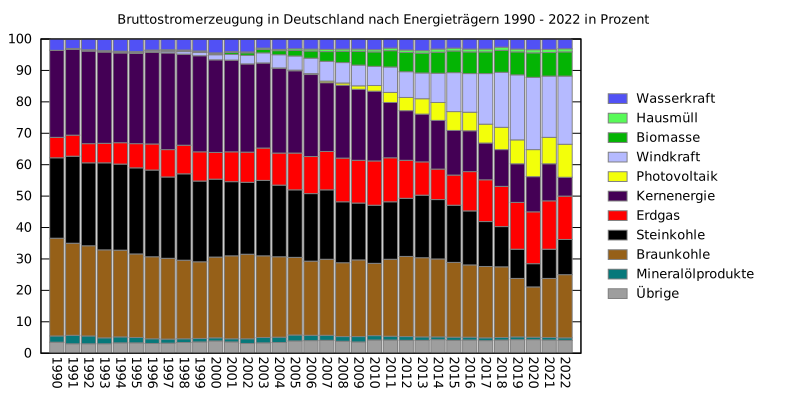

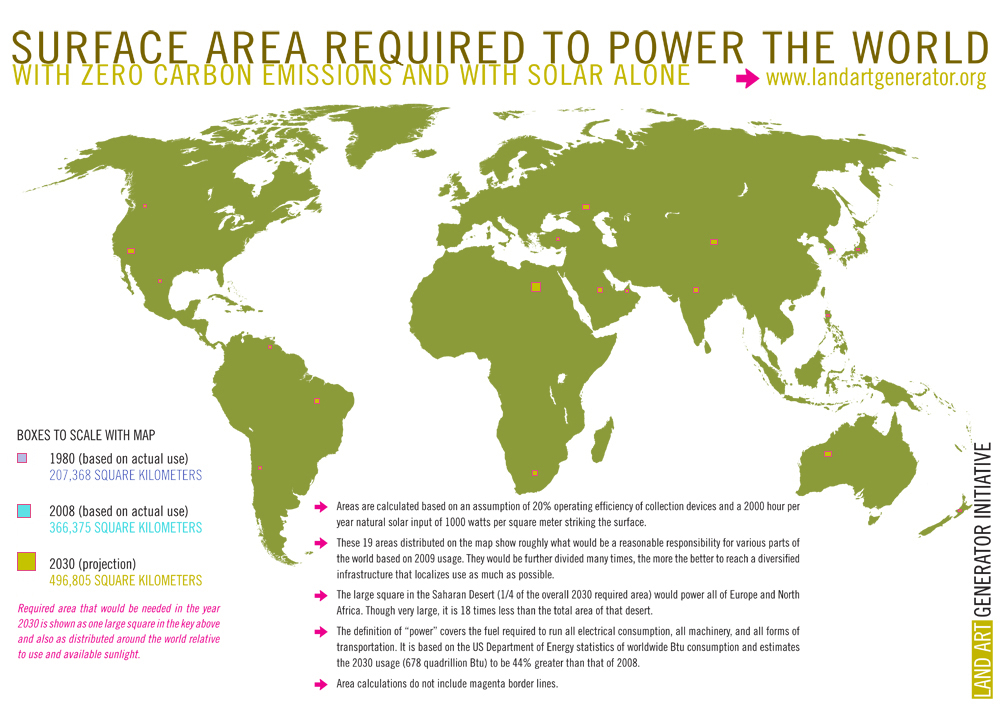
I'll even allow for the high, high likelihood that more people will die installing roof-top solar than will ever die in the lifetime of all nuclear reactors combined. The political capital lost in a reactor accident isn't worth it. The lost of faith in technology, the loss of trust in science. The mass hysteria just isn't worth it.