I live in the region (West Flanders, Belgium) so here are some local stories.
* When my brother in law was a kid, he found an old bomb at the roadside and decided to take it home on his bike, saying things like 'Look what cool stuff I found'. Of course mom panicked and called the deminers. All friends came to look how the dismantling went.
* In fact I know plenty of people finding old grenades and stuff. People die every year messing with them at their kitchen table, even if everybody should know by now not to do that.
* Lots of farms have a heap of old bombs on the terrain. Once a year or so DOVO comes and picks them up.
* Polish people are used a lot as cheap builders and road workers. In general they dont understand Dutch (the local language) or even English. So while people try to warn them not to touch any strange metal things they find on building terrains, the message doesnt come trough (' Know nothing. Talk boss'). Nasty accidents happen as a result.
* A few years ago, an old lady dug up a hand granade from her vegetable garden. So she calls DOVO, the organisation that does the demining. DOVO responds something like no time, call back later. This pissed her off enough to throw the bloody thing in a bucket, drive to dovo, and give the bucket at the reception desk saying ' This is yours'.
While typing this, my wife asks why I'm typing on that nerd site of mine. So now she suggests going to the dunes 2 km from here and taking a photograph if I see one. Sorry guys, Im not messing with old bombs in the dark after the Brussels terrorist attacks, but yes, it's that easy.
Story in my own family: we had some relatives who lived in a village near Ypres. In their living room they had this giant iron stove. When the Germans invaded they buried some cash and jewels under a tile under that stove, and fled to France. After the war they returned to the village, in the hope of retrieving the jewels. However, they were unable to find back the stove, due to the fact that they could no longer locate the house... due to the fact that they could not find back the street. The whole village was literally dust.
Funny one: A nephew of mine bought a house in the region, and started clearing out the mess in the cellar. At the back, behind a fake wall, he found old bottles with a small fortune in DMarks. Unfortunately, the german mark was replaced with a new version after the hyperinflation between the 2 world wars, so it wasnt worth anything anymore. We assume they were left behind by german soldiers in WW1. No idea what he did with them.
I also live in the region. The fact is that the people have come so used to bombs they stopped caring much about it. A lot of people handle the bombs without much care and in fact even the people from DOVO just throw them in the back of the truck and store them in a hangar because the detonation/neutralization machine is broken (at least it used to be a year ago, but probably still is).
For dutch people: here's an already classic video of west-flemish farmers trying to explain to Polish workers they need to run away if they see a bomb: https://www.youtube.com/watch?v=YWD3GqLOTgk
Basically they suffix every Dutch word with -ios so it sounds Polish. The polish workers just nod without understanding a single word.
Always nice to learn new things about your own country :] Though I'm kinda surprised by point 2 (people dying at home) and 4 (road workers dying). I saw 2 in the past (like 20 years ago or so) in the news but does it realy still happen every single year? And I don't recall ever hearing about 4: might be me (I don't read news on a regular basis) or does it not happen often or with only minor injuries or is it deliberatly kept out of the national news?
For 2) : I do programming in the healthcare industries, so I see sometimes the bills for care given to these people. They survive but generally need fake arms and legs. Generally kids who underestimate the danger, and find things in dunes, old bunkers, etc.... I presume some die too, but then I don't get to see the evidence. I think it's like car accidents: So common they don't get reported on anymore unless you start looking for them.
For 4) I hear the storys second hand, and i tried talking to them an dgot nowhere fast, so I can see it happening. I know a few year ago there was a scandal where hurt polish people were silently transported back to poland. In general, they are cheap and work in unsafe ways, and the builders hope like hell the authorities don't catch on, so bad news is hush-hush.
For the fans: Here is a local news article where a bomb was found and cleaned up recently. http://www.hln.be/regio/nieuws-uit-oostende/oesterbank-geeva... I live just above the map so didn't have to evacuate or stay away from the windows. These things still happen every 2 years or so. At this point, everybody stopped caring much.
Hey, this is off topic, but I will be in Belgium for my
first time this November. I'd love to meet up with some folks from "that nerd site" of ours ;)
I'll be there for the Devoxx conference in Antwerp, and probably a bit of time before/after. Contact info is in my profile if anyone's interested in getting together.
>Polish people
Well, that's just lovely. Because it is THAT hard to use google translator and write down "METAL THINGS IN GROUND BAD. CAN GO BOOM BOOM. NO TOUCHY"
I understand your feelings. However,
* farmers in general are pretty conservative about things like computers
* you dont' always know when you hire workers from a temp agency that nobody speaks your language.
* Its only recently that there is GSM internet reception in most fields here.
* Even I, an ITer pure sang of the internet generation, didn't think about this when being confronted with them while doing a small walk around and meeting them unexpectedly.
None of these makes this right, of course. But, I can see how this happens.
It only takes one person to translate the message once and then it can be spread from employer to employer. It really would not be that difficult to get the word out in terms that the workers could understand. I don't see any legitimate excuse for not doing it.
The US dropped more bombs on Laos while fighting the viet cong than the sum of all bombs dropped during WWII. Laos is one of the poorest countries in the world and wasn't directly involved. People are still walking through fields and getting blown up and we don't help them de-mine.
EDIT: I see some upvotes/interest so I want to state a feeling that I have: that we would have never done this if we respected Laotian people or thought of them as our equals. Only by thinking of them as simple poor brown hill folk could something like this happen. If Norway invaded Sweden via Denmark, we would never have treated Denmark the way we treated Laos.
> From 1964 to 1973, as part of the Secret War operation conducted during the Vietnam War, the US military dropped 260 million cluster bombs – about 2.5 million tons of munitions – on Laos over the course of 580,000 bombing missions. This is equivalent to a planeload of bombs being unloaded every eight minutes, 24 hours a day, for nine years – nearly seven bombs for every man, woman and child living in Laos.
> Nearly half of Laos is now contaminated with unexploded ordnances (UXOs), explosive weapons such as bombs, grenades and land mines. Cluster bombs, explosive weapons that work by ejecting hundreds of smaller submunitions over a wide area, make up the majority of UXOs that plague the country. Cluster munitions pose an especially grave danger to civilians, according to specializing in the field of disability, because they are “highly imprecise and indiscriminate” weapons designed to “scatter explosives over swaths of land often hundreds of yards wide.”
> Of the 260 million cluster bombs dropped by the United States, up to 30 percent of them failed to detonate. These bombs were released on targets in a large shell or casing. Each of the casings contained roughly 600 to 700 small bomblets, or “bombies,” as they are often called in Laos.
> There are now close to 78 million unexploded bomblets littering rice fields, villages, school grounds, roads and other populated areas in Laos, hindering development and poverty reduction. More than 34,000 people have been killed or injured by cluster munitions since the bombing ceased in 1973, with close to 300 new casualties in Laos every year. About 40 percent of the accidents result in death and 60 percent of the victims are children. At this time, less than 1 percent of the UXOs have been cleared.
> I want to state a feeling that I have: that we would have never done this if we respected Laotian people or thought of them as our equals. Only by thinking of them as simple poor brown hill folk could something like this happen.
So, in the comment section about an article about how two countries of white people went to war and dropped so many bombs that a century later some areas are still unusable, you are claiming that the only reason a country of white people dropped so many bombs on another country that a century later areas will still be unusable is because... the other country had brown people?
No, it is about context. The same can be said for Iraq - more ordnance dropped there than in all of WW2 and that is just 2003-2010. In WW1 the arms trade was barely started compared to what we have today. The world is at war against the arms trade profiteers but people talk about race instead.
I don't think it's all about race. That was just one of four adjectives that I used. But fundamentally I think they were (and are) viewed as more "different" from us and so naturally we feel less empathy and kinship. I think something like the https://en.wikipedia.org/wiki/My_Lai_Massacre would be less likely to happen in a scenario where US troops are fighting a proxy war in Canada.
The points you make about Iraq, war profiteers, and context are all spot-on and very informative. Thank you.
> Laos is one of the poorest countries in the world and wasn't directly involved.
Laos-the-country wasn't, but Laos-the-geographic-area definitely was. Rightly or wrongly, the US was bombing southern Laos because that's where the North Vietnamese supply channel was. It had nothing to do with the skin colour of the Laotians, and everything to do with the lack of political and military power of Laos.
I imagine a big part of the reason that we don't help them demine is that it's probably not a technically feasible task. I really don't know anything about de-mining or munitions and I don't have a good solution to offer.
In theory it sounds great to pay Laotians to de-mine fields in an organized and systematic manner, thus making quantifiable progress, progressively de-mining, and boosting employment. I don't know if it would work or if it's a realistic goal.
Edit: I found an amazing video of a man disarming a mine that I thought I'd share as well. I assume this is how they do it over there currently. "If you press that, blow up"
As for "use something like this", where "this" is any kind of technology that tries to detonate mines by force/and or grab up in bulk. You need to be very, very certain that you get all mines. Would you let your child play in the section woods with "hardly any mines" in it?
The issue with forcefully exploding mines is that a certain number might be defective, and/or unstable. Maybe the trigger doesn't work well enough - but maybe it can still go off - perhaps the main charge becomes unstable on its own etc.
There's a reason anti-personnel mines and cluster munitions are illegal (well, in/by civilized countries, anyway) - it's really, really hard to de-mine/clear up this stuff.
You mean illegal as in prohibited by the Convention on Cluster Munitions[1]? Signed by all civilized countries of the world, of course. Except for, among others, the U.S., China and Russia.
US assistance for UXO in Laos has been slowly increasing (though some point out it's only a tiny fraction of the amount spent bombing the country in the first place).
Suddenly, all those science-fiction/fantasy stories seem plausible now, about ancient weapons, traps and guardians staying lethally functional for thousands of years..
Many of these stories became popular because of the Egypt archeology.
Many of the early "acheologists" (they were more like tomb raiders, invading egyptian tombs, stealing the contents, and shipping to Europe) died of misterious diseases, or got mad in some way, it is where the "cursed pyramid" trope came from.
Recently it was found out that the culprit for these, was mostly fungus, the fungus locked inside those places over thousands of years, would slowly fill the air with toxic stuff, that then would poison anyone breaking in, with effects ranging from poison-related death/disease, to poison-related brain damage (thus, madness).
Also, losing technology and weapons is not new, India Oral tradition has tales that scientists estimate they were already "mythical" 6000 years ago, and they talk about "giant metal arrows that create pillars of fire and light", "air chariots that shoot other air chariots with light" and "air chariots that fire arrows that follow heat"
Or Atlantis, that was already mythical in ancient Greece (what we know of Atlantis, is about ancient greeks writing about the Atlantis myth... so to them, Atlantis was already a mythical thing).
And of course, people would always stumble into random crap left behind by earlier generations.
For example recently something puzzled many historians, when in germany archeologists found a bronze-age battlefield with traces of having people from all countries in Europe (something kinda bizarre, since until then bronze-age was considered mostly isolationist), with signs of a large scale battle (bizarre because historians thought the population to be too small then, for that happen), and lots of signs of civilisation (advanced clothing and weaponry, including signs of that the soldiers involved were some kind of special forces, having expensive clothes and weapons, multiple scars on their bones, and yet were very strong and healthy).
Or another interesting one, here on HN someone shared recently about the people found dead on tar pits are frequently murdered, not just died there stuck, and research matched ancient roman legends (To the romans, it was a legend already), about how they heard that ancient countries threw prostitutes, adulterers, enemy nobility, and other undesired people into the tar, instead of giving them normal execution and burial.
There is a very cool RPG setting called Numenera [1] (and an upcoming computer game based on it, by some of the guys behind Planescape: Torment [2]) whose premise is more-or-less that there have been several global civilizations on this planet, separated by hundreds of millions of years.
Each one either ascends to the stars or collapses, but they all leave behind remnants that continue to shape the world for those who come after them.
Given the current political and environmental turmoil worldwide, it may not be too far-fetched that we humans of today are but one page in Earth's story. Whatever happens to us, the planet will live on and others may eventually take our place.
> India Oral tradition has tales that scientists estimate they were already "mythical" 6000 years ago, and they talk about "giant metal arrows that create pillars of fire and light", "air chariots that shoot other air chariots with light" and "air chariots that fire arrows that follow heat"
It's in the Indian Vedas, Mahabharata and Ramayana. It's worth picking up copies, they've got planetary colonies, nuclear weapons, hollow earth, even instructions on how to build anti-gravity devices, a lot of the medical science in them is more advanced than we have now, in fact just today the Indian Government announced a multi-million dollar expedition to find a plant mentioned in one of them ( http://medicalxpress.com/news/2016-07-indian-state-life-savi... )
Also I realise this sounds crazy out there, but if you're interested keep an open mind and read them. The actual copies and stay away from research authors like Childress.
That theory strangely fits in with a lot of religious myths quite readily though.
I grew up in a religious household and even as a kid, I couldn't help but draw parallels between current technology or science fiction and religious icons or events, before I even knew the name for that concept.
For example, in Islam the Quran mentions a steed, made of light in some tellings, whose step takes it to the farthest point within its sight.. [1]
A craft that travels at/near the speed of light?
They also have the concept of seven skies, or heavens; could it be seven planets known at the time?
What about the different orders of angels in Christianity, flying beings (again made of light in some versions) each having an increasing number of wings?
And of course there are already adaptations of the story of Atlantis as an alien mothership that crashed into the ocean and eventually sank.
Was a strain of Aspergilus Niger - http://news.nationalgeographic.com/news/2005/05/0506_050506_.... Same kind of mold you find in your kitchen on forgotten fruit, but probably this strain was different enough from ones Europeans had exposure and immunity to that it killed a few mildly immunodepressed explorers and a tourist. I remember even a documentary about some of it... kind of boring though.
Ancient Indian mythology is creepy as fuck though, got to agree - they even mention units of time of sizes like 8.64 billion human years and longer mentioned in scriptures more than 2000 years old... I mean, I imagine they got to that by playing with exponentiation and logarithms for the first time while trippin' on some 'shrooms... but that's still a good creepy basis for some alternate history tales :)
Don't forget about radiation exposure from nuclear weapons (including test bombs here in the US) that will continue to cause cancer deaths among people that are alive today.
This map shows just how many people were exposed to fallout from a single nuclear test:
* statistically significant cancer rate increases are only seen when exposure happened under the age of 20
* cancer risk peaked 15 years after exposure
* the 30-year survival rate for related thyroid cancer is 90%
(don't worry about drinking milk these days)
So if you were a kid at the time, it happened to rain in the short time when atmospheric I-131 concentration was high after a test, and you drank a lot of milk... you had a noticeably higher chance of a fairly low risk cancer around 1980. A real risk to be sure, testing was stopped for a reason, but let's not blow it out of proportion or claim millions of people are still at risk.
And don't forget to notice that your risk of dying in a war is drastically lower as a direct result of these weapons. A direct result of their creation has resulted in relative peace unprecedented in the history of human civilization. War between major powers now seems impossible and old fashioned, though unfounded fear of these weapons was used for decades after WWII as an inappropriate game to control populations and fight-out conflicts between states that could no longer actually go to war.
Open air nuke testing surely produced a generation of dairy cow-keeping farm children with impaired thyroid function. You've pointed out the short half-life of I-131 and that fact, combined with the typical processing times for fresh milk, means that the milk city kids drank was not particularly dangerous. However, the time between our cows eating pasture grass and the milk on my cereal was on the order of two days. Low rates of thyroid cancer and the typically excellent outcomes of care for that should not give the impression that the overall impact was inconsequential. Both I and my sibling have unexplained (i.e. no positive antibody tests) hypothyroidism. Also, I had a super-low draft number for Vietnam, so all of that testing didn't really lower my risk of dying in a war, right?
Vietnam was peanuts compared to WWII, and what nukes did was eliminate the possibility of major wars between advanced states. If nukes were developed at different times, the worldwide war outcomes could have been much much much worse.
The most serious fallout damage from a US test was Castle Bravo[1], which had a yield roughly triple the predicted yield, so the damage from fallout was much worse than they had originally predicted. Most of the other tests did not cause significant increases to cancer risk for all but those very close to the tests
While true, that doesn't account for the many millions of older people who were exposed to much higher levels of radiation closer to the tests. Many of whom will die of cancers caused by that higher level of exposure.
Contamination from nuclear weapons is not a binary thing. Basically the worst form of contamination is your breathe air with radioactive particles or eat veggies growing in radioactively contaminated soil. Depending on your level of exposure the effects vary widely so pretending cancer is very likely is not really true.
The lesson we can learn from the poisoned battlefields of WWI can be applied as a counter-argument to anyone saying we should nuke something - consider not only the short term implications of the nuke, but the long term effect on local and global environments.
But both issues relate to death or injury within a larger population. The chance of getting killed by most risks is very small, but the magnitude of the impact is obviously massive. The end result (death) is the same.
It is reasonable to feel aggrieved about risk you have not consented to simply because it is an injustice. Perhaps the injustice won't be visited upon me in particular but that is not the point.
You can look up your own source. If you have to ask the question then you're not familiar with the subject.
A small distance away from 'ground zero' of the nuclear test sites there is basically zero difference in background radiation from elsewhere in the US in 2016.
This is from Norway - they were close to the very large and frankly unsafe tests the Russians did. It claims some health-hazard, but then admit that the effective exposure of the population from all that testing was the equivalent of 2 medical x-rays. Not entirely benign, but not a massive health hazard either - and this is back in the 1950's right after the testing was done.
The lingering effects from nuclear testing in SE USA are really, really small and from a health perspective, completely irrelevant.
An airline pilot will be exposed to significantly more radiation than anyone living near the test sites.
I mentioned 'continental testing' because most testing in the US is not 'high yield'. The tests they did out in the Pacific were orders of magnitude greater, and there are almost zero health effects for anyone but the surrounding animals, granted the effects on sea life is not immaterial.
In the grand scheme of things, nuclear tests are a non-starter in terms of public health. Nothing has come of it.
Nuclear energy is a little bit of a different story, but even there there is a lot of hysteria and misinformation.
> If you have to ask the question then you're not familiar with the subject.
Well, yes, obviously. That's why I asked.
> This is from Norway - they were close to the very large and frankly unsafe tests the Russians did. It claims some health-hazard, but then admit that the effective exposure of the population from all that testing was the equivalent of 2 medical x-rays.
That is such a misrepresentation that you are basically lying. The article says the effective exposure was equivalent to sixty X-ray mammograms, or two whole-body CT scans. A single CT scan has an estimated 1/2000 chance of causing a fatal cancer[1], a reasonable risk if it's used to diagnose a much more dangerous existing condition. The population of Norway in 1956 was 3,460,000--that means ~3,500 deaths from the equivalent of two unnecessary CT scans, in Norway alone.
Additionally, from your article, "Exposure to nuclear radiation during months three and four of pregnancy [due to fallout over Norway, 1956-1966] was associated with reduced educational attainment, high school completion, and adult earnings. Such exposures were also associated with reduced IQ scores among boys at 18 years of age. A one standard deviation increase in ground exposure reduced high school completion by about 1 percentage-point among men, and by about 2 percentage points among women."
> The tests they did out in the Pacific were orders of magnitude greater, and there are almost zero health effects for anyone but the surrounding animals
This is also a complete lie. Read any account of Castle Bravo alone, and the radiation poisoning and birth defects inflicted on the inhabitants of the Marshall Islands, which the US government covered up for decades.
You are clearly and intentionally being misleading. I'm kind of embarrassed for you.
> The exposure of the Norwegians was 2 medical xrays
A whole body CT scan delivers way significantly more radiation than a typical "medical xrays".
"The authors cite estimates that Norwegians in the hardest-hit areas were exposed to an annual radiation dose equivalent to about twice the dose one would receive from a whole-body computed tomography (CT) scan, and about 60 times the external dose from an X-ray mammogram."
Come on. That's not the same as getting an X Ray for a broken bone. This is a 1/1000 chance of fatal cancer directly from the radiation exposure.
Spare me your outrage. You used deliberately vague language to make a dangerous procedure used only in cases of pressing need sound like something safe and routine. This is playground lawyer stuff. You're not fooling anyone.
> Norwegian exposure was well within regular medical norms = fact.
No, now you're straight-up lying again. Norwegian exposure was double that of a dangerous and uncommon medical procedure.
And then you're completely ignoring my point about the Castle Bravo disaster and cover-up, and deploying argument-by-distraction. (Car crash deaths are bad! Therefore, cancer deaths don't matter!)
Let's get back to the original point. You said: "follow on health effects from nuclear testing on the continental USA are negligible. You're more at risk getting an x-ray at the dentists office." I clearly can't trust your unsourced statements on this subject, so I really would like to see a credible source, please.
"having the world taken over by a ruthless Empire that has invaded an occupied dozens of nations, and actively overthrowing states to install vassal dictators?"
Wait, isn't this still happening or are you referring to the Soviet Union?
But his point, modern warfare saving us from the unfathomable horrors of the World Wars, is well worth even the true cost of the fallout from the nuclear testing.
If we're considering the potential cost of wars that didn't happen, we also need to consider the possibility for the Cold War to have escalated into nuclear Armageddon.
We’re still evacuating entire cities every week because some new WWII ordnance was found, and has to be defused.
Or you learn that they found some 500lbs bomb half a meter below your school’s football field, with an unstable system that could explode every minute.
You did not happen to go across the border to Bosnia did you? Even places that have been cleaned are bordered by places that are mined (villages in the north from my personal experience) meaning that if you are kicking the ball around in a back yard and it goes over the fence, don't go looking for it.
Lots of areas were used to dump surplus munitions at the end of both world wars. North Sea, Irish Sea[1], Baltic[2], Gulf of Mexico[3], and many other places.
In the case of the Irish Sea, which was the main MoD dump since around 1920, 14,600 tons of Phosgene, and by 1949 the RAF alone had dumped 137,000 tons. It ceased being used in 1973. [1]
In the Baltic fishermen catch upto 3 tons of munitions each year.
BP turned up quite bit of unexploded ordnance while exploring for their now infamous Gulf of Mexico rig.
The worst-written software always lives the longest. Maintainable, modular software, by definition, is easy to change and swap out. So the evolutionary forces favor awful spaghetti codebases that everyone is too afraid to touch.
So then the solution would be true natural selection and self-evolving software. As long as external entities (programmers) are tasked with killing off the unfit code, selection is going to be pretty bad.
I can say that emacs will survive till the end of the keyboard era. It's not tied to any OS, it's portable and is a general purpose programmable programmer's tool. It's the archetype of long living software already.
This is one of the reasons for telling everyone: if you are in a foreign country, holding a gun and shooting at someone, then please just stop. If you are forced to not stop by your commanding officer, then miss and shoot as little as possible. Fighting is not the solution.
This advice probably sounds a lot better when you're not in a foreign country being shot at. Shot at people being lead by a dictator who wants to take over your country.
I specifically excluded defending your own country and/or home. Everyone certainly should be allowed to that.
My point is - we as a society should be actively distilling in everyone the reverse of the results of the stanford prison study - you are responsible for your actions, even if someone else tells you it's ok or even orders you. Because in the end, as the attacker, you always have a choice, when it's just you and someone else.
In the end it's just a person against another person, just because someone told them that the other guy is bad. Everyone should be taught to question that. Probably he/she is just as scared as you are.
I recently watched "Lessons of Darkness" (documentary by Werner Hertzog) again and the scene where a woman describes soldiers coming into her home and stepping on the head of her infant was just haunting, because I could not stop thinking of, why would anyone do that. In that moment, it's not your superior ordering you - it's you making the decision to be the terrible torturer.
This. "Blueprint for Armageddon" [0] is amazing. He spends a good bit of time talking about what trench warfare was really like. The horror people there experienced is just nearly unimaginable.
The entire length of the series is nearly 24 hours, but it is so worth it. Even if you're not a fan of history, check it out because Dan weaves a masterful true story that keeps you on the edge of your seat for the entire 24 hours.
Absolutely 100% agree. Carlin, doesn't describe himself as a historian, but he is an amazing story teller.
I'm finishing the last episode right now. Among the topics he covered so far:
- The murder of Franz Ferdinand and the mentality of the Serbian assassins. Carlin has a way of explaining how terribly coincidental everything was: the first assassin failing, the couple escaping and complaining at the police station about their treatment, the driver taking the wrong turn out of the city, the car backfiring near where a second assassin happened to be standing...
- Carlin does a great job explaining the new German nationalism and the status quo before the war. He explains how carefully Bismarck made a web of diplomatic relations to protect Germany against a two-front war that his successors immediately tore down.
- Stories of German efficiency in the initial invasion of Belgium and the exact moments when people realized that this was a different type of war. The French were still wearing white gloves and the Germans issued everyone gray khakis.
- Descriptions of how naval warfare was changing and how most battleships, even those made just ten years ago, became obsolete. One great story is how the British original planned to use these now obsolete ships against the Turks in Gallipolli but the admirals were too hesitant to move quickly and risk the ships because they had an emotional connection to them! Most of those admirals served as junior officers on those ships!
- How unspeakably terrible Verdun, the Somme, the Marne and Ypres were. Ypres, for example, Carlingoes into detail about men falling off of duckboards and drowning in the mud. Most of the time, the mud was so thick and the equipment so heavy that their platoon members couldn't help them or they'd risk drowning themselves. So they'd stay up at night, hearing the survivors slowly sink...
There's so many other stories I can't remember. It's a 24 hour series. Can't recommend it enough.
Carlin is what I recommend to people who don't like history, before I get them into The Great Courses (which are amazing, if pricey when you're not on Audible). I have a catalogue of minor beefs with the way he presents some stuff, but he's always up-front that he's not a historian (and I appreciate that acknowledgement) and they haven't stopped me from happily paying for everything he's done for Hardcore History.
It's a good listen, and it's worth your time if you haven't tried his stuff.
I've never heard of Great Courses before, thanks for the recommendation. Do you have any recommendations for other audio entertainment/learning while you're here?
Great series as always, though I have to say I feel like it felt somewhat rushed at the end. i suspect that he did not want to do another 5-hour last part, like his series on the roman republic ended up having.
If you want more have you listened to some of his catalog? There's over 50 episodes. If you liked the WWI one check out the Ghosts of the Ostfront on the Eastern Front of the second world war, it's thematically similar.
During WW1, the term "Shell Shock" showed up, that later got changed to PTSD, when people started to think it had to do with psychology, rather than physiology (when Shell Shock first showed up, it was blamed on constant explosions hurting people).
Then some days ago we had here on HN frontpage, research that shows that PTSD, even in more recent conflicts, IS shellshock, that the air pressure of the explosions and the shaking actually damage the brain, and cause inflammations that cause PTSD symptoms.
I wonder then, how bad it was for the WW1 people, those that were near the concentrated fire of 150 explosions per hour nearby, and survived, maybe some of them wished they had been hit instead of surviving...
I was thinking the same thing when I read that article. The shell shock victims of world war one, do not look like PTSD victims today. They look physically brain damaged. Check out some of these videos of shell shock victims, the symptoms are very physical and severe: https://www.youtube.com/watch?v=cc7ehb8agWY
What about PTSD developed in non-combat zones? Or people who develop it and are not even in war zones? Do you know if there is any information on that?
Not trying to start a flame war. Just interested in the PTSD thing itself.
Pretty much any environment that causes your body to frequently flood with cortisol is a breeding ground for PTSD. The brain interprets the constant threats to its well-being as a signal to rewire itself to be trigger-happy on the flight-or-fight response to conditions that most others would not react as intensely to.
Examples: childhood poverty; abusive/neglectful parents; societal discrimination (especially if violence or a heightened possibility is a factor).
There is so much about PTSD we don't understand (or more accurately there is very little we do understand about it) that your claims are simply not true.
We aren't sure what causes PTSD, we don't understand what physiological, neurological or psychological conditions are needed for "PTSD" to evolve.
As far as cortisol goes well it is again not that simple, both elevated and lowered cortisol levels have been recorded in PTSD cases which is why it's still debated if lower or higher levels of cortisol cause or are a symptom or an indicator of PTSD, and since cortisol levels are only usually tested in cases where the person has already been or being diagnosed the correlation is even harder to identify, especially when considering that both lowered and elevated levels of cortisol can be recorded in nominal people and in people suffering from other mental disorders.
PTSD is just another placeholder akin to "shell shock" and the later "combat fatigue", in the end it would be an umbrella of various disorders with various preconditions and causes expressing themselves in a similar fashion.
One thing I've noticed is that there's a very severe bias in culture against PTSD. There's this idea that PTSD should be a "really big deal" and it only exists in the "goes to 11" mode and nothing else, that it has to be "earned" through truly great trauma. PTSD that exists from more minor things (such as childhood emotional trauma that didn't involve physical violence) is often ignored and sidelined. Consider, for example, the character of Clarice from The Silence of the Lambs. The event that gave that movie its name likely gave Clarice lasting PTSD that she had not overcome even as an adult. Her PTSD wasn't as life damaging as a veteran incapable of holding a job or staying sober, she obviously managed to prevent it from impacting her daily life too powerfully, but it still existed.
There are tons of people walking around with similar or even more "minor" forms of PTSD. And it's causing them stress and giving them potentially harmful behaviors like hypervigillance. Many of them will go through their lives not knowing or even recognizing the possibility that they're experiencing PTSD, because society says PTSD has to be a 500 pound gorilla, and a 2 pound monkey on your back is not even worth worrying about.
Also, there's apparently evidence that prior trauma puts you at greater risk of PTSD from subsequent trauma. Which helps explain why different people in more or less the same situation can have very different responses, because of their different experiences earlier in life.
I suspect we'll find that there's a difference between what was called shell shock (brain damage from blast waves) and PTSD (psychological trauma), and that it's possible to suffer from one or the other, or both.
(NOTE: This is for some of what goes under the umbrella term "PTSD", so of course not for every single diagnosis. Only the people exposed to such shock waves.)
Shell Shock wasn't about brain damage it's what it just was called because it was a convenient name, later in Korea it was called combat fatigue and after vietnam we had PTSD.
PTSD cases have been recorded in cases with or without physical trauma including TBI, and not everyone gets it even under the same circumstances.
You can have a platoon of troops on the same deployment, going through exactly the same stuff day in and day out but not everyone would develop PTSD.
I think there are probably /some/ cases called PTSD which are actually physical injury from blasts, that have been conflated with other cases where people have lasting psychological damage after ongoing trauma.
"Shell shock" and "PTSD", like cancer, are symptoms clusters having possibly multiple causal factors, some compounded, some independent.
The YouTube video posted downstream in this thread, at about 7 minutes, touches on this -- both physical and psychological stresses would result in symptoms described as "shell shock".
Modern PTSD similarly describes a set of symptoms which may result from physical or psychological stresses. There was a commenter in the earlier thread who seemed to have a distinct inability to grasp this even when presented with NIMH and Mayo Clinic definitions of the condition:
My own lay sense is that the brain is a complex organ, and may well exhibit multiple modes of breakdown, several of which express similar end results. Whether it's repeat psychological strain or physiological disruption, or chemical or idiopathic causes, failure of proper neural function would seem likely to result in similar types of symptoms: shaking, loss of speech or senses, decline in mental function, paralysis.
PTSD is, and always has been, a thing of its own. But for a very long time people with explosive blast traumatic brain injury ("shell shock") were misdiagnosed as having only PTSD. In all likelihood many people with "shell shock" that has been misdiagnosed as PTSD alone also actually have PTSD as well.
The major symptoms of "shell shock" include disorientation, weakness or numbness in extremities, dizziness, memory problems, irritability, confusion, etc. Typical major symptoms of PTSD include reliving the event in your mind (such as through "intrusive imagery"), hyperarousal, hypervigillance, and emotional distress (especially negative changes in thinking, ideals, mood, etc.). There is some overlap because the stress aspect will make people irritable and distressed. Because all of these things are filtered through personalities and cognition it can be difficult to suss out the underlying true symptoms, especially if someone doesn't want to share their feelings.
But you can have both. And the fact that many soldiers who have been the victims of blast trauma almost certainly will have some degree of PTSD as well (due to the likelihood that the blast was a major traumatic incident in their life, possibly involving the death or grievous injury of someone close to them) has made it all the more difficult to suss out the particular role of "shell shock". I suspect that a lot of the research into traumatic brain injury in boxing and football has aided the discovery (or re-discovery) of "shell shock" greatly.
There was an pretty stellar coverage of the topic in the epic The Great War documentary from PBS sometime back. I can't find the video but I hit the 3rd episode title Mutiny that looks like its the one. Watching this as a young teen really haunted me back then, they created a whole ambiance to the film that still gives me chills.
http://www.pbs.org/greatwar/chapters/ch3_mutiny.html
I feel that its probable that the symptoms that we link to PTSD today (and shell shock of the past) can arise from a variety of different stimuli. Maybe as we study in closer, we may find subtle differences in the exact responses due to actual physical trauma, versus things caused by psychological factors. The physiological and psychological symptoms and causes could all be linked in a this brutally complex web of causal factors and feedback cycles.
In the hopefully not too distant future, when humanity grows out of its barbaric infancy and we cease to kill each other over petty disputes a long term global renewal project will commence.
We will use all the means at our disposal to clean up and undo the damage we have done to our home.
Swarms of autonomous robots, and possibly nanites will replenish the soil, water and air. We will restore coastlines and replant forests.
Wiser, and ashamed of our primitive past, we will rebuild a pristine paradise fitting of a spacefaring civilization.
Responding to violence with violence may have been the right response in 1914 or in 1939. It may no longer be the right response in 2016. I find it disheartening that in the current time the idea of pacifism seems to be dead and buried and replaced by this moral defeatism that man is doomed to behave like an animal for the remainder of history. Even from supposedly liberal politicians like Obama or Hollande we hear nothing but that same old primitive macho-ape language in response to terrorism "we will hunt down... we will destroy... we will eradicate". I look forward to the day that a powerful nation decides that it will no longer kill for any reason whatsoever.
"Those who have no swords can still die on them" - Tolkein
Responding to violence aimed at destroying or enslaving your society with enough violence to prevent it is kind of required by any society that does not have a death wish.
I can choose to respond with pacifism to violence directed at me. I do not have the right to choose that for anyone else, nor for my nation.
None of the actors in WWI were set on destroying or enslaving entire societies within Europe. The losers would have been forced to live under a different political system, not been subjected to genocide.
Would it really have mattered to the common man? Maybe not. did it matter to the common man that he or his sons got sent away to war to die? Definitely.
Pacifism can be a sensible policy sometimes. Some wars aren't worth fighting, even if you "win" or force a stalemate.
> None of the actors in WWI were set on destroying or enslaving entire societies within Europe.
This is not entirely true. The term "war of attrition" came from WWI, and it was specifically referring to depopulating the opponent's country by killing all the males.
The term "War of attrition" came from WWI because after the first three months of hostilities, everyone realized that the only way one side would win, is for all the people on the other side to be dead. Or for the United States to join the conflict.
The Kaiser wasn't a bloodthristy genocidal maniac, and an unconditional surrender from the Entente would not have been the only outcome of an early peace. War reparations, and, as per most European wars, small territorial/colonial concessions would have been the far more likely outcome.
What really was at stake was national pride. For the ruling class, that was one thing that they would not surrender. The common man should not have given a rat's ass about.
The context to my comment is AnimalMuppet's hyperbolic reply that pacifism in the face of the enemy would somehow result in the destruction or enslavement of your whole society.
I'm pointing out that if say the French had surrendered to the Germans early in WWI there's no historical evidence that that would have been the case, and likely countless lives would have been saved.
The destruction of the state is not synonymous with the destruction of the people in it. Most wars only seek to abolish state power, not the people that make up those states.
So many things would have changed for the better in that war if the various actors had drawn clear lines in the sand in advance.
E.g. the Germans believed the British wouldn't go to war with them over Belgium, the British knew Belgium was under threat in advance, but wouldn't draw a clear line in the sand telling the Germans that violating Belgium was an act of war.
Likely doing that would have kept Britain out of the war entirely since Germany would have attacked France directly.
True. But, while you can make that claim about WWI, you can't about WWII. Worse, it might have appeared that you could have made that claim about WWII at the beginning of it...
> Responding to violence with violence may have been the right response in 1914
Responding with violence actually is the only reason why there was WWI. Also every party that took part in the war saw it as an opportunity to further their own interests.
Yeah, it's pretty asinine to imagine that "war is bad" will mean that disputes which lead men to die for the purpose of killing other men will just go away.
Doubly asinine to link that old utopian thought to mystical singularity nanobot swarms etc...
PS: nanobot swarms would make a terrifyingly effective military weapon.
> In the hopefully not too distant future, when humanity grows out of its barbaric infancy and we cease to kill each other over petty disputes a long term global renewal project will commence.
What could cause this change?
What could be different tomorrow compared to the past many thousands of years of wars that will stop wars from happening?
War is pretty simple in the general sense. Limited resources (land being the main one), and selfish people. We have more technology today, yes, but we let the population explode so land resources are still quite limited.
If you're expecting people to just 'wake up' I'm afraid that wont happen now for the same reasons it did not happen in the past.
Cultures ebb and flow. You cannot expect anti-selfishness culture to be a forever-lasting deterrent to war.
I think the change will come through total surveillance, mutually assured destruction for nation states and genetic engineering for asymmetric threats.
When technology advances such that individuals have the power to cause massive destruction in lone wolf attacks, and science advances to the point where we have the ability, we will have the choice of whether or not we will allow traits such as psychopathy to continue in the gene pool or to be edited out.
We will come to a point where we will just not be able to tolerate the destructive power of anti social individuals.
I think we will edit out the sadistic, dominating and anti social parts of our nature or we will become extinct.
What would be required to remove heavy metals from the soil? It would take a massive amount of work and I'm not sure if it will ever be worth it economically.
Mushrooms. I'm on mobile and can't find a source at the moment but there has been some remediation work done using fungi to soak up heavy metal contamination.
It isn't just the metal that is polluting the soil. Apparently tones of very toxic compound have been in the mix, like arsenic. And this would be only the depolluting phase, as the devastation has torn the ground so much that its composition has dramatically changed at places.
Perhaps this is the right crowd to ask. I've been looking for a particular article on WW I for a couple decades now, but I haven't been able to find it online. It's an Encyclopedia Britannica article which I think is entitled "War", although that may not be exact. It's from one of the editions published in the 1930's, which would make it the 14th Edition. I owned the set in hard copy for a while, but had to give it away when I moved.
The article one of the most poignant things I've ever read. The tone was essentially "Finally we've figured out how nations can live together in peace and harmony, and never again will humans engage in a war of that magnitude". Crucially, this article was from one of the editions published after World War I, and shortly before World War II. Does this sound familiar to anyone?
I've often wanted to reread that the article and ponder how applicable it is to the present. Does anyone happen to have a copy? The 11th Edition is available online from archive.org, but that's too early. And I presume it was revised quickly in any editions printed after World War Two.
Most of the landmines in Cambodia were put there by the Khmer Rouge, not the Americans.
When I was in Cambodia, I saw the results of what landmines did, they're fucking horrific. They aren't designed to kill someone, but to only blow their foot off and maim them.
I believe that they're one of the most barbaric weapons of war. It's a damn shame that the USA, China, and Russia won't ratify the Ottawa Convention.
I don't think it's fair to list the US on that list in the same sense as China and Russia.
The US has declared that it's going to abide by the treaty except on the Korean peninsula, which is entirely about the mines in the Korean DMZ meant to stop North Korean tanks from rolling in.
That's not comparable to the general use of anti-personnel landmines in warfare. It's a specific cordoned off area with big signs surrounding it saying "enter here and die".
It would increase sales too. Seems that would heighten interest. How would the mine know when to start degrading through? Having that happen during storage would be unfortunate.
Me too, good point. However I understand that some explosives degrade in such a way that they get more unstable rather than less, so the problems may remain.
Reminded me of the Takata airbag recall. From this article:
"A propellant made with ammonium nitrate would swell and shrink with temperature changes, and eventually the tablet would break down into powder. Water and humidity would speed the process. Powder burns more quickly than a tablet, so an air bag whose propellant had crumbled would be likely to deploy too aggressively."
These are not fair comparisons, because you are talking about bombs dropped from the air, whereas WW1 was about shells fired from artillery. According to wikipedia [1], about 1 ton of explosives was fired per square meter of combat territory. If the Zone Rouge originally covered 460 square miles (= 1200 km^2 = 1.2 billion m^2), this works out to 1.2 x 10^9 tons of explosives (can that be really true? wow! [2]). In Vietnam, "only" 7.6 million tons were dropped from the air. That's a few orders of magnitude less.
2. My numbers don't add up. I just saw a BBC story about WW1 industrial production (tl;dr: allies vastly outproduced the central powers by more than 2 to 1). There's a graph showing that Germany produced 400,000 tons of explosives from 1914 to 1917. Four times that amount is less than 2 million tons, so the number in wikipedia (1 ton per m^2) is definitely wrong.
There's no reason gravel mines have to weigh that much. Those 20g include 9g of explosive. A .22 short cartridge still contains enough explosive to kill you if it's aimed in the right place, but that's 250mg of black powder, which is half as energy-dense much less brisant than modern explosives.
So you could easily imagine "mines" that were a tenth of that size, 2g, with an embedded microcontroller to trigger them under arbitrary conditions, and enough explosive to maim you if you picked them up or stepped on them. A 1kg-payload weather balloon could carry 500 such "mines".
It's going to be difficult to keep having civilization.
Sobering thought to think that 65 square miles will take 300 years (minimum) to clean of threats and contamination. I would quibble with the characterization of dead people and animals as "contamination" as there are have been people and animals dying in great numbers over the millenia in various spots, but the concentrations of arsenic and lead are different.
Given what I've seen of strip mines from the air, I wonder how long it would take to process 100' of material from 65 square miles (~17,000 hectare) through a refining process. Could you just decide that what ever plant and animal life and structures would be forfeit and just dig it out, process it, and put it back? How long once everything had been processed might you expect it to take for the forest to regrow, certainly within 100 years you'd have a solid regrowth. So can you pull 150 to 200 years off the restoration time ?
I imagine the explosive material complicates things immensely. I'm not an expert on strip mines but it seems like they just dig up and grind everything indiscriminately and process it later. This would obviously be a bad strategy when explosives are involved.
It does, but not insanely so. WW I explosives were much less energetic than modern munitions. A modern MRAP[1] could drive around all day and be fine. The gas cannisters are an issue but manageable as well. The economic choice in re-mediating battlefields has been to minimize economic harm (tearing up the landscape). But the question of 300 years of non-useful land? Taken all at once does it make more sense to pay the price now.
You can think of it like a mortgage with interest, if you pay it off slowly over time it takes less money per month, but the total money over time is large. If you pay off the mortgage it takes a lot of money but the overall cost is lower. What if you do the modern calculus of costing the land use, versus the cost of complete remediation more quickly.
Let me put it into a modern context. If you took 65 square miles and turned it into a city with the density somewhere between Manhattan and Aleppo, you could settle the entire middle eastern diaspora on land that is currently unused. This is fertile land which once had 9 villages. The diaspora is filled with working age people you could recruit as labor for the effort. How much would that cost? Would that be more or less than the cost of refugee programs and border management and social programs for the unemployed immigrants?
I only ask the question if anyone thinks about it this way, I don't think they do.
To continue the mortgage example, you could also just not buy a house and put that money into a stock index...
The land may not be usable for another few hundred years, but what is the opportunity cost of all that upfront remediation? It's big. That's capital that can be invested in other things.
Some land in the middle of nowhere is not really that valuable. The productivity of such rural land is low. This is why no one has bought up that land and remediated it in the first place.
> How much would that cost? Would that be more or less than the cost of refugee programs and border management and social programs for the unemployed immigrants?
That 65sqm could be anywhere; there's tons of un-mined land in Europe. It's a whole continent. There is no necessary connection to remediation. If you can't make such a 'diaspora city' work economically on unmined land, you can't make it work on mined land either.
It's a fair point that the cost computation is imprecise. My question was more to the one of whether or not someone in France was thinking about it in those sorts of terms. Or put another way, would France lease it to me for 900 years for 1 euro with the provision that I ensure that nobody is endangered by inadvertently going into the area?
The big difference is that artillery shells are a lot more powerful than land mines, and some of those shells have mustard gas. Using a machine of some sort is a good idea but I bet it wouldn't work the same as the minefield sweeper at all.
There are also the mines that were placed to destroy trenches. Truly colossal quantities of explosives that were placed at the end of tunnels. Not all were exploded.
Yes, these are mines, built by miners (the people that dig tunnels to extract minerals). During the war, they dug mines under enemy lines and filled them with tons of explosives. Not all were used and the location of some unused ones has been lost [1]. One of them blew up from a lightning strike in 1955[2].
As we reduce our coal use, the United States has a lot of absolutely enormous strip mining equipment going surplus. An obsolete 1960's era shovel moves 80m^3 in a scoop and that scoop is WW-1 era bomb proof for all practical purposes, say you want to dig down 4 meters, thats 20m^2 cleared per scoop. About 2 million scoops to clear a square mile. That one shovel should be able to pick up and sift a square mile of Europe in about 2 years. Granted, some of it will need to be run through an incinerator as well and you'd have the same environmental result as a used strip mine, but you can farm that and a square mile of France or Belgium should have resale value.
Edit: The German bucketwheel excavators like the Bagger 293 might do it faster.
As bad as things are in the red zone environmentally, they aren't as bad as having been strip mined, no? Except for all the stuff that wants to explode...
I wonder what the biggest ordinance in the ground is. Armorning some giant bulldozers (https://en.wikipedia.org/wiki/Komatsu_D575A) presumably would not do the trick, or they'd be doing it already.
Individual shells probably aren't that powerful but there are also absolutely huge explosives at the end of tunnels which were intended to be exploded and destroy enemy trenches. Googling brings up this article about a 50,000lb tunnel bomb under a field in Belgium: http://rense.com/general47/50000lbWW1bomb.htm
Given that armored IDF Caterpillar D9s can survive 500-1000 pound IEDs, which is larger than the explosive charge in any WWI artillery shell, getting mine clearing machines to survive isn't the problem. Finding said shells, which are dug deep into soggy ground, is a bigger problem.
I saw that number too. But it's crazy wrong. A square mile has 2.5 million m^2, and I don't think the combatant nations produced 2.5 million tons of explosives altogether during the whole war. About 7 million tons (!!!) were dropped from the air during the Vietnam war. One ton per m^2 works out to 1.2 billion tons over the Zone Rouge that the article talks about. That just can't be right.
>I don't think the combatant nations produced 2.5 million tons of explosives altogether during the whole war. About 7 million tons (!!!) were dropped from the air during the Vietnam war.
I'm having trouble finding a reference, but I don't find 2.5 million tons unbelievable. The comparison to Vietnam is silly because that was a much smaller and different war, and aircraft have limited weight capacity.
It's said that some artillery bombardments in WWI were called drum fire because it sounded like a drum roll. During Verdun there was so much artillery that it's said you couldn't distinguish the individual explosions, it was just a load continuous roar that went on for many hours. Perhaps that battlefield is where the statistic comes from.
They were going through tens of thousands of shells a day and were quickly running out after a few weeks in. Many factories were converted or built to produce explosives. Dozens of trains were built to transport them to the front lines where they were fired continuously for 4 years. The scale and duration of the war was just insane.
I think you are misreading the OP. 2.5 million tons is the amount that would be required to cover a single square mile at 1 ton per square meter. Since the Zone Rouge is many square miles, it would require 1.2 billion tons of explosive for the 1 ton per square meter figure to be correct.
"I don't think the combatant nations produced 2.5 million tons of explosives altogether during the whole war" should be read as "While 2.5 million tons for the entire war might be plausible, 500 times that amount for a single front is clearly an error". My guess would be that someone along the way confused "acre" or "hectare" with "square meter".
> Great Britain, for example, stepped up production of powder and explosives from 50,000 tons in 1914 to over 1,860,000 tons in 1917
http://www.bbc.com/news/magazine-17011607 has a graph of the British and German explosives production during the war years. It looks like about 625,000 tons, with 285,000 by Great Britain.
I have better feelings about http://rsnr.royalsocietypublishing.org/content/68/2/171 ("Lord Justice of Appeal John Fletcher Moulton and explosives production in World War I: ‘the mathematical mind triumphant’"). Figure 3 shows Great Britain manufactured about 340,000 tons of high explosives, and 400,000 tons of propellant. (Rough eyeball numbers.) But that gives only about 350,000 tons for the year 1917, compared to the 1,860,000 tons earlier.
I can believe 2.5M tons produced by all sides during the war. Barely.
I can't believe that would all be on a single square mile. That would be equivalent, after all, to a 2.5MT nuke, or a Little Boy/Hiroshima-sized bomb equivalent every day for 3-4 months.
The original source was written by a journalist with (presumably) no military, science or engineering background, so "one tonne of explosives" probably means one tonne of artillery shells, most of which is steel. Still, 1.2 billion tons seems excessive, since that's the equivalent of China's entire production of steel in 2015, or 40 straight years of production for 1914 Germany.
Jesus christ, that dude was standing next to three shells that were as big as him. They were really launching artillery that large? What kind of power did those shells have? How'd they launch them? I always thought of the artillery bombardments as similar to modern mortars.
Looks like a Big Bertha shell [1]. Those larger shells were fired by special-purpose guns built in very small numbers (only 12 Berthas were ever built), used to break sieges or against particularly strong front-line fortifications - for example, Big Bertha was first used in action against the Liege fortifications during the drive through Belgium.
An even taller (but lighter) shell was fired by the Long Max [2] converted battleship guns.
The majority of the bombardment was carried out by 75-85mm guns, like for example [3]. Their shells were about half the caliber, and a quarter the mass, of modern 155mm howitzer ammunition, but still twice the mass of modern light infantry mortar shells.
Powerful story - I've heard the tales of how some of the worst battlefields of the WWI and WWII are spooky because of the complete absence of bird song. I always assumed the sheer bad karma of so many deaths in a small space would make the place a 'no go' zone for wildlife, but I never considered the sheer amount of toxins in the environment that would be a deterrent too.
Very close to where I live here in Australia is a beautiful cliffside area that is frequented by locals and tourists alike to watch the sunset over the sea. At the foot of the cliffs is an old WWII dumping ground that is absolutely littered with asbestos waste. The local council won't move it because it is (a) too expensive and (b) actually safer to leave it in situ because the sea water keeps it damp and prevent asbestos dust from spreading. I wonder at the other toxins.
Lot of local kids still go down at low tide and forage - you are guaranteed to find bullet casings etc., and a friend of mine once found an actual Colt .45 down there once (totally rusted and useless, and he handed it in to the police).
> I always assumed the sheer bad karma of so many deaths in a small space would make the place a 'no go' zone for wildlife, but I never considered the sheer amount of toxins in the environment that would be a deterrent too.
Is that the actual thought process of an adult in 2016 Australia? You hear "no wildlife" and your first thought is not environmental damage but "bad karma"?
Do yourself a favour and visit Auschwitz someday. Stand in front of the ovens and see if you can summon up the jocularity to do a stand up comedy routine, then get back to me with your all seeing knowledge of 'karma'...
EDIT: Do you also derive moral superiority by going around critiquing millions of people who still 'irrationally' believe in 2016 that some higher entity created the earth in 7 days?
That is because of the knowledge we have of the holocaust though. Try bringing someone from Asia who hasn't had the history education or seen any of the books/media and I doubt they would feel anything.
In some parts the ground is so contaminated that most plant species won't grow. The animals that live in the area get heavy metal poisoning because it bioaccumulates. Chernobyl is different because many plants can withstand radiation, and the levels are low enough to support animals.
How do these issues (threat of death from unexploded ordnance and chemical poisoning of the soil) compare to the damage done by the atomic bombs?
The remaining fissionable material in the bombs was 139 pounds of U-235 (Little Boy) and 12 pounds of Pu-239 (Fat Man). Essentially atomized and spread into the upper atmosphere, where it spread throughout the global environment and may have caused a hard-to-measure uptick in cancer, but the actual demolished territory is rebuilt and thriving today.
Horrifying to think that in the long-term view, the conventional ordnance of the European theater was a bigger threat to human life and ecosystem stability than the atomic bombs.
Humans are always more scared of things they can't see. Things like toxic gas and the mythology that built up in mining communities, cursed area/tombs killing people (possibly there are good reasons to avoid these places like biological disease presence). Religion and gods and and allthat carry on - you can't see them but they can hurt you. Radiation, particularly ionising, is somewhere in that collection of hard to understand things. Being able to detect a danger with your own senses is very reassuring.
Who are you arguing with? Fixermark said nothing about nuclear power, and said that the conventional ordnance of WWI was worse than the atomic bombs of WWII, in the long term.
Anybody know the status of the thousands of tons of chemical weapons the allies dumped in the ocean after WWII? Curious if those munitions are still dangerous
Uninhabitable is not an appropriate term. Uninhabitable means unsuitable for living. Regions with very high levels of radiation, extreme cold, extreme heat are often the reasons why some place is uninhabitable.
These lands are scarred by the war but are surely inhabitable if those countries had higher population density. All the government has to do is perhaps spend couple of billion dollars picking up all the shells, bombs and mines.
Reading on with that link is so depressing. Describing 22 year olds getting married (who are old enough to be paid to go and get maimed or die) as "not yet a mature adult... You were young, dumb and full of one bad idea after another". The tips and tricks nature of an article describing basic life skills to people with guns is rather sobering.
While we're talking mostly about past wars and their past and ongoing effects, let's not forget that we've created and still perfecting weapons that are several times more damaging than any of those used in those wars.
And we're always looking for opportunities to use them. Remember Donald Rumsfled's "Shock and Awe"?
I don't think that episode has done anything to reign in what is seen as acceptable. Those doing the deeds are treated as heros and those ordering attacks are rewarded with money and medals.
So what would it take for us to get some metal detecting robots and some advanced imagery to map out these fields of death? That sounds like a fantastic side project that would help a ton of people. I'd contribute if someone knows of something in the works.
I heard of APOPO, a nonprofit organization focused on training rats to smell and identify landmines, https://www.apopo.org. Maybe we (they) could get involved in some way.
The book "Aftermath: The Remnants of War" by Donovan Webster explores how the wars of the last century have impacted the surrounding areas. He also gives great perspectives on the clean up effort/process. Highly recommend.
Yeah, just watching the news, it's becoming more and more apparent that people are so far removed from the horrors of WWI and WWII that they don't understand why we created the international institutions we did.
The UN, WTO, EU, etc, are ineffective, bureaucratic messes, but no matter how bad they are, they're a better way of solving international disputes than the historical alternatives.
Western nationalists like to talk about how the cultures of the middle east are inherently violent, but seem to forget that the history of europe was a centuries-long bloodbath that eventually engulfed the entire world in horror and put us nearly on the brink of the extinction of all human life.
It's those alliances and international organizations that allowed us to step backwards from it. Solving our problems in courtrooms and at negotiating tables rather than on the battlefield.
Is the EU that ineffective? Some of its greatest triumphs are invisible because they don't exist.
I know someone who used to handle transporting goods around Europe and experienced the reduction of paperwork and inspection and costs and delays and so on, until he ended up with basically none. He says all the troubles he used to have that no longer exist utterly dwarf anything new.
The current hostility to standardisation and regulation seems a little strange to me as a programmer. Everything we do is dependant on having a reliable standard of how things are supposed to work. Obviously compulsion is bad, but without the EU we would still have compulsion. Instead of one required standard we would have hundreds which would need to be checked at borders.
What they really need is a way of reforming these things (namely the EU), instead of it being a "love it or leave it" type of affair. This is one of the big problems with human-created bureaucracies: there's no easy and effective way to reform them, so people end up either abandoning them (e.g. Brexit, various independence movements or revolutions) or they become usurped by some better competitor (e.g. IBM being pushed out of the PC business, American automakers losing to foreign competition) or they end up collapsing (e.g. DEC being split up and sold in chunks, or the Roman Empire falling apart).
It seems to be a constant that larger human organizations are simply impossible to reform effectively, so we're stuck with chaos. I don't think there's a solution for this, short of genetically-engineering humans to work better together, or else we would have found it over the past couple of millennia.
Yes, but this is international politics here. Your idea about Brexit being the stimulus for badly-needed reforms in the EU sounds great, but I think it's just too optimistic.
Instead, I think Brexit will happen, the EU won't reform, the economies of both will collapse, followed by the US's, and then China's, a massive world war will happen, and then life for the survivors will resemble scenes from "The Walking Dead".
Sometimes they are flawed even beforehand. Notice how fast US manufacturing declined after Japan beat them. I think part of the problem in this case is arrogance.
But did the UN ever stop a World War from breaking out?
Practically, even had the UN been built instead of the League, World War 2 probably would have still happened (Italy was on the Detente side in World War 1 and would have vetoed any anti-Germany resolution).
I think it's just that:
1. A weakened Europe has nothing left to fight over, and any war between two European countries would have resulted in the Soviet Union sweeping through, swallowing them all up
2. Even the "winning" side would be devastated due to Nuclear weapons.
3. Land has much less importance in a service/technology economy. Look at Singapore, for example.
The Marshall Plan, the ECC (predecessor to the EU), NATO, and the Warsaw Pact were designed in large part to bind the European countries into alliances to make war between them unthinkable. This did result in the Cold War, where both NATO and the Warsaw Pact lived in fear that the other side was ready to invade across the Iron Curtain any second, but MAD probably played a big part in restraining tensions between the two sides in war.
The other thing that happened after WWII, which probably has a bigger impact on the lack of war, was that, rather than deciding which countries gets which land by plebiscites, the people who lived on the wrong side of the borders were simply deported en masse. Deportation of the Poles from Lwów, the Germans from Stettin, or the Finns from Karelia did a lot to dampen irredentist claims to those lands.
Now that you mention it, some of the rhetoric about the Middle East really is weird. The last time Europeans tried to go out and kill everybody with the wrong religion is still in living memory. And they were a lot more effective at it, too!
Don't be forgetting Bosnia (I assume you were referencing WW2). And while the war crimes were nowhere near the same scale, Bush did make a few uncomfortable remarks about evil, crusades and the Middle East.
These international institutions are not visibly working for the vast majority of the electorate though. The British working class finally voted for their interests and of course they've been vilified from the top for it. All these institutions have allowed for is centralization of power under one ruler/representative instead of dozen smaller ones.
You don't understand how the EU works. There is a parliament and a central bureaucracy, yes, but 80% of it is just leaders of national governments sitting in a surveillance-proof room hashing out deals. There are legitimate complaints against how the EU is structured, but this is not one of them.
The raison d'etre for these kind of institutions is precisely to centralise power. So that matters of wider community importance can be agreed upon collectively and standardised. And we absolutely do have issues that need to be solved at a continental level.
The problem is that sometimes those institutions overreach into areas that should be handled at a lower level. Arguably the British Parliament is more guilty of this than the EU and has control of things that are much more important to everyday life.
> These international institutions are not visibly working for the vast majority of the electorate though.
This is cleary true, but it doesn't follow that the right solution is to quit the union rather than reforming it. There are more options than rabid nationalism vs total financialization.
> Yeah, just watching the news, it's becoming more and more apparent that people are so far removed from the horrors of WWI and WWII that they don't understand why we created the international institutions we did.
It is sad it only takes such a short time for people to forget.
I have met a couple of people who have experienced World War II, although most of them were only children at the time. I listened to stories of being woken in the middle of the night by sirens, and then spending the rest of the night in a bunker, unable to sleep, constantly being shaken by explosions. I cannot imagine what that must be like, but I know that I would not wish that on anyone.
Somebody once said that the only thing we learn from history is that we learn nothing from history. So far, it looks like whoever said it was right.
British politic elites haven't been listening to the lowly for ages - They've done many things against the countryside English people for long, for example importing new workers in London and forcing multiculturalism on people who don't want it. I don't care whether it's good or bad for England to welcome extremely good Indian talents - If the People didn't want that, then don't do it, because it's how the democracy works. The Brexit vote is just a vote against the elites.
The cause of the war, if any, is not the Brexit as you pretend, but the divide between the People's opinions and their elites certainly causes a war.
Another thing. It's all a democracy theater. In France I'm persuaded the police is not doing its job. In a single day I could find cocaine and photograph a hundred of traffic infringements. A trained reporter could buy a gun. So why can't the police? We have police everywhere but I don't see them working, they sometimes kick a thief at 10 policemen against 1 civilian, or they themself jaywalk or use their sirens. Terrorism is the result of the police letting things go. It's a theater, they just have to wake up and do something to find criminal networks, but they want people to vote more extremist, so they'd rather not work.
Next time you have an opinion on which vote is right and which one is war, please also consider that the people only vote among a limited set of options. For example, in France, the next vote is for the president. No-one is asking the French people whether they want to limit the family visas, extend the refugee visas, add more education in poorer areas or get the police to work. No, the French people are just asked whether they want the same president (the one who didn't listen to 6 months of demonstrations, didn't improve economic results, created new taxes and searched 3200 Muslims without due diligence the week after the Bataclan attack), or whether they want to switch to someone (Le Pen - extreme right) who will bark against immigrants. It's an extremely narrow choice. I'm not sure whether an incompetent president is a good thing.
> If the People didn't want that, then don't do it, because it's how the democracy works.
Is democracy about pandering to a minority who happen to be very opinionated on the matter? I can not think of a single vote that has democratically rejected multiculturalism or even immigration. At the last election people mostly voted for parties that promise to control numbers, and are broadly in favour of immigration.
Ultimately people had many of reasons for voting for Brexit, which may well have included bashing the elites. But in a democracy we do not decide policy on the basis of perception of a referendum but by normal parliamentary democracy.
Sorry what the hell have 'Indian talents' got to do with the EU? Futhermore, to me your claim that "The cause of the war, if any, is not the Brexit as you pretend, but the divide between the People's opinions and their elites certainly causes a war." is beside the point. The EU reduces the chances of wars between European countries because it makes them much more interdependent economically, meaning both 'elites' and the general population have much more to lose from war.
I'm not really concerned that UK and the EU will start some WWIII against each other. What I'm more concerned with is that they will have differing policies for dealing with rogue states, and/or create competing interests in different regions of the world, especially the Middle East and Africa.
WWIII will probably start with what will look an awful lot like the Forth Crusade.
Edit: obviously I meant fourth, and I don't mean this from the religious perspective, just the European involvement in conflicts in the Middle East.
It doesn't have to be a literal re-enactment of the crusades, it just has to rhyme. Current US political discourse has a lot in common with religious fervour, and at least one of the candidates seems OK with turn-the-middle-east-to-glass type rhetoric.
Reseed masively, keep people out of the borders and let the trees do its job. Roots can crush a lot of that bomb shells or keep pressed forever the trigger of land mines for us. We can afford to lose some poplars here and there.


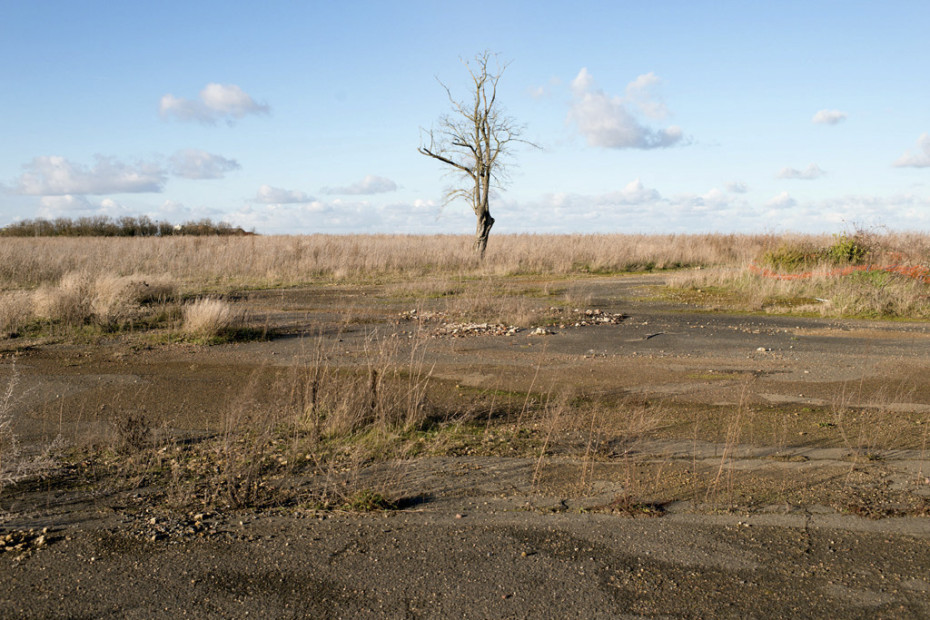
I live in the region (West Flanders, Belgium) so here are some local stories.
* When my brother in law was a kid, he found an old bomb at the roadside and decided to take it home on his bike, saying things like 'Look what cool stuff I found'. Of course mom panicked and called the deminers. All friends came to look how the dismantling went.
* In fact I know plenty of people finding old grenades and stuff. People die every year messing with them at their kitchen table, even if everybody should know by now not to do that.
* Lots of farms have a heap of old bombs on the terrain. Once a year or so DOVO comes and picks them up.
* Polish people are used a lot as cheap builders and road workers. In general they dont understand Dutch (the local language) or even English. So while people try to warn them not to touch any strange metal things they find on building terrains, the message doesnt come trough (' Know nothing. Talk boss'). Nasty accidents happen as a result.
* A few years ago, an old lady dug up a hand granade from her vegetable garden. So she calls DOVO, the organisation that does the demining. DOVO responds something like no time, call back later. This pissed her off enough to throw the bloody thing in a bucket, drive to dovo, and give the bucket at the reception desk saying ' This is yours'.
While typing this, my wife asks why I'm typing on that nerd site of mine. So now she suggests going to the dunes 2 km from here and taking a photograph if I see one. Sorry guys, Im not messing with old bombs in the dark after the Brussels terrorist attacks, but yes, it's that easy.