Verification is optional (and expensive), so I imagine more than one person thought of running a Sybil attack. If it's an email signup and paid in cryptocurrency, why make a single account?
Also live in Norway, nord Trøndelag. Power went out 3 timeslast year, few times for days, but that was an unusual winter. This years it’s only gone out for a few hours.
Seems to be a maintenance issue, trees are not cleared well enough. Sambo said that the warmer winters make the trees more likely to fall over.
like if a typical winter is slightly but consistently below 0C
then a warmer winter would have
- more black ice
- more ice rain
- more snow melting and refreezing (so ice on roofs, ground or trees etc.)
- wetter snow (so heavier)
etc.
Through where I live it is/was the opposite this year. Normally we have mostly above 0C degrees and rarely ice rain/black ice or similar. Also some way colder days (-10C and below) too cold to have much ice issues. This year for ~a month the temperature did non stop bounce between enough above 0 during the day to slightly melt things (but not fully) and below 0 at evening + cold ground to fully freeze any water produced by melting. So non stop icy walkways, streets etc. for nearly a month. During the last days before it got warmer some unmaintained walk way I passed by had 4cm of solid ice on it. At the same time it wasn't cold enough to do ice skating on lakes. It really wasn't a nice winter.
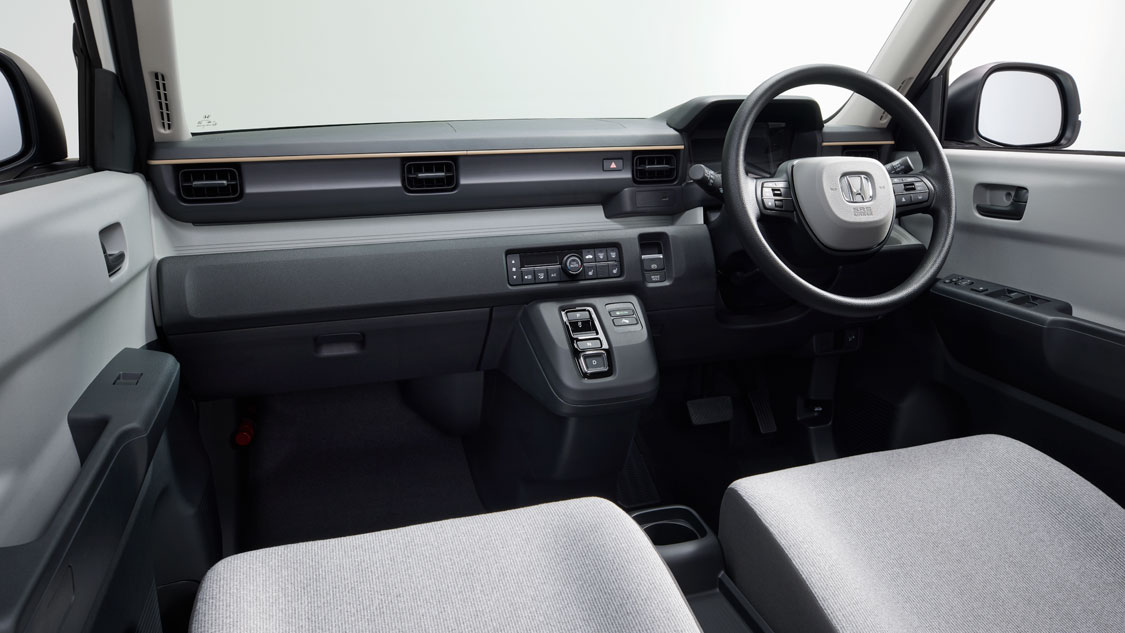
Funny how “game engines” are now car parts in 2026.
Can I just have an electric car that’s a car and nothing else? Seats, wheels pedals, mirrors, real buttons, no displays just a aux jack. I’d buy it, hell I might even take the risk and pre-order it
In the US, no. Backup cameras are required by federal law as of 2018. The intent of the law was to reduce the number of children killed by being backed over because the driver couldn't see them behind the car.
It is crazy how many things are downstream of the structural issue where US regulations favor ginormous SUVs and pickups where this is a problem, but if we introduced legislation to fix this we would end up ruining US automakers which have pivoted almost entirely to this segment alone
While I agree with you that the issue is far worse with larger vehicles, I do find that backing up in my wife's 2011 camry (without a backup camera) feels significantly less safe than I feel backing up my 2017 accord with a backup camera. I'm all for fixing the structural issue you are referring to, but I think the requirement for those cameras is sane in an age where the added cost to the manufacturer is miniscule.
I have to agree. Backing up my Tundra (8' bed) feels substantially safer since I can see immediately behind the vehicle than any pre-regulation vehicle I've driven. That doesn't even account for the convenience with lining up for towing, hauling, etc. (It's no replacement for GOAL—Get Out And Look—but it definitely helps!)
I bought a new car last year (my first actual _new_ car, vs pre-owned) and one of my most important features was a 360 camera. That extra visibility is just amazing for safety.
Another was a HUD. Being able to see how fast I'm going, what the speed limit is, and other info; all while keeping my eyes on the road... is safer.
I think it was a Dodge Neon from the early 00s that had the worst rear view I'd experienced. My Challenger was close, but the backup camera and blind spot sensors helped a lot. You could hide a bus in the blind spot on a Challenger, not to mention the passenger seat headrest blocks most of the corner/A window.
Give me a backup camera without a screen and then we’ll talk. Doubly so because once you’ve got that screen, no automaker will resist making it do other things.
My SO's Buick Enclave has a screen behind the rearview mirror that can be set to show the backup camera. Works okay, but I prefer the actual mirror and just use the dash display. That said, vision issues, so not driving since around this time last year.
As someone who can only afford cars that are 10+ years old, i've never owened a car with a backup camera. And in a way-- good. That part of my brain, let it continue to develop. I am much better at "feeling out" where a car is than my friends who rely on back up cameras.
I understand your skepticism 100%, but I suspect you might change your mind if you, say, rented a car with it for a week. It's definitely a net positive for safety, and it probably costs the auto maker less than the seat belts (literally).
I've owned cars with backup cameras since about 2014. I still mostly back up the old fashioned way, and really only use the camera for very tight situations where a few inches matter.
ive owned two cars. the modern backup camera means the new one has small "stylish...." rear windows. it is wayyyy more dangerous than the older one with no sensors
i only have those two data points; but give me an older car with larger windows every. single. time.
like a vehicle touching a body in a speed of 3/4 km/h and the kid shouting or stepping away? or worst case your motion sensor beeping?
how much the conversation diverts on a commentary about someone not wanting a car shipped with an OS capturing telemetry even of farts on the right back seat
I used to be ornery about this but having a camera mounted on the back of the trunk that can see all the way down both ways of the aisle is actually a huge boon when backing out of a spot. Especially if I am parked next to something that is taller than my golf, which is most vehicles.
This is what changed my mind too. I was firmly in the “can’t you just learn to drive?” camp before.
I can use my eyes and look around but I can’t see through objects.
The camera and sensors have an incredibly wide view. I only have to get my rear end out a few inches to be able to see everything I couldn’t before. Pray and pull out isn’t very safe.
Backup camera are insanely nice. Modern cars give you things that even great awareness won't give you. The bird's eye view you get with multiple cameras is sheer magic.
Its not just the added cost, its the supply chain. Putting cameras into cars requires processors, ram, all manner of chips and compnents that a car didnt need before.
There was the chip shortage during covid which held car production back becasue the auto makers couldnt source their chips fast enough. I am waiting to see if the current supply issue for ram chips modules will produce a similar effect.
> Putting cameras into cars requires processors, ram, all manner of chips and compnents that a car didnt need before.
Was there a single mass market consumer car sold in the United States in this millennium that didn’t already have processors and RAM in them?
I would be absolutely shocked if there was a single car for which the relatively recent backup camera requirement required them to introduce processors and RAM for the first time.
oh yeah. I've once bought a $10ish one on Amazon out of curiosity.
There's the yellow composite plug, a 12V input, and a small bit of wire to be cut to rotate image 180 degrees, at the other end of a 30ft cable from the camera. The composite goes into the existing infotainment. There would be a wire from shifter to infotainment that switches the display to external composite video when the gear lever is in reverse. I think it even came with a miniature hole saw in size of the camera module.
$10 and one afternoon later, I could have upgraded a dumb car to have one, complete with auto switch to backup on reverse. No software hacking needed. It's fundamentally an extremely simple thing.
I believe that in some vehicles the backup camera actually runs on a separate (possibly real time, otherwise certainly heavily nice'ed) system. Tesla has a recall where they had to nice the backup camera software. The problem was if the display freezes or is delayed, then the driver is backing up and not aware that he doesn't see where he is going (he thinks that what he sees is representative of the area around the car currently).
In Hyundai and Renault I've seen it first hand that it's a separate subsystem that works even when the infotainment is dead/unresponsive/glitchy (it's like that probably everywhere, these two are just the sample I have).
I mean you can buy add-on 3rd party backup cameras for like $20. They don't have any cost excuses for including backup cameras, camera sensors and display screens are literally cheaper than dirt.
Legacy automakers still use these for upselling trims.
It's so silly when they make some "Advanced Technology Package" with a VGA camera and a 2-inches-bigger infotainment screen that's still worse than junk from Aliexpress, and charge $3000 extra for it.
I know it's just a profit-maximizing market segmentation, but I like to imagine their Nokia-loving CEO has just seen an iPad for the first time.
That's great for cars built before the regulation were put into place. Without that regulation, you'd then be dependent on the end user purchasing an after market part and installing it. The vast majority of them won't. So if it is so important to have, you make it part of the car. They did not leave seat belts up to the owners to install after market versions.
My point is that if a 3rd party manufacturer can produce and sell a combination screen and camera for $20 for a profit, an automotive manufacturer has no reason to complain about the "expense" of such a setup. It is even cheaper for them than a 3rd party addon supplier since they buy in larger bulk and can integrate mounts for those devices into the car, rather than trying to devise some sort of one-size-fits-all mounting system that the addon manufacturers need.
They might as well be complaining about the costs of a rear view mirror, it is nonsense from the start. If a $20 gadget breaks the bank on a $30,000 minimum vehicle, they are a shitty business to start with and we should all be clapping our hands when they go out of business.
The 3rd party guy isn't paying someone $40/hour to install the $20 unit. The $20 unit will not be as integrated into the car and will have the look of an after market part. Does the $20 part only come on when the car is in reverse, or is it on all the time? There's a lot of reasons the after market thing can be $20 and a lot of reasons the auto manufacturer's is not. It's not all down to greed
Was it ever a problem to get the kind of phone SoC or camera chips you'd need for a backup camera if you were willing to pay an extra $20? I thought the issue was more specialized things. And you need one gigabyte of ram or less.
You shouldn’t need any dedicated RAM. A decent microcontroller should be able to handle transcoding the output from the camera to the display and provide infotainment software that talks to the CANbus or Ethernet.
And the bare minimum is probably just a camera and a display.
Even buffering a full HD frame would only require a few megabytes.
Pretty sure the law doesn’t require an electron app running a VLM (yet) that would justify anything approaching gigabytes of RAM.
I just went on Amazon and a 1GB stick of DDR3 ram is about 30% cheaper than a 128mb stick of RAM. Why would any RAM company make tiny RAM chips when they can make standard-sized chips that work for every application that needs less?
I really feel like a lot of the people objecting in this thread are people who have just written web apps in Python whose closest experience with the audio-visual space is WebRTC.
Tech for cars is “standard-sized”. Not everything revolves around datacenters and tech, the car industry easily predates the computer industry and operates on a lot tighter margins and a lot stricter regulations.
So having a smaller, simpler chip that ultimately costs less physical resources at scale and is simpler to test is better when you’re planning on selling millions of units and you need to prove that it isn’t going to fail and kill somebody. Or, if it does fail and kill somebody, it’s simpler to analyze to figure out why that happened. You’ve also got to worry about failure rates for things like a separate RAM module not being seated properly at the factory and slipping out of the socket someday when the car is moving around.
Now - yes, modern cars have gotten more complex, and are more likely to run some software using Linux rather than an RTOS or asic. But the original complaint was that a backup camera adds non-negligible complexity / cost.
For a budget car where that would even make sense, that means you’re expecting to sell at high volume and basically nothing else requires electronics. So sourcing 1GB RAM chips and a motherboard that you can slot them in would be complete overkill and probably a regulatory nightmare, when you could just buy an off-the-shelf industrial-grade microcontroller package that gets fabbed en masse, dozens or hundreds of units to a single silicon wafer.
I simply refuse to believe the cost difference between a CPU with hundreds of megs of DRAM is cheap enough to be an appealing choice over the same chip with a gig of RAM. We're not talking about a disposable vape with 3kb of RAM, this is a car that needs to power a camera and sensors and satellite radio and matrix headlights or whatever. If it's got gigahertz of compute, there's no reason it's still got RAM sized for a computer from 30 years ago.
The original comment was complaining about backup cameras seemingly adding significant electronics requirements.
In practice, you’re not going to tie intimate knowledge of the matrix headlights into the infotainment system, that’s just bad engineering. At most it would know how to switch them on and off, maybe a few very granular settings like brightness or color or some kind of frequency adjustment, not worrying about every single LED, but I can’t imagine a budget car ever exposing all that to the end user. Even if you did, that would be some kind of legendarily bad implementation to require a gigabyte of RAM to manage dozens of LEDs. Like, is it launching a separate node instance exposing a separate HTTPS port for every LED at that point?
Ditto for the satellite radio. That can and probably is a separate module, and that’s more of a radio / AV domain piece of tech that’s going to operate in a world that historically hasn’t had the luxury of gigabytes of RAM.
Sensors - if this is a self-driving car with 3D LIDAR and 360-degree image sensors, the backup camera requirement is obviously utterly negligible.
Remember, we had TV for most of the 20th century, even before integrated circuits even existed, let alone computers and RAM. We didn’t magically lose the ability to send video around without the luxury of storing hundreds of frames’ worth of data.
Yeah, at some point it makes more sense to make or grab a chip with slightly more RAM so it has more market reach, but cars are manufactured at a scale where they actually are drivers of microcontroller technology. We are talking about a few dollars for a chip in a car being sold for thousands of dollars used, or tens of thousands of dollars new.
There is just no way that adding a backup camera is an existential issue for product lines.
I tried to think of a wording that wouldn't get this response, I guess I failed. Ram is generally bought in gigabytes, "1 or less" is as low as numbers go without getting overly detailed.
So what microcontroller do you have in mind that can run a 1-2 megapixel screen on internal memory? I would have guessed that a separate ram chip would be cheaper.
But mostly it’s the fundamental problem space from an A/V perspective. You don’t need iPhone-grade image processing - you just need to convert the raw signal from the CMOS chip to some flavor of YUV or RGB, and get that over to the screen via whatever interface it exposes.
NTSC HD was designed to be compatible with pretty stateless one-way broadcast over the air. And that was a follow-on to analog encodings that were laid down based on timing of the scanning CRT gun from dividing the power line frequency in an era where 1GB of RAM would be sci-fi. We use 29.97 / 59.94 fps from shimming color signal into 30 fps B&W back when color TV was invented in the early-mid 1900s, that’s how tight this domain is.
Back in the mists of time, we used to do realtime video from camera to display with entirely analog components. Not that I'm eager to have a CRT in my dashboard, but live video from a local camera is a pretty low bar to clear.
Yeah, I cannot understand why people are thinking a gigabyte of RAM in this context save for their context being imagining what this would take with a python HTTPS server streaming video via WebRTC to an electron GUI running out of local docker containers or something. Because that ought to be enough memory for a hour of compressed video.
It’s like saying your family of four is going to take a vacation, so you might need to reserve an entire Hyatt for a week, rather than a single room in a Motel 6.
It's not just ginormous SUVs with this problem, though, right? You're not going to see a 18 month old out the back window of your compact hatchback if they're too close to your car. Especially now that windows seem to be tinier than they used to.
No, it's common to all vehicles. You can't see small children behind a small passenger car, either.
Blaming trucks and SUVs for everything is a favorite pasttime of internet comments, but all vehicles benefit from backup cameras and collision detection sensors.
The US averages 23 pedestrian deaths per million people per year. The EU averages 8. The US fatalities have increased by 50% since 2013, while in the EU have decreased by 25% in the same time frame.
While I think it's more because of the speed difference in cities. In EU you just can't drive fast, because it's crowded. In the USA you have way more space to drive speed limit
> The US averages 23 pedestrian deaths per million people per year. The EU averages 8.
Americans drive significantly more miles per year, and larger/more comfortable cars are in part needed because Americans spend far more time in their cars than Europeans.
Euro governments are also increasingly anti-car, which means citizens are loosing their freedom to travel as they wish and unreasonably taxed, policed, and treated like cash cows for the "privilege" of driving.
> which means citizens are loosing their freedom to travel as they wish
Most of my European friends brag about how they can get anywhere via train and how much more comfortable it is to travel that way. When I visit Europe I have to agree. Just haven't really seen this viewpoint, though I do think I would feel this way as an American if I moved to Europe to some extent (though I'd be extremely happy to have viable mass transit).
Collision detection sensors do the job just fine without a screen though.
I have a 2016 vehicle with no console screen and they have saved me from hitting all sorts on things, and are sensitive enough to detect minor obstacles like long grass.
I think the difference is that a 3 year old barely-walking child tends to wander behind moving cars far less often than an 8 year old playing football.
Right, backup cameras make sense even for sedans and other small cars. The high-hood trucks and SUVs in the US are the reason we'll probably get mandatory front cameras eventually as well.
It's a little ironic that the truck that diverged from the trend for high butch looking hood lines for no real reason is... Cybertruck. We kill pedestrians in the name of macho.
The front camera is the best thing I added to my 2004 Prius. The hood on that car is very good for visibility, but with the birds eye cameras I can roll it up within centimeters of things in front of me (there's a slight risk that you can absolutely poke the nose under stuff but at that point it's quite obvious out the windshield too).
Why are infants materialising out of nowhere behind cars? There must be something else going on here.
When I reverse, there can't possibly be something behind my car, because I've just driven forwards over that area. When I begin to reverse, I'm looking all around behind and I'll be able to see if an infant, or dog or whatever, runs into the path I intend to take.
A lot of people tend to drive forwards into parking spaces then reverse out. I've no idea why, because it's far easier to reverse in then drive forwards out. And I reckon much safer too. If people are sitting in their cars for extended periods then beginning to drive in reverse, I can see this being a problem. But there are also vehicles that you wouldn't be able to see an infant in front of the car either.
Personally I don't own a huge SUV, but I feel backup cameras are a godsend. You're so much better off looking from the point of the actual back of the car to judge the distance to the car parked behind you.
The perk of not having to twist your body around while steerins is also pretty nice.
This is ultimately the thing that needs to be fixed. The exemption for small trucks was stupid, and it should have been reserved for literal farm equipment (as that was intended). The fact that SUVs slip by on this now has created such a dumb market.
The OBBB Act passed by Congress last year eliminated the financial penalties associated with violations of CAFE standards, so there’s presumably no reason why automakers have to abide by them anymore, except possibly for concerns about future legislation.
It wouldn’t be HN without a commenter shoehorning the topic of a thread into proof of their pet problem. See also any topic even remotely tangential to city planning.
Backup cameras do contribute significantly to safety, to the point that I installed one in my 2002 vehicle with a cheap aftermarket head unit. The important thing to realize is that all the modern conveniences can be decoupled from the drivetrain. My $50 Android head unit does basically all the things that the OEM head unit on our 2018 vehicle does. It even does many things better.
The problem with modern cars is that everything is so heavily integrated and proprietary. If I swapped out the OEM touchscreen, apparently I would also lose the ability to set the clock on my instrument cluster. Now that this has become normalized, automakers have realized they can lock Android Auto/CarPlay behind a paywall and you’ll have no recourse but to buy one of those tablets that you stick on your dashboard and plug into the aux port. If your car still has an aux port.
I’m excited for the Slate, but unfortunately I have the feeling that the people who buy new cars aren’t the same people that want the Slate. The rest of us who keep our 20+ year old vehicles reliably plugging along don’t make any money for automakers.
> buy one of those tablets that you stick on your dashboard and plug into the aux port
Every single car I have been in in the last 5 years or so has Bluetooth. No need for aux ports in this day and age, especially when devices dont have headphone jacks anymore.
I still use headphone jacks on my phone, I wouldn't buy one without it. It is just more garbage to manage and more stuff to fix when it doesn't work. It takes half a second to plug in a cable and I don't gotta run around broadcasting a bluetooth signal which drains battery when not in use and takes as long to disable as pulling out a plug. Plus it is often lower quality than the cord.
Bluetoothing to your car is to me the same energy as using "wireless" charging stands for your phone. You are just replacing a physical tether with a less efficient digital tether of higher complexity for no actual gains.
I thought the same until my latest pixel refused to use the headphone jack to the car because it detected the hands free communications in the steering wheel as a microphone and decided to block audio out with notifications telling me to set up Google Voice Assistant first (get fucked).
Backup cameras are great for people who wear glasses. My visual cone is narrower, so I effectively have to turn my head 180° to see accurately enough, otherwise it's just a blur.
When I'm 5'11" and I often see trucks and SUVs whose hoods come nearly to my shoulder, it just boggles my mind. Of all the regulations around vehicles, I don't understand why "being able to see the road five feet in front of the vehicle" isn't one of them.
Because trucks are extremely popular, and frankly there is a cultural identity associated with them. Most people don't haul things with their truck, and if they do, it's very infrequently. BUT in American fashion, the optionality to do this partially drives purchasing decisions.
Ah sorry, I quickly edited that out of my comment! I had the video playing while posting, they were talking about a precursor project for embedded Flutter which this in some ways builds on, /that/ is running on the new RAV4.
One of the example uses given in the talk is 3D tutorials, which I could imagine being handy. Not sure I'd want to click on the car parts for it but with the correct affordances I could imagine a potentially useful interface.
I feel like "game engine" is a misnomer for what we're actually dealing with here. It's more like an "ECS-based scene rendering engine, which can be used for games or for advanced UI". But that doesn't have a succinct label yet.
A Toyota Corolla starts at $23K. I think the "Under 20" and "Under 30" price points (a la the original Model 3 goal) are simply a thing of the past for any volume car with reasonable demand.
What you get for that $23k is now quite substantial though.
Power windows are standard. 169hp. Automatic climate control, central locking and key fobs, Automatic emergency braking and other radar based features. Digital gauge cluster. Modern infotainment. Modern crash safety, which is really good compared to 20 years ago.
That's a lot of car for $10k in 1996 dollars.
That's ignoring the $3k in fees, taxes, and whatever scam the dealer runs.
The reason we don't see more of it is that selling one $23k Corolla to one value minded shopper can't make line go up as much as selling one $60k MEGATRUCK to one easily influenced shopper. The new car market is exclusively for people who buy new cars regularly, and are therefore willing to get very bad deals for cars. The market is driven by people who self select for bad ability to parse value.
Yup. The expectations are set higher and to a point since cars are bigger for safety reasons (crumple zones, airbags) and have more pedestrian safety features like spring loaded hoods, it invited incremental additions until the new price points were set. A spartan 19K car isn’t going to sell as well as a CarPlay equipped 23K car.
Part of what has made modern EVs successful in the wider market is the connected navigation system that knows your battery level, current consumption, planned navigation route, and what charging stations are available along the way.
To have a decent travel experience in an EV you'd likely at least need this data ported out to your phone via an OBD adapter or CarPlay / Android Auto integration with an in-car infotainment display.
Connecting via ODB? Come on. The car does not need any of that built into it. You can connect an app on your phone to handle all of that and just use the screen as a display. There is no need for a car to have a cellular connection just to give this functionality. That would also prevent the car from being able to communicate with the mother ship. If there's an update, have the app do that as well.
Funny, my phone can provide accurate routing data with out the car. What data from the car does the phone need to be able to accurately route? I'm at my desk no where near my car and it is working just fine
Current battery level and consumption, so that it can tell you whether you will make it to your destination with adequate charge left or insert charging stops where needed.
Ol' Dirty Bastard? I jest, but I think the theory behind wanting an 'On-board Diagnostics' [1] connection would be to get data from the vehicle. You can get cheap bluetooth OBD-II adapters to transmit that info to your phone, it's not a given. I don't know much about electric cars, but if you want your phone to know the fuel level in an ICE vehicle then you'd need this kind of connection.
I make typos like that lot. The one that is most common for me is CVS instead of CSV. No, this isn't a list of things to get from the drug store ::facepalm::
Flat plane or cross plane? Cross plane cranks necessitate an asymmetric firing order, which produces the wonderful burble from US V8s. Flat plane is more common in Europe - think Ferrari - and has a symmetric firing order that produces a toneless metallic howl.
The last car that I remember being just an engine and seats was the Dodge Viper. I think some K class Japanese domestic vehicles are also likewise basic.
I loved the Viper, but its spartan interior and features list were its detriment.
> Can I just have an electric car that’s a car and nothing else? Seats, wheels pedals, mirrors, real buttons, no displays just a aux jack. I’d buy it, hell I might even take the risk and pre-order it
You can buy a tubular frame chassis for Beetle-based kit cars from a factory in the south of England, that's been adapted to take modern coilover suspension and an MGF or MGTF engine and gearbox, because Beetles are so rare that anyone wants to put the engine back into a Beetle.
I reckon with a minor amount of fettling you could squeeze a Nissan Leaf transaxle and a sufficient amount of batteries in, and still drop your Manx beach buggy shell over the top. Or any other shell you like.
You'd be running around in a solar-powered beach buggy. THAT is the future.
Given how many cars have Carplay or Android Auto, but also have their own e.g. Toyota app that you need to/ought to install, it feels as though this isn't that far off from how things basically are.
Personally, I'd be happy with some kind of situation where:
1. You have a small in-dash touchscreen, as most small sedans have these days, as the basic level of "backup camera and radio view"
2. Everything the car does has a physical button so you don't NEED to use the touchscreen
3. The car has a USB-C port that can power a tablet and which provides a standardized interface that e.g. iOS and Android can interface with, so that users don't have to worry about their new OS doesn't support the not-updated app, or the app doesn't support their not-updated device
4. Sell an optional tablet mount that attaches to the dash the way a built-in one would be
5. Sell an optional 'tablet' that does nothing but interface with the USB-C port and provide what it needs, in case someone wants a larger screen without having to buy an iPad Pro
Then again I don't drive, so I'd be happy with none of this also.
Honestly, I'd be okay with this, and then you can upgrade / replace said tablet if you wanted to. In an Alternate Universe, your iPad drives your car, your iPad Pro drives your car through hell and back, or whatever.
do you know about the slate truck? give it a search. it doesn't even come with speakers. or electric windows. or paint. it does have a backup camera afaik.
No because more basic cars have much lower profit margins while requiring higher volume and investors/capitalists will not accept that. Why earn 5% on their investment selling a million cars and building brand name when they can instead earn 20% on selling 100,000 cars at the expense of a brand name they never cared about maintaining in the first place? Brand tarnishment is something other smucks will have to deal with down the road, not the guys making these decisions right now who get performance "bonuses" and not the shareholders that want large returns.
> Funny how “game engines” are now car parts in 2026.
Seems almost inevitable. Game engines end up supporting user interface elements and text with translations, but with an emphasis on simplicity, performance, and robustness. Many currently trending user interface stacks readily generate bursts of complexity, have poor performance even with simple usage, and are buggy and crash prone.
dawg idk how you have a car that's "electric" and also "basic." everything in an electric car is _necessarily_ mediated by software. if you want a simple car, you want combustion.
Basic does not mean "no software" it means "no cellular modem" and "no 15 inch tablet" and "no subscription based features"
There is functionally no difference between the powertrain of an electric road car and a brushless drill. How much software is there in your brushless drill? More than zero, far less than an electric road car.
Real buttons are more expensive than electronic. Not sure if you care, but people make that mistake more generally.
Game engines are probably trivially cheap to produce in 2026. You forget that Toyota sells 10M cars per year. In 3 years thats 30M cars. What does it cost each buyer for the game engine? 30 cents?
I can buy a 104 key mechanical keyboard for under $75 retail. That's 104 switches, 104 labelled button caps, a circuit board, controller and USB interface, with reliability likely much better than any other moving part found on an automobile.
That is very factually wrong. The reliability will be worse. That $75 keyboard is going to be used be hundreds of thousands of people, not millions. There is no safety involved. No one is testing to see how sunscreen and 50 other liquids interact with it. Dump a sugary drink on your car buttons, they will still work. Do that on your keyboard and it wont.
This only makes sense if touchscreens are reliable. They are not. You should look at the fault rates. Cheaper isn't better. In any case, we had cheap and good analogue before so let's not pretend like it's not possible. It might have been more expensive than a keyboard, but it wasn't dramatically different or we would have never had it. They just found a way to 1) reduce cost by going digital and 2) charging a premium for going digital as it was perceived as an upgrade by a majority of the market. They sold it to us, it's what they're good at. It doesn't mean it was a good idea.
> Real buttons are more expensive than electronic.
It might add up to a lot of money for the manufacturer who is cranking out thousands or millions of vehicles, but to the consumer buying one car it isn't a meaningful difference.
This is 10 year old outdated, but 10 years ago 1 button was ~1.00. Probably closer to $1.20 or $1.30. But sometimes buttons had 2 buttons on them, Those would go for $2.10-$2.30.
Then you had wiring each button wire I believe was $1. This wasnt 1 wire, but a few wires, power, ground, signal. Each button had them. This wasnt my job, so I didn't follow this price too much, but I asked the question at the time. I think going into the ECU, there is also a cost associated with it.
Anyway, you could assume 10 years ago, each button was $2. A car has 40-70 buttons? So its probably like $100 a car. Maybe $150 or $200 in today's money.
Also buttons and wires break, causing warranty problems.
At the time these vehicles were selling for under $20k at the bottom, and $40k at the top. So 1% of costs were buttons.
This doesn't even include the cost of hiring ~20 engineers to handle the buttons. ~6 people to check appearance and do testing... It doesn't include the assembly costs on the line. That 1% was just the cost of button + wire.
> This doesn't even include the cost of hiring ~20 engineers to handle the buttons. ~6 people to check appearance and do testing... It doesn't include the assembly costs on the line. That 1% was just the cost of button + wire.
That doesn't make sense. $1 uninstalled might make sense for a fancy custom-molded button, even if it's too much for a generic button. (I'd rather have some generic buttons with labels than use a touchscreen, by the way.) But there's no way a few feet of signal wire and the proportional share of power wires get anywhere near $1 uninstalled.
Also I can find entire car stereo units with 15 buttons on them for $15? That kind of integrated button is cheap, has been common in cars for a long time, and can control things indirectly like a touch screen button if that's cheaper than direct wiring.
You are underestimating the quality you are getting with a car. The light colors match perfectly with science and experts. Its wild how much effort goes into it.
Your after market has not been tested to react with sunscreen.
But the whole argument was that it's too expensive. If impeccable color matching is too expensive then give me the cheapest button that won't break. Needing the touchscreen to adjust the A/C is more ugly than the worst looking button.
But also that kind of button doesn't need dedicated wires.
Touchscreen controls are crappy. They're less nice than ugly buttons.
(And of course people still buy cars with flaws. An entire car is an amalgamation of so many features that's it's hard to use purchases to measure people's reaction to the vast majority of specific changes. And features like controls often take longer than a test drive to evaluate, too.)
> Anyway, you could assume 10 years ago, each button was $2. A car has 40-70 buttons? So its probably like $100 a car. Maybe $150 or $200 in today's money.
I have a late 90s Range Rover. It has about 12 buttons on the dashboard, most of which I never have to bother with (they do things that turn on and off the fog lamps, which I don't need to use, or adjust the air suspension, which I rarely need to use). I turn the lights off and on, and I switch the heating from "normal" to "BLAST EVERYTHING ON, FRONT AND REAR DEMIST ON, SEAT HEATERS ON, EVERYTHING ON, EVERYTHING ON, EVERYTHING UP FULL, WE'RE AN AIR FRYER NOW" mode.
From looking at some new car options lately, it seems like you're lucky if you can get floor mats for $200. This doesn't take away from your point - I suppose I'm just griping.
I don’t care. I want a simple car with simple parts that I can fix. Not this spaceship that we get now days.
The 12v battery on my partners car had to be replaced, apparently it had to be “paired” in the shop and was not user serviceable wtf!?
The "pairing" probably makes sense if you deep-dive into the technical details. My guess is that the battery has software on it to improve performance, total life, whatever.
The real problem is that the whole is not designed to be user-servicable.
Dear god do I not want to be trying to deal with an interactive user manual when pulled over on the side of the road trying to look up the lift point to jack the car up.
Could someone explains to me what the secret is here? Apart from the fancy marketing, is it the full integration? The hardware? It took me a while to find an actual picture of one of the modules.
They’re players in a newish market segment called “hyperconverged,” basically “you buy a rack and it runs your workload, you don’t worry about individual systems/interconnect/networking etc because we handled it.”
Oxide seem to be the best and most thorough in their space because they have chosen to own the stack from the firmware upwards. For someone who cares in that dimension they are a clear leader already on that basis alone, for other buyers who don’t, hopefully it also makes their product superior to use as well.
Microsoft and Nutanix have had a hyperconverged architecture for over a decade. Oxide is mostly an alternative to Nutanix or other soup-to-nuts private clouds.
Oxide is a really nice platform. I keep trying to manipulate things at work to justify the buy in (I really want to play wiht their stuff), but they aren't going for it.
The first attempts at hyperconverged were very hardware focused and kinda meh. Nutanix is the best example - they pioneered hyperconverged hardware but the firmware/software was extremely average. Oxide are the first to say "it should just feel like cloud, except you own it" and building for that.
I'm a bit puzzled because this seems backwards from what I thought had been the evolution of things.
Didn't companies historically own their own compute? And then started offloading to so-called cloud providers? I thought this was a cost-cutting measure/entry/temporary solution.
Or is this targeting a scale well beyond the typical HPC cluster (few dozen to few hundred nodes)? I ask because those are found in most engineering companies as far as I know (that do serious numerical work) as well as labs or universities (that can't afford the engineers and technicians companies can).
Also, what is the meaning of calling an on-prem machine "cloud" anymore? I thought the whole point of the cloud was that the hardware had been abstracted (and moved) away and you just got resources on demand over the network. Basically I don't understand what they're selling if it's not what people already call clusters. And then if the machine is designed, set up and maintained by a third party, why even go through the hassle of hosting it physically, and not rent out the compute?
> Didn't companies historically own their own compute?
As group-of-cats racks, usually, which is a totally different thing. Way "back in the day" you'd have an IT closet with a bunch of individually hand-managed servers running your infrastructure, and then if you were selling really oldschool software, your customers would all have these too, and you'd have some badly made remote access solution but a lot of the time your IT Person would call the customer's IT Person and they'd hash things out.
Way, way, way back in the day you'd have a leased mainframe or minicomputer and any concerns would be handled by the support tech.
> I thought the whole point of the cloud was that the hardware had been abstracted (and moved) away and you just got resources on demand over the network.
This idea does that, but in an appliance box that you own.
> And then if the machine is designed, set up and maintained by a third party, why even go through the hassle of hosting it physically, and not rent out the compute?
The system is designed by a third party to be trivially set up and maintained by the customer, that's where the differentiation lies.
In the moderately oldschool way: pallets of computers arrive, maybe separate pallets of SAN hosts arrive, pallets of switches and routers arrive. You have to unbox, rack, wire, and provision them, configure the switches, integrate everything. If your system gets big enough you have to build an engineering team to deal with all kinds of nasty problems - networking, SAN/storage, and so on.
In the other really oldschool way: An opaque box with a wizard arrives and sometimes you call the wizard.
In this model: you buy a Fancy Box, but there's no wizard. You turn on the Fancy Box and log into the Deploy a Container Portal and deploy containers. Ideally, and supposedly, you never have to worry about anything else unless the Big Status Light turns red and you get a notification saying "please replace Disk 11.2 for me." So it's a totally different model.
> Didn't companies historically own their own compute?
Historically, companies got their compute needs supplied by mainframe vendors like IBM and others. The gear might have sat on premises in a computer room/data center, but they didn't really own it in any real sense.
> Basically I don't understand what they're selling if it's not what people already call clusters.
Is it really a cluster when the whole machine is an integrated rack and workloads are automatically migrated within the rack so that any impending failure doesn't disrupt operation? That's a lot closer to a single node.
Rack scale computing, on both the software and hardware side. That means building custom network switching, power management, etc, in a turn key solution that drops in to a customer's data center. Unbox it, plugin a few connections, make a few configuration settings, and start deploying. It's the on-prem response to the cloud for companies running things at scale.
Companies spend an eye watering amount of money on AWS relative the underlying hardware cost. There's definitely a market for something like a mainframe that runs K8s, Postgres, Redis, and the like where you buy once and then run forever.
I don't know if it's true or not but it seems like our AWS bill is something like paying the full purchase price of the underlying hardware every month.
The selling point, from the looks of it, is an on-prem cloud where you own the hardware.
For the business guys they're focusing on price and sovereignty. Owning your business. For technical people they are focusing on quality. Not having to deal with integration bugs.
It's not really a mainframe because the RAS story (Reliability, Availability, Servicing) story is sorely lacking compared to what a true mainframe gives you. So a midrange machine like AS/400 is probably a better comparison.
An AS/400 has a similar RAS story to mainframes than to Oxide/Dell. Oxide is closer to Dell (Oxide RAS is effectively the same as any sled hyperconverged) than they want to admit.
When the AS/400 came out circa 1989 or whatever, you could replace an entire mainframe with a box not much bigger than a mini fridge. The hardware is built for high reliability, and the OS and application software stack have a lot of integration. If Unix is "everything is a file" then AS/400 is "everything is a persistent object in a flat 64 bit address space."
The result is a system that can handle years of operation with no downtime. The platform got very popular with huge retailers for this reason.
Then in later years the platform got the ability to run Linux or Windows VMs, so that they could benefit from the reliability features.
I don’t know who they see as competitors in market positioning (ie, who is selling against them on their target buyer’s calendar). But the space is called hyperconverged computing and there are a few other players like Scale Computing building “racks you buy that run your VMs.”
More like Nutanix, Xen, IBM, Kubernetes... private cloud, colo, on-premise... etc. There's a ton of stuff (I'd bet the majority) of compute workload in business that is local/colo and not cloud.
From the podcasts they talk a little about their clients. It's people who want something like AWS Outpost but fully disconnected and independent from any cloud and running 100% local.
I don't think that is the 'main' competitor. But its certaintly 'a' competitor for companies that already have put a lot of their eggs into the AWS basket.


Source??
reply