I made two serious attempts to get into front end web development, around 5 years apart. Both times I started with the most popular framework. Both times the most popular framework was something different before I even finished the project.
What is the practical latency difference you see between on-device and, say, whisper, in streaming mode, over the internet? Comparable? Seems that internet latency would be mostly negligible (assuming reasonable internet/cell coverage), or at least compensated for by the higher end hardware on the other side?
If you run a smaller whisper-distil variant AND you optimize the decoder to run on Apple Neural Engine, you can get latency down to ~300ms without any backend infra.
The issue is that the smaller models tend to suck, which is why the fine-tuning is valuable.
My hypothesis is that you can distill a giant model like Gemini into a tiny distilled whisper model.
but it depends on the machina you are running, which is why local AI is a PITA.
Just make a route on your web server, making all the files available with some long, impossible to guess, unique ID that can be shared. Like https://files.<your domain>/<id here>.
If they want to collaborate, they can just post the changed file, using the auth key you generated for them set in some header field, to https://files.<your domain>/<id here>, which could automatically increment revision numbers. Then you could access specific revisions with .../<id here>/rev/<revision>.
So much easier than installing an app! You could literally just use curl as the interface! (I kid)
Hah, yeah. I do have a one line CLI script to upload a file to S3, get a shareable link, and send it to me on ntfy.sh. And my family all have ntfy.sh so that honestly is viable for some things. But still, not really all that workable for many things. And only I have this power in my family
> Where’s the usual comments claiming that hybrids are the true way forward?
I've never ever seen anyone claim that hybrid is the end goal.
I've only ever seen people say that hybrid is the practical stopgap until faster charging rate/infrastructure and better range is available, probably the result of next-gen batteries.
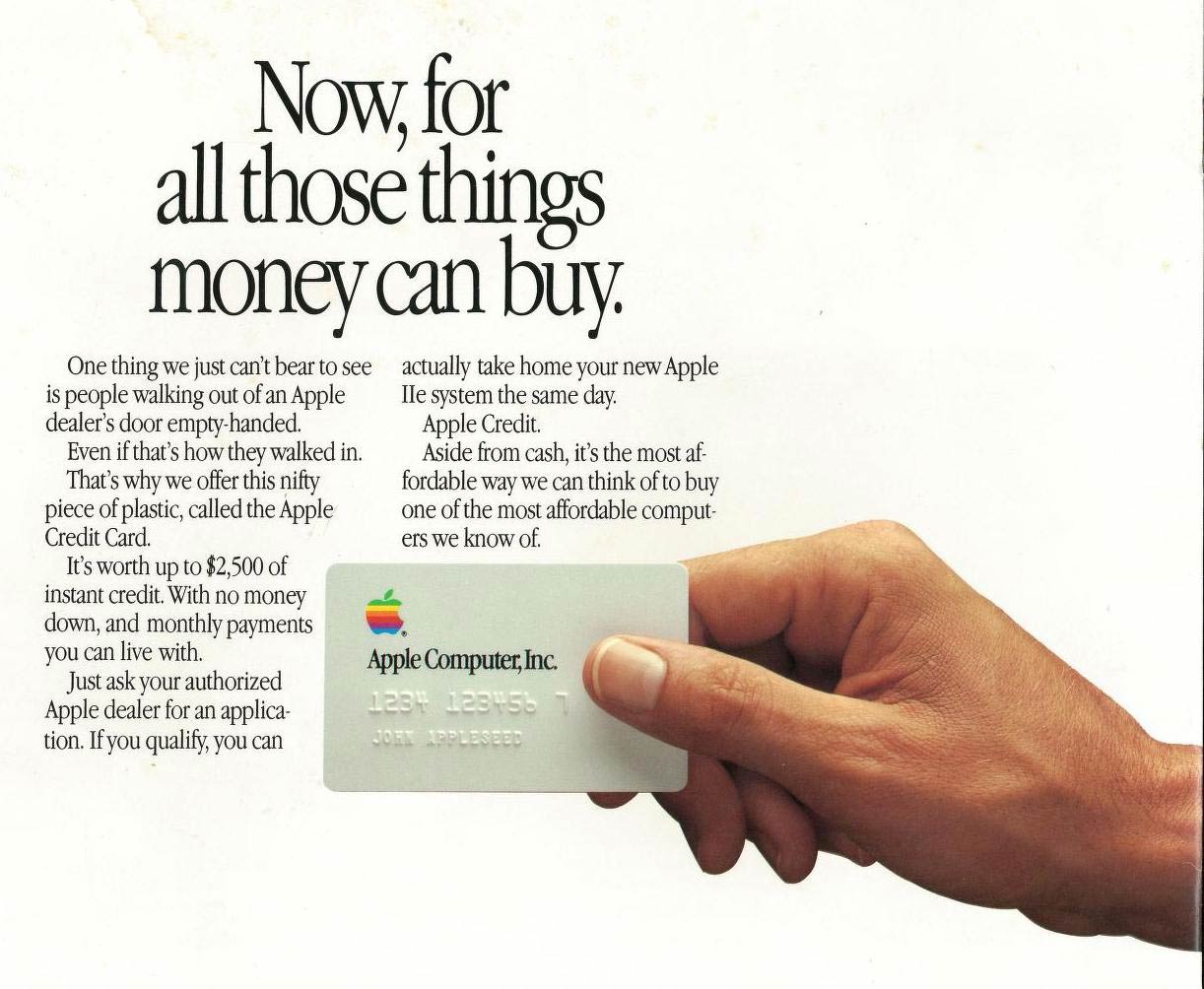
Isn't it obvious? They already offer financing on new machines with the Apple Card. You can put your iPhone or new Mac on an installment program. It's been around since at least 2020.
I must be missing something here. I don't disagree with anything you've said. My top comment is heavily downvoted. I am not saying I like this development.
> when it seems pretty obvious what Apple's strategy is here.
The concept of financing an expensive thing is overwhelmingly mundane and widespread. The word "obvious" means "self evident". Unless that logic also applies to all the other companies through time that provided financing, it is not self evident, since they're all contradictory evidence to your view of Apple's strategy (since it was not those other companies goal)! You're claiming that the motivations of financing applies differently to Apple than all other companies that use it, but not giving evidence why you think that, making it all an opinion/guess, not something obvious to anyone else.
Based on what evidence? This is the "making things up" the reply alluded to. It's not even remotely obvious to me, and I disagree with your concussion. Hardware is 75% of Apple's revenue
China could definitely do this, to offset the minuscule of the destruction they do with the dark fishing fleets around (and possibly in) protected marine areas.


reply